Concert ticket fraud is defined as the sale of counterfeit, invalid, or nonexistent tickets to live events, and it costs fans hundreds of dollars per incident. The Better Business Bureau recorded over 140 formal complaints on ticket fraud for concerts and sports events in 2024 alone. That number reflects only reported cases. The real total is almost certainly higher. This avoid concert ticket scams guide covers how to verify ticket authenticity, spot risky sellers, choose safe payment methods, and recover quickly if something goes wrong.
How to avoid concert ticket scams: verifying authenticity before you pay
The single most reliable way to buy tickets safely is to purchase directly from the official venue box office or an authorized ticketing platform. Official sources control the full transaction chain, which means the ticket you receive is the ticket that will scan at the door.
Modern concert tickets use technology that makes fraud much harder. Dynamic mobile barcodes refresh every 15 seconds inside the ticketing app, so a screenshot of the barcode becomes worthless almost instantly. This is the single most important development in concert ticket purchasing tips over the past several years. If a seller sends you a screenshot of a barcode or a static PDF, treat it as a red flag, not a ticket.
Physical verification is also an option. The venue’s Will Call box office can confirm whether a ticket is registered to a valid order before event day. Call ahead and ask the box office to verify the order number or barcode. This step takes five minutes and can save you from showing up to a sold-out show with a worthless piece of paper.
Here is a quick checklist for verifying ticket authenticity:
- Buy from the official source first. Check the venue’s website directly for authorized sellers.
- Confirm the ticket is delivered through an official app. Static images and PDFs are not secure.
- Check that the barcode is live and refreshing. A frozen or screenshot barcode is a duplicate risk.
- Call the venue’s Will Call desk to verify the order number if you bought from a reseller.
- Look for buyer guarantees. Accredited resellers who belong to the National Association of Ticket Brokers (NATB) offer a 200% purchase guarantee, meaning you get double your money back if the tickets are invalid.
Pro Tip: Search for the reseller’s name on the NATB website before you buy. NATB membership requires brokers to meet ethical standards and carry buyer protection guarantees that unverified scalpers simply do not offer.
What are the red flags of a ticket scam?
Recognizing a fraudulent seller before you hand over money is the core skill in preventing concert ticket fraud. Scammers rely on urgency, low prices, and unfamiliar platforms to catch buyers off guard.
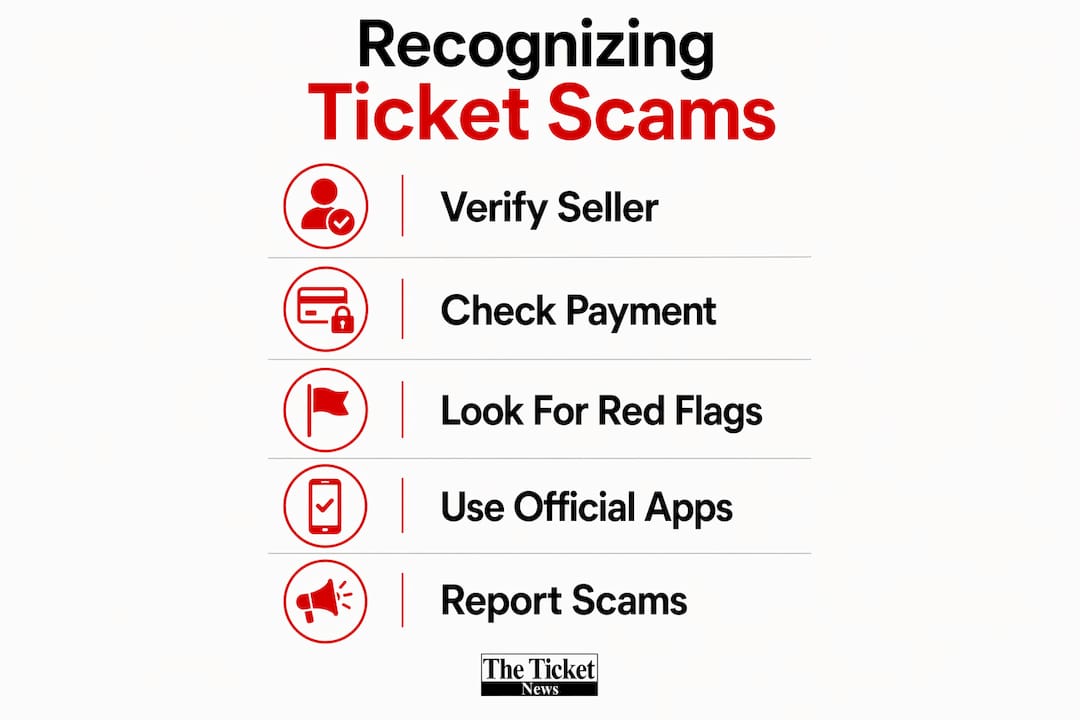
The Better Business Bureau warns that speculative ticketing is one of the most widespread scams in the resale market. Speculative ticketing means a seller lists tickets they do not actually own, hoping to acquire them after you pay. You pay, they fail to deliver, and your money is gone.
Watch for these numbered warning signs in any ticket transaction:
- Prices that seem too good to be true. Floor tickets to a sold-out stadium show listed at face value from a stranger are almost always fake or speculative.
- Pressure to pay immediately. Legitimate sellers do not create artificial deadlines. Scammers do this to prevent you from researching the offer.
- Sellers with no transaction history. New social media profiles, zero reviews, and no verifiable identity are all signs of a risky seller.
- Requests to pay outside a secure platform. Any seller who insists on a direct bank transfer or cash app payment is bypassing the protections that legitimate platforms provide.
- Lookalike websites. Scammers build sites that mimic official ticketing platforms down to the logo and color scheme. Always verify the URL matches the official domain before entering payment details.
Social media is a particularly high-risk channel for buying tickets. Sellers on Facebook groups, Instagram DMs, and Twitter have no accountability. A profile created last week with a handful of followers and a “great deal” on Taylor Swift tickets is a textbook scam setup. The resale checklist for safe buying at The Ticket News walks through exactly how to evaluate a resale seller before committing.
Google search results also carry risk. Official platforms caution that lookalike scam sites frequently appear in paid search results alongside legitimate platforms. Do not assume a top search result is the official source. Type the venue or artist name directly into your browser and navigate to the official site from there.
Pro Tip: Run any unfamiliar ticket seller through the BBB Scam Tracker at BBB.org before you pay. The tracker logs reported scams by business name and location, and it takes under two minutes to check.
Which payment methods protect you from ticket fraud?
Payment method is the last line of defense between you and a total financial loss. Credit cards are the recommended payment method for any ticket purchase because they allow you to dispute fraudulent charges through a chargeback process. Chargebacks give you legal recourse when tickets are fake or never delivered. That protection does not exist with most other payment options.
Safe payment methods:
- Credit cards (Visa, Mastercard, American Express, Discover)
- Debit cards linked to a bank account with fraud protection
- PayPal Goods and Services (not Friends and Family, which has no buyer protection)
Payment methods to avoid:
- Wire transfers, gift cards, Zelle, Cash App, or cryptocurrency offer no recourse if the tickets are fake
- PayPal Friends and Family, Venmo personal payments, and any peer-to-peer app that does not include buyer protection
The reason scammers specifically request these payment types is that the transactions are irreversible. Once you send $300 via Zelle to a stranger for concert tickets, that money is gone. No bank dispute, no chargeback, no recovery. Credit card fraud protection exists precisely for situations like this.
Before entering any payment details online, confirm the website address begins with “https” and shows a padlock icon in the browser bar. That signals an encrypted connection. It does not guarantee the site is legitimate, but a site without it is an automatic disqualifier. For a deeper look at buying resale tickets safely, The Ticket News has a full breakdown of the steps that actually work.
What should you do if you think you’ve been scammed?
Acting fast is the most important factor when you suspect ticket fraud. Every hour you wait reduces your chances of recovering money or stopping additional charges.
- Stop all payments immediately. Do not send any more money, even if the scammer claims a second payment will fix the problem.
- Contact your bank or credit card issuer. Report the transaction as fraudulent and request a chargeback. Do this within 24 hours if possible.
- Document everything. Screenshot every message, email, listing, and receipt. Save the seller’s profile URL, username, and any phone numbers used.
- Report to the ticketing platform or venue. If the transaction happened on a platform, report the seller. Venues can flag fraudulent order numbers so they cannot be used again.
- File a report with the BBB Scam Tracker. Your report helps other concert-goers identify the same scammer. It also creates a paper trail that law enforcement can use.
Reporting matters beyond your own case. Chargebacks and consumer protection through credit card purchases are the most reliable legal recourse available to buyers. If you paid by credit card, your issuer is your strongest ally. Call the number on the back of your card and use the word “fraud” clearly when you explain the situation.
Key Takeaways
Buying tickets safely requires verified sources, dynamic ticket technology, credit card payments, and fast action if fraud occurs.
| Point | Details |
|---|---|
| Buy from official sources | Purchase directly from venue box offices or authorized platforms to guarantee ticket validity. |
| Verify dynamic barcodes | Reject any ticket sent as a screenshot or static image. Live barcodes refresh every 15 seconds. |
| Check seller credentials | NATB-accredited resellers carry a 200% purchase guarantee that unverified scalpers do not offer. |
| Pay by credit card only | Credit cards allow chargebacks. Wire transfers, gift cards, and peer-to-peer apps offer zero recourse. |
| Act fast if scammed | Contact your bank within 24 hours, document everything, and report to the BBB Scam Tracker. |
The Ticket News take on staying ahead of ticket scammers
The scam tactics we see most often are not technically sophisticated. They are psychologically sophisticated. Scammers create urgency, mimic trusted brands, and target fans who are emotionally invested in seeing a specific artist. That emotional investment is the real vulnerability.
The fans who get burned are almost never careless people. They are people who wanted to see a sold-out show badly enough to take a shortcut. The fix is not to want the show less. The fix is to build a habit of verification that takes five minutes and becomes automatic.
Dynamic mobile barcodes are a genuine leap forward in ticket security, but they only protect you if you insist on receiving a ticket through the official app. A seller who cannot deliver a live, app-based ticket is a seller you should walk away from, regardless of how convincing their story sounds.
The other thing worth saying plainly: the resale market is not inherently dangerous. Accredited brokers, verified platforms, and transparent all-in pricing exist specifically to give fans a safe secondary market. The problem is the unregulated fringe, not resale itself. Learning to tell the difference between a legitimate scalper ticket situation and an outright scam is a skill that pays off every time you buy tickets.
Share what you know with your concert crew. The more people in your circle who understand speculative ticketing, fake URLs, and payment risks, the harder it becomes for scammers to find easy targets.
— The Ticket News
Ticket safety resources at The Ticket News
Concert-goers who want to stay ahead of fraud have a reliable starting point at The Ticket News.

The Ticket News covers official ticket sale announcements, verified resale options, and practical buying advice for events ranging from local club shows to major festival weekends. Whether you are tracking presale windows for a stadium tour or looking for last-minute deals on a sold-out night, the latest ticketing news and tips are updated regularly to reflect current market conditions and emerging scam patterns. Bookmark the site and check back before any major purchase. Knowing where to look is half the battle.
FAQ
What is speculative ticketing?
Speculative ticketing is when a seller lists tickets they do not yet own, hoping to acquire them after receiving payment. The Better Business Bureau identifies it as one of the most common forms of concert ticket fraud.
How do dynamic barcodes prevent ticket fraud?
Dynamic mobile barcodes refresh every 15 seconds inside the official ticketing app, making screenshots and static copies invalid almost immediately. Any ticket delivered as a screenshot or PDF image cannot be trusted.
Which payment method is safest for buying concert tickets?
Credit cards are the safest option because they allow you to dispute fraudulent charges through a chargeback. Avoid Zelle, Cash App, wire transfers, gift cards, and cryptocurrency, as none of these offer buyer recourse.
How do I know if a ticket reseller is legitimate?
Check whether the reseller is a member of the National Association of Ticket Brokers (NATB). NATB members carry a 200% purchase guarantee and are held to ethical standards that unverified sellers are not.
What should I do first if I suspect a ticket scam?
Stop all payments immediately and call your bank or credit card issuer to report the transaction as fraudulent. Document every message and receipt, then file a report with the BBB Scam Tracker at BBB.org.
Leave a Reply