Country music awards are the single most powerful force shaping festival lineups, ticket demand, and artist careers across the genre. The relationship between awards bodies like the Country Music Association (CMA) and the Academy of Country Music (ACM) and major festivals like CMA Fest is not coincidental. It is structural. Understanding how country music awards impact festivals gives both fans and organizers a real edge when planning their season.
How country music awards impact festivals through artist selection
Award wins and nominations directly determine which artists get booked at festivals. Booking agents and festival programmers track CMA and ACM results closely, using them as a credibility signal when assembling lineups. An artist who wins Entertainer of the Year or earns a New Artist nomination becomes a much easier sell to festival sponsors and audiences alike.
Award nominations and wins serve as career-defining platforms for emerging artists, boosting streaming numbers, media attention, and ticket sales for festival performances. That visibility translates directly into negotiating power with festival promoters. An artist who performed at the ACM Awards in april and earned a nomination can realistically command a higher slot on a festival bill by june.

Emerging artists benefit from a specific value exchange that most fans never see. Festivals use their brand reputation to negotiate lower performance fees from rising acts who gain significant exposure from appearing. The artist accepts a reduced fee in exchange for access to a large, engaged audience. The festival fills its mid-tier slots with credible, award-recognized talent at a manageable cost.
Here is how award recognition shapes festival booking decisions in practice:
- Headliner selection: Artists with multiple recent wins or nominations anchor the main stage and drive presale ticket demand.
- Mid-tier programming: Nominees in categories like Best New Artist fill the afternoon slots, giving festivals a credible story around emerging talent.
- Emerging artist stages: Award-adjacent artists, those who performed at ceremonies or appeared in award show packages, get booked for smaller stages where local artist support rounds out the day.
- Negotiation leverage: A recent nomination gives an artist’s management concrete data to justify a higher fee or a better time slot.
Pro Tip: If you are a festival organizer, track ACM and CMA nomination announcements the moment they drop. The window between nomination and ceremony is when artist fees are most negotiable, before the win inflates demand.
How do awards affect festival attendance and fan engagement?
Award recognition drives measurable spikes in fan interest that show up directly in ticket sales. Ratings and social media engagement spike after awards shows, driving streaming numbers and ticket purchases for performing artists. That momentum does not fade quickly. Fans who discover an artist through an awards broadcast often seek out the next live opportunity to see them, which is frequently a summer festival.
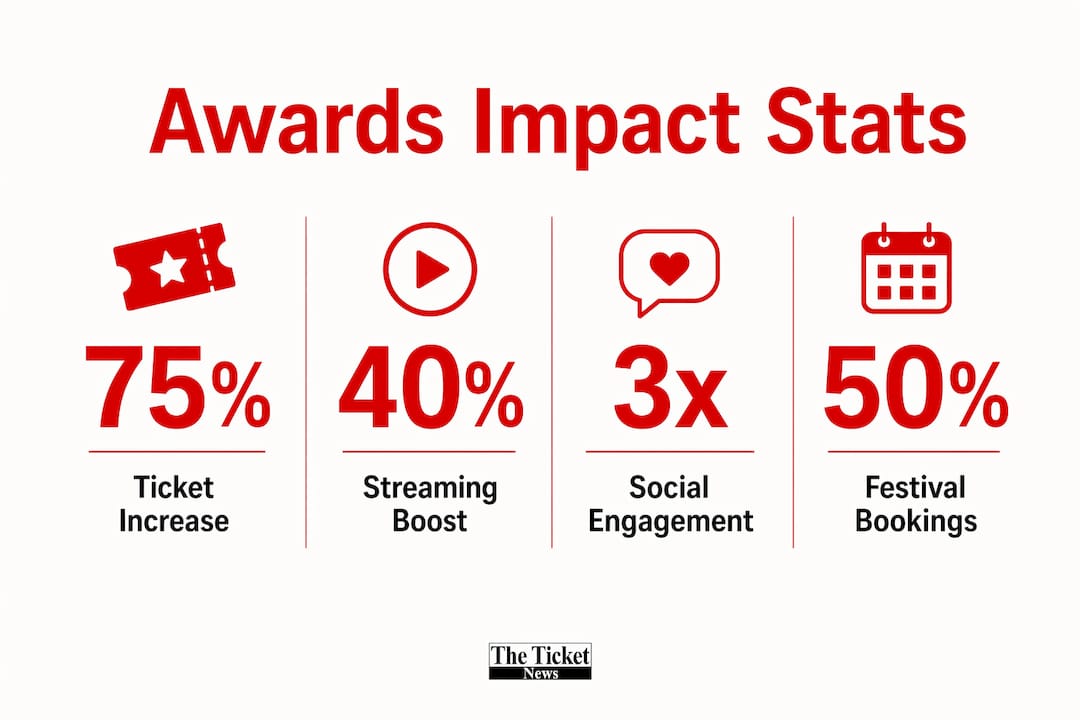
Country music festivals already outperform other genres in audience retention. CMA Fest draws approximately 100,000 daily fans, with attendance growing up to 12% year over year. That growth rate reflects the compounding effect of awards cycles feeding fan enthusiasm into festival seasons.
The sequence from awards to attendance plays out in a predictable pattern:
- Awards broadcast: An artist wins or performs at the CMA or ACM Awards, reaching millions of viewers.
- Streaming surge: The artist’s catalog sees an immediate spike in streams, introducing them to new listeners.
- Social media amplification: Clips from the ceremony circulate across platforms, extending reach beyond the broadcast audience.
- Ticket demand increase: Fans who discovered the artist online search for upcoming live dates, with festival tickets often the most accessible option.
- Presale sellouts: Festivals featuring award-winning artists frequently see their presale windows close faster than in prior years.
Fan enthusiasm shaped by recent awards also changes behavior at the festival itself. Attendees plan their schedules around award-winning acts, arrive earlier, and stay longer. That extended attendance increases food, beverage, and merchandise revenue for festival operators, making the economic case for booking award-recognized artists even stronger.
How awards influence industry trends seen at festivals
Awards do not just reflect the current state of country music. They actively set the direction the genre moves next. Awards and festivals shape public taste by curating lineups that spotlight new artists and emerging trends, functioning as co-producers of cultural direction rather than passive mirrors of it.
The rise of crossover country, blending hip-hop production, pop melodies, and traditional storytelling, gained mainstream legitimacy partly through ACM and CMA recognition. Once those crossover artists won awards, festivals had both the audience data and the industry cover to book them prominently. Festival programmers follow award trends because their audiences already do.
| Trend spotted at awards | Festival programming response | Fan impact |
|---|---|---|
| Crossover country artists winning major categories | Main stage bookings for genre-blending acts | Broader demographic attendance |
| Female artist nominations increasing | More balanced gender representation in lineups | Higher engagement from female fans |
| Regional acts earning national nominations | Secondary market festivals gaining credibility | Decentralized festival growth |
| Streaming-native artists winning New Artist awards | Younger-skewing festival programming | Increased presale activity from under-35 fans |
Balancing global stars with local talent is one of the hardest decisions festival organizers face. Global superstars do not guarantee local artist success. Festivals that rely entirely on award-winning headliners risk losing the regional identity that makes them distinct. The strongest festivals use awards as a filter, not a formula.
Pro Tip: When reviewing your festival lineup, check whether your mid-tier and emerging slots reflect the same genre trends the awards are recognizing. If the ACM is spotlighting Appalachian-influenced artists and your lineup has none, you are already behind the curve.
What is the economic and cultural impact of awards and festivals?
Hosting major country music awards generates substantial economic activity for the cities and regions involved. The 2025 Mercury Prize delivered £1.4 million to the North East UK economy through hospitality revenue, tourism, and event-related spending. Country music awards at scale, like the CMA Awards in Nashville or the ACM Awards in Las Vegas, produce economic effects many times larger.
The economic benefits extend well beyond the ceremony itself:
- Hotel and hospitality revenue: Award attendees, industry professionals, and fans fill hotels for multiple nights surrounding the event.
- Restaurant and retail spending: Visitors spend across local businesses, creating a multiplier effect beyond direct event revenue.
- Job creation: Production crews, security, catering, and transportation all see increased demand during awards weeks.
- Long-term tourism: Cities associated with major awards build reputations that attract return visitors and future events.
Regional hosts are now actively pursuing awards to build entertainment infrastructure. St. John’s will host the 2027 Canadian Country Music Awards, a deliberate move to establish the city as a country music destination and test ticket demand in a market outside the traditional coastal centers. That strategy reflects a broader industry shift toward decentralizing country music events.
Festivals and awards are not just entertainment. They are economic development tools that reshape how cities and regions position themselves in the national cultural conversation.
The cultural branding effect is equally significant. Cities that host recurring awards or festivals become synonymous with country music in ways that attract year-round tourism, media coverage, and artist residencies. Nashville’s identity as Music City is inseparable from its history of hosting the CMA Awards. Smaller cities that secure awards hosting rights are making the same long-term bet.
Lesser-known artists gain disproportionate exposure from performing at high-profile festivals with strong reputations, without necessarily commanding high fees. That exposure leads to increased public interest and career opportunities that compound over time. The cultural value of that artist development pipeline benefits the entire genre, not just the individual acts.
Key Takeaways
Country music awards are the primary driver of festival lineup decisions, attendance growth, and industry trend adoption across the genre.
| Point | Details |
|---|---|
| Awards drive bookings | CMA and ACM nominations give artists immediate leverage in festival lineup negotiations. |
| Attendance follows recognition | Award-winning artists increase festival draw, with CMA Fest growing up to 12% year over year. |
| Trends flow from ceremonies to stages | Festival programmers adopt genre trends that awards bodies recognize first. |
| Economic impact is measurable | Hosting awards generates direct hospitality revenue and long-term tourism for host cities. |
| Decentralization is accelerating | Secondary markets like St. John’s are actively pursuing awards to build regional industry relevance. |
The Ticket News view: awards and festivals need each other more than ever
The conventional wisdom says awards follow the market. The reality is the opposite. Awards create the market, and festivals cash in on what awards build.
At The Ticket News, we track festival lineups and ticket pricing across hundreds of country music events every year. The pattern is consistent. The weeks following the CMA and ACM Awards are when presale activity spikes most sharply. Fans who watched an artist win on television want to see that artist live, and festival tickets are often the most affordable and accessible way to do that.
What concerns me about the current trajectory is the risk of homogenization. When every major festival chases the same award-winning headliners, the lineups start to look identical. The festivals that stand out in 2026 and beyond will be the ones that use awards as a starting point, not an ending point. They will book the nominees before they win, the regional acts before they go national, and the crossover artists before the genre fully accepts them.
The shift toward streaming platforms for awards coverage is also changing how festivals measure success. Younger fans discover artists through award show clips on social media, not through broadcast television. Festivals that understand this are already building their programming around streaming-native artists who have strong digital followings but limited live touring history. That is where the real opportunity sits for organizers willing to look past the trophy.
The decentralization of awards to cities like St. John’s is the most underreported story in country music right now. When awards move to new markets, festivals follow. And when festivals follow, entire regional economies shift. That is a bigger story than any single win on any single night.
— The Ticket News
Country music festival tickets and coverage at The Ticket News
Country music fans planning their 2026 festival season have a lot of ground to cover, from award-season announcements to lineup reveals and ticket on-sale dates.

The Ticket News tracks all of it in one place. Whether you are looking for classic festival experiences across the country or trying to catch an award-winning artist before their ticket prices climb, The Ticket News gives you the lineup news, pricing context, and ticket options you need. Check the latest CMA Fest ticket coverage and set up alerts so you never miss a presale window for the artists awards season puts on your radar.
FAQ
How do country music awards affect festival lineups?
Award wins and nominations signal to festival bookers that an artist has mainstream credibility and fan demand. Artists with recent CMA or ACM recognition consistently earn higher billing and better time slots at major festivals.
Do award-winning artists increase festival ticket sales?
Award recognition drives streaming spikes and social media engagement that convert directly into ticket purchases. CMA Fest attendance has grown up to 12% year over year, partly driven by the draw of award-recognized performers.
Why do festivals book award nominees before the ceremony?
Booking nominees before the ceremony locks in lower fees before a potential win inflates the artist’s market value. Festival organizers who track nomination announcements closely can secure rising talent at a significant cost advantage.
What economic benefits do country music awards bring to host cities?
Hosting major awards generates hospitality revenue, tourism spending, and job creation for local economies. The 2025 Mercury Prize, as a comparable example, delivered £1.4 million to its host region through event-related economic activity.
How are awards changing country music festival trends in 2026?
Awards are spotlighting crossover artists and streaming-native acts, pushing festivals to diversify their programming beyond traditional country formats. Secondary markets are also gaining relevance as awards decentralize away from Nashville and Las Vegas.
Leave a Reply