Ticket resale markets are secondary marketplaces where tickets originally sold at face value are resold by individuals, brokers, or companies at prices set by demand, platform rules, and seller choice. Understanding how ticket resale markets work is the difference between paying a fair price and overpaying by hundreds of dollars. Platforms like StubHub, SeatGeek, and Ticketmaster’s own resale program connect buyers and sellers after the primary sale closes. Fees, buyer guarantees, and legal frameworks all shape what you pay and what sellers receive. This guide covers pricing mechanics, legal regulations, platform operations, and safe buying and selling practices.
How do ticket resale markets determine ticket prices?
Ticket prices in the secondary market are set by individual sellers reacting to real-time demand, not by venues or promoters. The original face value is fixed at the primary sale by the promoter or venue based on projected demand. After that, the secondary market takes over, and prices move freely based on what buyers are willing to pay.
Resale ticket prices fluctuate in real time as demand shifts after the original sale. A sudden spike in an artist’s popularity, a viral moment, or a tour announcement can push prices sharply upward within hours. Conversely, poor weather forecasts, competing local events, or a slow-selling show can cause prices to drop below face value as the event date approaches.
Several factors drive price movement in the resale market:
- Artist popularity and tour scarcity: A sold-out Taylor Swift or Beyoncé show commands far higher resale premiums than a mid-tier act with available primary inventory.
- Seat location: Floor seats and front sections consistently trade at multiples of face value. Upper-deck seats in the same venue may sell below face value for the same show.
- Event timing: Prices typically peak when tickets first sell out, then soften in the weeks before the event, and sometimes spike again in the final 48 hours.
- Local demand: A show in a smaller market with fewer venues can drive higher resale prices than the same artist playing a major arena city.
- Platform algorithms: Resale platforms use AI-driven pricing tools to suggest listing prices to sellers based on comparable sales, seat quality, and days remaining before the event.
One counterintuitive fact: concertgoers saved an estimated $202 million buying below face value on the secondary market in 2024. That figure proves resale is not always more expensive. Presale holders who can no longer attend and sellers needing quick cash often list below face value, creating real savings opportunities for patient buyers.
Pro Tip: Monitor resale prices for your target event starting four to six weeks out. Prices often soften in the final week as sellers get anxious about unsold inventory. Use The Ticket News guide on tracking ticket price history to spot the right window.
What legal regulations apply to ticket resale markets?
Ticket resale regulation varies sharply by country, and knowing the rules in your market protects you as both a buyer and a seller.
In the United States, ticket resale is largely unregulated at the federal level. Most states treat tickets as personal property, which means sellers can list them at any price without a legal cap. This free-market approach produces the wide price swings you see on platforms like StubHub and SeatGeek. A handful of states have anti-scalping statutes, but enforcement is inconsistent and penalties are rarely applied to online platforms.
The United Kingdom operates under a stricter framework. UK ticket resale is governed by the Consumer Rights Act 2015 and the Digital Economy Act 2017, which require platforms to disclose the face value of tickets, the seat location, and any restrictions on resale. These laws give buyers statutory remedies if a ticket is misrepresented. As a result, UK-based resale platforms carry more legal accountability than their American counterparts.
Consumer protection laws in the UK transform resale platforms into regulated entities with responsibilities for ticket authenticity and transparency, elevating buyer confidence.
Key regulatory distinctions buyers and sellers should know:
- US: No federal price cap; sellers set prices freely; buyer protections depend on platform policy, not law.
- UK: Mandatory disclosure of face value and seat details; statutory remedies for misrepresented tickets.
- Artist-controlled tools: Ticketmaster’s Face Value Exchange restricts resale to the original purchase price when an artist opts in. This curbs price inflation but requires artist participation to activate.
The legal landscape is shifting. Regulators in both the US and UK are examining whether platform fees and speculative ticket buying harm consumers. Staying informed about these changes matters whether you are buying tickets resale or listing them for sale.
How do ticket resale platforms operate and generate revenue?
Resale platforms operate as marketplaces connecting buyers and sellers without owning any ticket inventory themselves. The platform provides the technology, fraud prevention, payment processing, and buyer guarantees. In exchange, it takes a percentage cut from every transaction.
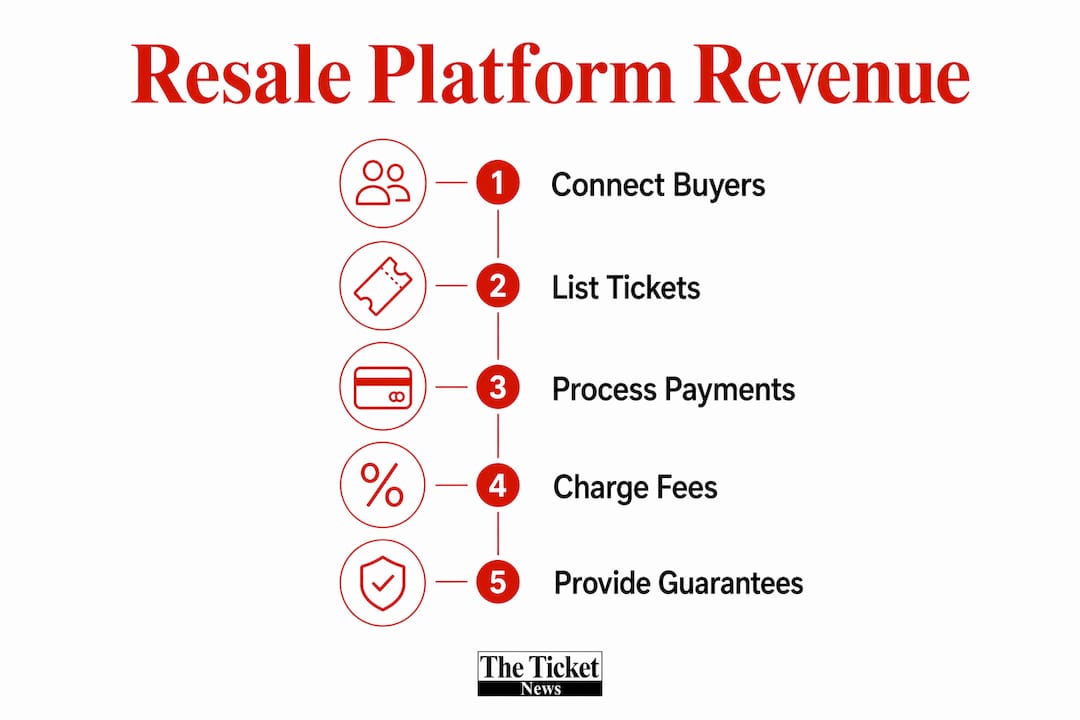
StubHub reported a take rate of approximately 19% on $2.4 billion in gross merchandise value in Q3 2025. That 19% comes from fees charged to both the buyer and the seller on each transaction. The buyer pays a service fee added at checkout, and the seller pays a separate seller fee deducted from their payout.

| Fee type | Who pays | Typical purpose |
|---|---|---|
| Buyer service fee | Buyer | Payment processing, fraud prevention, buyer guarantee |
| Seller fee | Seller | Platform listing, payment processing, payout handling |
| Delivery fee | Buyer | Digital transfer or physical shipping costs |
Ticket resale fees cover payment processing, fraud prevention, customer support, and buyer guarantee protections. These costs are real, and they explain why the all-in price at checkout is often 20–30% higher than the listed ticket price. Always check the all-in total before comparing prices across platforms.
Reputable platforms also offer verified ticket transfers through the venue’s official app or Ticketmaster’s transfer system. This verification step is what separates legitimate resale sites from risky off-platform transactions. Buying directly from a stranger on social media or Craigslist removes every protection the platform provides.
Pro Tip: Enable “all-in pricing” filters on SeatGeek or StubHub before you compare listings. The base price without fees is misleading. All-in pricing shows the true cost per ticket so you can make an accurate comparison.
What are best practices for buying and selling tickets on resale markets?
Safe participation in the resale market comes down to using the right platforms, timing your moves well, and understanding what protections you actually have.
For buyers: how to buy resale tickets safely
- Buy from verified platforms only. StubHub, SeatGeek, and Ticketmaster’s resale program all offer buyer guarantees. Verified platforms transfer tickets using the venue’s official app and provide ticket replacement or refunds if something goes wrong.
- Confirm the seat details before purchasing. Check the section, row, and seat number against the venue’s seating chart. Resale listings occasionally contain errors that are hard to dispute after purchase.
- Calculate the all-in price. Add buyer fees and delivery costs before comparing listings. A ticket listed at $80 with $30 in fees costs more than a $100 listing with $5 in fees.
- Check the transfer method. Tickets transferred through Ticketmaster’s official system or a venue’s app are the safest. PDF tickets and screenshots carry higher fraud risk.
- Know the refund policy. Most platforms offer refunds only if the event is canceled, not postponed. Read the policy before you buy.
For a full walkthrough, The Ticket News has a detailed guide on buying resale tickets safely that covers every step from search to entry.
For sellers: how to sell tickets online without losing money
Selling on the secondary market carries its own risks, particularly if you bought speculatively hoping to profit.
- List early on a reputable platform. Prices are typically highest right after a show sells out. Early listings capture peak demand.
- Price competitively from the start. Overpriced listings sit unsold while the market moves past you. Check comparable seats before setting your price.
- Account for seller fees in your target payout. If a platform charges a 15% seller fee, you need to list at a price that covers that cost and still meets your goal.
- Avoid holding out for last-minute spikes. Last-minute price surges happen, but they are not guaranteed. Unsold tickets the day after an event are worth nothing.
- Use platform tools. SeatGeek and StubHub both offer suggested pricing tools that adjust recommendations based on real-time comparable sales.
The benefits of ticket reselling extend to buyers too. When sellers list below face value to move tickets quickly, informed buyers capture real savings. Staying active on resale platforms in the days before an event is one of the most reliable ways to find deals.
Key takeaways
The ticket resale market rewards informed buyers and sellers who understand pricing dynamics, platform fees, and the legal rules that govern each transaction.
| Point | Details |
|---|---|
| Prices move in real time | Resale prices react to demand shifts, artist news, and event timing, not face value. |
| Legal rules vary by country | The US allows free-market pricing; the UK requires face value disclosure and statutory buyer remedies. |
| Platforms charge both sides | Buyers and sellers each pay fees, making all-in pricing the only accurate cost comparison. |
| Verified transfers protect buyers | Official app transfers and buyer guarantees are the strongest protection against fraud. |
| Resale can save money | In 2024, buyers saved an estimated $202 million purchasing below face value on the secondary market. |
The Ticket News take on resale markets
The most common mistake fans make is treating the resale market as a fixed, overpriced system to avoid. The reality is more nuanced. Resale markets are fluid, and the same event can offer both the worst deals and the best deals depending on when you look.
The technology side of resale is moving fast. AI pricing algorithms now adjust suggested listing prices in near real time, which means sellers who set a price and walk away are often undercut within hours. Buyers who check prices daily in the week before an event frequently find listings that drop well below what was available at the primary sale.
The legal picture is also shifting. The UK’s framework under the Consumer Rights Act 2015 is the clearest model for what buyer protection in resale markets can look like. The US is moving slowly toward greater transparency requirements, but platform-level guarantees currently do more practical work than any statute.
The Ticket News believes the most underused tool in resale is patience. Most buyers panic-buy the moment they see a show announced. Sellers panic-sell the night before. The fans who wait, watch price trends, and act at the right moment consistently get better outcomes. That is not luck. It is understanding how the market actually works.
— The Ticket News
Ticket News: your resource for resale market insights
The Ticket News covers the full picture of concert and event ticketing, from primary sales to secondary market trends.

Whether you are trying to find the best price on a sold-out show or figure out the right moment to list your extra tickets, The Ticket News has the guides you need. Check out the concert ticket resale checklist for a step-by-step breakdown of safe buying practices. For last-minute deals, the guide on finding cheap tickets last minute covers the exact timing and platform strategies that work. Visit theticketnews.com for ongoing coverage of resale market trends, platform updates, and event-specific ticket guides.
FAQ
What is a ticket resale market?
A ticket resale market is a secondary marketplace where tickets originally sold at face value are resold by individuals or brokers at prices determined by demand and seller choice. Platforms like StubHub and SeatGeek are the most widely used resale marketplaces in the US.
Are resale tickets always more expensive than face value?
No. In 2024, concertgoers saved an estimated $202 million buying below face value on the secondary market. Sellers who need to offload tickets quickly often list below the original price.
Is it legal to resell tickets?
In the US, ticket resale is legal in most states, with sellers free to set any price. In the UK, resale is legal but regulated under the Consumer Rights Act 2015, which requires platforms to disclose face value and seat details.
How do resale platforms make money?
Resale platforms charge fees to both buyers and sellers on each transaction. StubHub, for example, reported a take rate of approximately 19% on gross merchandise value, covering payment processing, fraud prevention, and buyer guarantees.
How can I avoid scams when buying resale tickets?
Buy only from established resale platforms that use official venue app transfers and offer a buyer guarantee. Avoid purchasing tickets through social media or informal channels, where no fraud protection exists.
Leave a Reply