Ticket marketplaces are online platforms that connect buyers and sellers of event tickets outside the primary box office, giving fans a second chance at seats they missed or a way to offload tickets they can no longer use. The role of ticket marketplaces has grown from a niche workaround into a central part of how Americans access live music. Platforms like StubHub, SeatGeek, and TickPick now serve millions of concert fans each year. They deliver three things the primary market often cannot: price competition, seat availability after sellouts, and built-in buyer protections that street resale never offered.
How do ticket marketplaces work?
Ticket marketplaces operate as two-sided platforms. Sellers list tickets at prices they set, and buyers browse, compare, and purchase with a platform guarantee backing the transaction. That guarantee is the key difference from buying off a stranger on social media. Ticket marketplaces provide money-back guarantees, fraud prevention, and delivery verification, lifting resale from shadowy street transactions into transparent, secure e-commerce.

Sellers on these platforms fall into two broad categories. The first is individual fans who bought tickets and can no longer attend. The second is professional brokers who buy in bulk and list across multiple platforms simultaneously. Both types coexist on most major marketplaces, which means the same seat may appear at very different prices depending on who listed it.
The mechanics behind a typical purchase work like this:
- Search and filter: You enter the event, date, and venue. The platform returns available listings sorted by price, section, or row.
- All-in pricing view: Some platforms show the final price including fees upfront. Others reveal fees at checkout. This difference matters more than most buyers realize.
- Seller verification: The platform confirms ticket validity before completing the sale, either through barcode scanning or direct integration with the venue’s ticketing system.
- Delivery: Tickets arrive digitally via transfer or a mobile barcode, usually within minutes of purchase.
Professional resellers use API-driven pricing tools that deliver real-time market data and inventory feeds, letting them update listings automatically before most casual buyers even open the app. Knowing this helps you understand why prices on a listing can shift within hours of an event announcement.
What are the economic benefits of ticket marketplaces?
The economic case for ticket resale platforms is stronger than most fans expect. 62% of resale tickets sold in 2024 went below the original box office price, saving consumers $414 million in total, with an average savings of $40 per ticket. That figure covers 10.4 million tickets. The takeaway is direct: the resale market is not purely a price-gouging machine. For most events, it is a discount channel.
The benefits extend beyond individual savings:
- Seat fill rates: Venues lose revenue when seats go empty. Roughly 50% of concert seats go unsold without a functioning resale market to redistribute them. Secondary marketplaces compensate for that inefficiency, benefiting venues, artists, and fans alike.
- Price competition: When resale platforms compete with primary sellers, it pressures the primary market to price more carefully. A fan who can find a floor seat on TickPick for less than face value has real leverage.
- Market liquidity: Only 2% of concert events sell out as of 2026. That means the vast majority of shows have accessible tickets available through primary or secondary channels without inflated prices.
The impact of ticket trading on the broader live event economy is real and measurable. Resale does not just benefit buyers who missed the on-sale. It creates a functioning secondary price signal that tells venues and promoters how demand is actually distributed across sections and dates.
How do ticket marketplace fees affect what you pay?
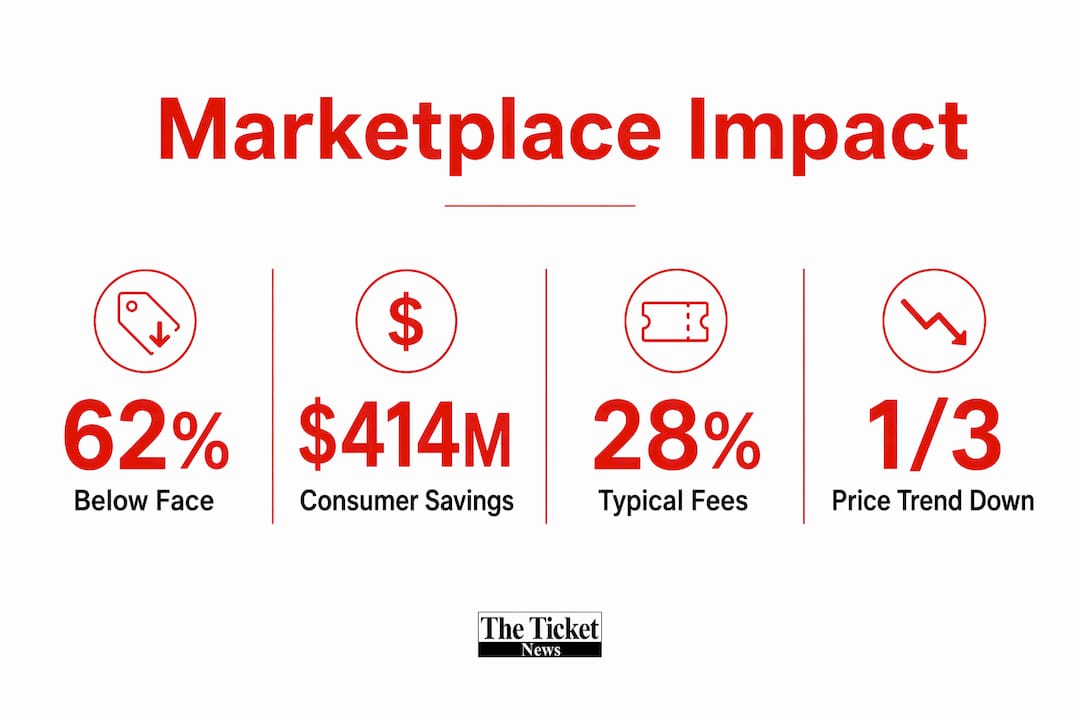
Fee structures across ticket resale platforms vary widely, and the difference can change your total cost by 25% or more. TickPick charges zero service fees to buyers, while StubHub fees average around 28%, making TickPick often 10–25% cheaper on identical listings. That gap is not trivial on a $150 ticket.
| Platform | Buyer Fee Structure | Typical Fee Range |
|---|---|---|
| TickPick | No buyer service fees | 0% |
| StubHub | Buyer service fee added at checkout | ~28% |
| SeatGeek | Buyer fee added at checkout | Varies by event |
| Vivid Seats | Buyer fee added at checkout | Varies by event |
All-in pricing is the standard you should demand. The TICKET Act, currently moving through Congress, would require all ticket sellers to display the full price upfront, including fees. Until that passes, you need to compare final checkout prices, not listed prices.
One more pricing fact that surprises most buyers: resale prices trend downward by roughly one-third as the event date approaches. Sellers who cannot attend would rather recover something than nothing. That means waiting until the week of the show often produces the best deal, especially for non-sellout events.
Pro Tip: Always click through to the final checkout screen before deciding which platform offers the better deal. A listing that looks $20 cheaper can end up $15 more expensive once fees load.
How has the role of ticket marketplaces evolved?
The function of ticketing websites has shifted dramatically over the past decade. Resale used to sit entirely outside the primary market. Today, the line between primary and secondary sales is dissolving fast. Here is how that evolution has unfolded:
- From street resale to digital platforms: Ticket resale moved online in the early 2000s with platforms like StubHub, replacing informal and often risky street transactions with verified digital listings.
- From separate market to integrated infrastructure: Resale is now integrated into the ticket lifecycle itself. Venues and promoters track tickets from initial purchase through resale and all the way to entry validation, giving them pricing control and fraud prevention in one system.
- From passive listing to real-time pricing: Platforms now use dynamic pricing models that adjust listings based on demand, remaining inventory, and time to event. This mirrors how airlines and hotels have priced for years.
- From fan-to-fan only to mixed seller ecosystems: Today’s major marketplaces host both individual sellers and professional broker networks, creating deeper inventory and tighter price competition.
- From opaque fees to transparency pressure: Consumers now expect all-in pricing. Legislation like the TICKET Act and growing cross-platform comparison behavior are pushing marketplaces toward pricing clarity, a shift that benefits every buyer.
Official resale channels integrated into primary platforms improve the fan experience by connecting resale to identity verification, payments, compliance, and entry validation. That is a meaningful upgrade over disconnected secondary marketplaces where a ticket’s legitimacy depends entirely on the seller’s honesty.
Practical tips for finding affordable concert tickets on marketplaces
Finding a good deal on a resale platform is a skill, not luck. These steps give you a real advantage:
- Compare all-in prices across at least three platforms. Check TickPick, SeatGeek, and StubHub for the same section and row. The price gap between platforms on identical seats is often 15–25%.
- Use price history tools. Tracking how a ticket’s price has moved over time tells you whether you are buying at a peak or a dip. The Ticket News covers how to track ticket price history for concerts in detail.
- Know your seller type. Fan-to-fan listings often price lower than broker listings. Some platforms let you filter by seller type, which is worth using.
- Buy close to the event date for non-sellouts. Resale prices drop as the show approaches for most events. If the concert is not sold out, waiting a week can save you real money.
- Verify the buyer guarantee before purchasing. Every major platform offers some form of protection, but the terms differ. Confirm the platform will replace or refund your ticket if something goes wrong.
- Avoid listings with vague seat descriptions. Legitimate sellers specify section, row, and seat number. Vague listings are a red flag.
Pro Tip: For a step-by-step walkthrough of safe resale ticket buying, The Ticket News has a dedicated guide covering every stage from search to entry.
Key takeaways
Ticket marketplaces deliver measurable savings, better seat access, and fraud protection that the primary market alone cannot provide, making them a necessary part of the modern concert experience.
| Point | Details |
|---|---|
| Most resale tickets are below face value | 62% of resale tickets in 2024 sold below box office price, saving buyers an average of $40. |
| Fee structures vary dramatically | TickPick charges zero buyer fees; StubHub averages 28%, so always compare final checkout prices. |
| Prices drop closer to the event | Resale prices fall roughly one-third as the event date nears, rewarding patient buyers. |
| Resale is now ticketing infrastructure | Platforms now track tickets from purchase through entry, improving fraud prevention and pricing control. |
| Most concerts are not sold out | Only 2% of concert events sell out, meaning accessible tickets exist for the vast majority of shows. |
The Ticket News take on where this market is heading
The Ticket News has tracked the ticket resale space closely, and the clearest trend is this: the old narrative that resale always harms fans is simply not supported by the data. The 2024 Senate testimony numbers are striking. More than 10 million tickets changed hands below face value in a single year. That is not a market exploiting fans. That is a market redistributing inventory that primary sellers priced too high or failed to move.
What does concern us is fee opacity. The gap between a $90 listed price and a $115 checkout total is a trust problem, not just a math problem. The TICKET Act is a step in the right direction, and we expect all-in pricing to become the standard within the next two years, whether by legislation or competitive pressure.
The integration of resale into primary platform infrastructure is the development worth watching most closely. When a venue can track a ticket from the moment it is purchased through every resale transaction and all the way to the turnstile, the entire ecosystem gets cleaner. Fraud drops. Pricing becomes more honest. Fans benefit. That is the direction this market is moving, and it is genuinely good news for anyone who buys concert tickets.
— The Ticket News
Find your next concert deal at The Ticket News
The Ticket News covers ticket marketplace news, pricing trends, and buying strategies so you always know where to find the best seats at the best price.

Whether you are hunting for last-minute deals or planning ahead for a major festival, our guides give you the edge. Start with our best sites for cheap tickets in 2026, which ranks the top marketplaces by real buyer cost. For a full breakdown of what to check before you buy, our concert ticket resale checklist walks you through every step. The Ticket News also publishes updated guides on saving on concert tickets throughout the year, so bookmark the site and check back before your next purchase.
FAQ
What is the role of ticket marketplaces for concert fans?
Ticket marketplaces give fans access to seats beyond the primary box office, offering price competition, availability after sellouts, and buyer protections like money-back guarantees. They serve as the secondary market where supply and demand reset ticket prices after the initial on-sale.
Are resale tickets usually more expensive than face value?
Not always. In 2024, 62% of resale tickets sold below the original box office price, saving consumers a combined $414 million. Prices also tend to drop as the event date approaches, especially for non-sellout shows.
How do ticket marketplace fees work?
Fees vary by platform. TickPick charges buyers no service fees, while StubHub adds fees averaging around 28%. Always compare the final all-in price at checkout rather than the listed price to get an accurate cost comparison.
Is it safe to buy tickets on resale platforms?
Major platforms like StubHub and SeatGeek include buyer guarantees covering fraud, invalid tickets, and last-minute cancellations. These protections make online resale significantly safer than buying from individuals outside a venue.
When is the best time to buy resale concert tickets?
Buying close to the event date often produces the lowest prices. Resale prices decline by roughly one-third as the show approaches for most non-sellout events, as sellers prioritize recovering some value over holding out for a higher price.
Leave a Reply