Group ticket discounts are special price reductions offered when multiple tickets are purchased together, designed to create value for both buyers and sellers at the same time. Understanding why group ticket discounts exist helps you make smarter decisions when planning a concert outing with family, friends, or a larger crew. The core reason is simple: selling more seats in a single transaction reduces costs for the event organizer and fills the venue faster. That efficiency gets passed back to you as a lower per-ticket price. Whether you are booking for a family of five or coordinating a group of 30 for a music festival, the logic behind group pricing works in your favor.
Why group ticket discounts exist: the core business case
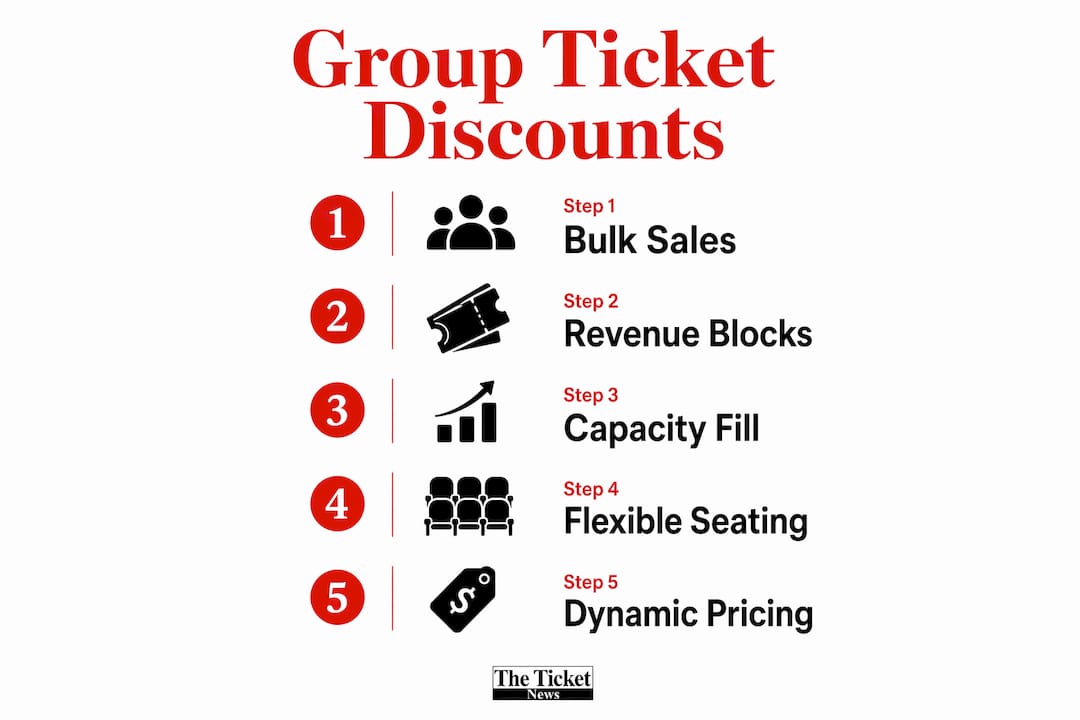
Group ticket discounts exist because bulk sales reduce the per-transaction cost for event organizers. Every individual ticket sale requires processing, customer service, and seat assignment. When one buyer purchases 15 tickets at once, the organizer handles one transaction instead of 15. That operational savings is real, and the discount reflects it.
The second driver is revenue certainty. A confirmed group booking guarantees a block of seats will sell, often weeks or months before the event. That predictability helps venues plan staffing, concessions, and logistics. Organizers are willing to accept a slightly lower price per ticket in exchange for that guaranteed revenue.
The third reason is capacity management. Venues and concert promoters need to fill seats. Group pricing strategies give organizers a tool to move large blocks of inventory at once, reducing the risk of empty seats on show night. A sold-out venue creates a better atmosphere and stronger word-of-mouth for future events.
How do group ticket discounts work for music events?
Group ticket pricing in the live music world typically follows a tiered structure based on group size and buyer demographics. Most venues and event organizers set a minimum group size, often 10 or more people, before any discount applies. Once you cross that threshold, the savings scale up as your group grows.
Tiered discount structures are common across transport and event providers, with examples including 60% off for children ages 4–12, 30% for young people ages 12–27, and 10% for adults in groups of 10 or more. That layered approach means a family group with kids and teens can see dramatically different savings on each ticket type. The total discount across the whole group adds up quickly.
Here is what typically shapes a group ticket offer at a music event:
- Minimum group size: Most programs start at 10 tickets, though some festivals require 20 or more.
- Demographic tiers: Children, students, and seniors often receive steeper discounts than adults.
- Booking window: Groups that book early access lower price tiers before inventory tightens.
- Seat block guarantees: Group buyers often receive confirmed adjacent seating, which individual buyers cannot guarantee.
- Payment flexibility: Many group contracts allow a deposit upfront with the balance due closer to the event date.
Pro Tip: Contact the venue’s group sales department directly rather than buying through a general ticketing platform. Group desks often have access to pricing and seating options that do not appear in the standard online checkout flow.
Dynamic pricing algorithms also affect group ticket costs. These systems adjust prices in real time based on demand and remaining inventory. A group booking that crosses multiple fare class tiers can trigger a price jump for the entire order. Booking early, before demand drives prices up, is the most reliable way to lock in the best group rate.
What benefits do group ticket discounts provide to event organizers?
Event organizers gain several concrete advantages from offering group discounts, and raw discount percentages are actually the least important of them. The real value lies in the operational and financial predictability that group sales create.
Here are the primary benefits organizers receive:
- Higher sales volume per transaction: One group sale of 25 tickets generates more revenue in a single interaction than 25 separate purchases, with far less administrative overhead.
- Guaranteed revenue blocks: Group contracts prioritize flexible payment terms, seat reservations, and price stability over raw discount depth. That structure locks in revenue early.
- Smoother logistics: When a group of 40 people sits together in a reserved block, ushering, security, and concession planning all become more predictable.
- Reduced customer service load: A single group coordinator handles questions and changes for the whole party, rather than 40 individual buyers contacting support separately.
- Lower no-show risk: Groups with deposits on file are far less likely to abandon their tickets than individual buyers who purchased on impulse.
Group offers often bundle in conveniences rather than deep discounts, focusing on service predictability and risk management for organizers. That means the discount you see as a buyer represents only part of the value exchange. The organizer is also buying certainty, and that trade works well for both sides.
What advantages do consumers gain from group ticket discounts?
The most obvious benefit is cost savings. Group travel almost always results in lower per-person costs compared to individual bookings when organized effectively. At a major music festival, even a 10% group discount across 20 tickets represents meaningful savings that can cover transportation or food costs for the outing.
Beyond price, group buyers gain logistical advantages that individual buyers simply cannot access:
- Guaranteed adjacent seating: Your whole group sits together, which is never guaranteed when 15 people book individually.
- Simplified coordination: One booking, one confirmation, one point of contact with the venue.
- Flexible payment terms: Many group contracts allow deposits with final payment due weeks later, giving your group time to collect money from everyone.
- Access to reserved sections: Some venues offer group buyers access to premium or reserved areas not available in the general sale.
- Name-change options: Group bookings are often managed as contracts with name-change flexibility, so if one person drops out, you can substitute another attendee.
Pro Tip: Designate one person in your group as the coordinator before you start the booking process. A single point of contact speeds up communication with the venue and reduces the chance of errors in seat assignments or payment.
The stress reduction factor is real and often undervalued. Coordinating 20 people to individually buy tickets, find each other in a venue, and sit in the same section is a logistical headache. A group booking solves all of that in one step.
How do pricing dynamics and technology influence group discount offers?
Dynamic pricing is the biggest variable in group ticket costs today. Ticketing platforms use algorithms that adjust prices based on real-time demand, remaining inventory, and historical sales patterns. For group buyers, this creates a specific risk that individual buyers do not face.
Booking engines raise prices for the whole group to the next fare tier if insufficient seats remain in cheaper fare buckets. That means a group of 20 trying to book when only 12 discounted seats remain will pay the higher price for all 20 tickets. The algorithm does not split your order across price tiers. It moves the entire group to the next available price level.
The table below shows how timing and group size interact with typical pricing outcomes:
| Booking timing | Group size | Likely pricing outcome |
|---|---|---|
| 8+ weeks before event | 10–20 people | Best available group rate, full seat selection |
| 4–7 weeks before event | 10–20 people | Moderate pricing, limited seat block options |
| 2–3 weeks before event | 20+ people | Higher tier pricing likely due to inventory depletion |
| Under 2 weeks | Any size | Standard or above-standard pricing, group discount may not apply |
Early group coordination is vital to lock in lower-tier pricing before inventory availability shrinks due to demand. The window for the best group rates at popular concerts closes faster than most buyers expect. At major events like music festivals or anniversary tours, that window can close months in advance.
Larger group sizes generally unlock greater discount percentages because vendors offer better deals to increase volume and fill capacity. That negotiating power grows with your headcount. A group of 50 has significantly more leverage with a venue’s group sales team than a group of 12.
Key takeaways
Group ticket discounts exist because they reduce transaction costs for organizers, guarantee revenue blocks, and fill venue capacity. These benefits make the discount a fair trade for both sides of the transaction.
| Point | Details |
|---|---|
| Core reason discounts exist | Bulk sales cut organizer costs and guarantee revenue, making lower per-ticket prices financially viable. |
| Tiered structures matter | Discounts scale by group size and demographics, so larger and mixed-age groups save the most. |
| Book early to save | Dynamic pricing depletes cheap fare tiers fast; early booking locks in the best group rates. |
| Non-price benefits are significant | Guaranteed seating, flexible payments, and name-change options add real value beyond the discount itself. |
| Group size drives leverage | Larger groups negotiate better rates and access exclusive deals not available to smaller parties. |
The Ticket News take on group pricing
Group discounts are genuinely useful, but most concert-goers misunderstand what they are actually buying. The discount percentage is the headline, but the real value is in the contract structure underneath it.
At The Ticket News, we have tracked group ticket pricing across dozens of music events and festivals. The pattern is consistent: groups that focus only on the discount number often miss the bigger wins. Guaranteed seating blocks, flexible payment schedules, and name-change options are worth more than an extra 5% off the face price in most real-world scenarios. A family of eight sitting scattered across a venue is not a good deal, even if each ticket was cheap.
The other misconception we see constantly is that group rates are always cheaper than buying individually. That is not always true. Dynamic pricing can push a group order into a higher fare tier if inventory is tight, meaning your group of 20 could end up paying more per ticket than someone who bought individually a week earlier. The solution is simple: book early, coordinate fast, and use the venue’s dedicated group sales channel rather than the general public checkout. That single habit change produces better outcomes than any discount-hunting strategy.
— The Ticket News
Planning your next group outing with The Ticket News
Finding the right group ticket deal for a music event takes more than a quick search. You need current pricing data, event-specific discount information, and a clear picture of what is available before you commit.

The Ticket News covers upcoming concerts, festivals, and live music events with detailed ticket pricing information, including group rate availability. From major touring acts to regional festivals like the Bristol Rhythm & Roots Reunion, you will find event details and smart ways to save on tickets for your whole crew. Check current listings at The Ticket News and start planning your group outing with accurate, up-to-date information before the best seats are gone.
FAQ
Why do venues offer group ticket discounts?
Venues offer group discounts because bulk sales reduce per-transaction costs and guarantee revenue blocks in advance. The operational savings from one group booking versus many individual sales make the discount financially worthwhile for the organizer.
What is the typical minimum group size for a concert discount?
Most music venues and event organizers require a minimum of 10 people to qualify for group pricing. Some larger festivals set the threshold at 20 or more attendees.
Can group tickets ever cost more than individual tickets?
Yes. Dynamic pricing algorithms can push a group order into a higher fare tier when discounted inventory runs out, making the per-ticket price higher than what an individual buyer paid earlier.
What non-price benefits come with group ticket purchases?
Group bookings typically include guaranteed adjacent seating, flexible payment terms with deposits, name-change options, and a dedicated group coordinator contact at the venue.
When is the best time to book group concert tickets?
Book at least 8 weeks before the event to access the lowest fare tiers. Early coordination locks in pricing before demand depletes the discounted inventory available to group buyers.