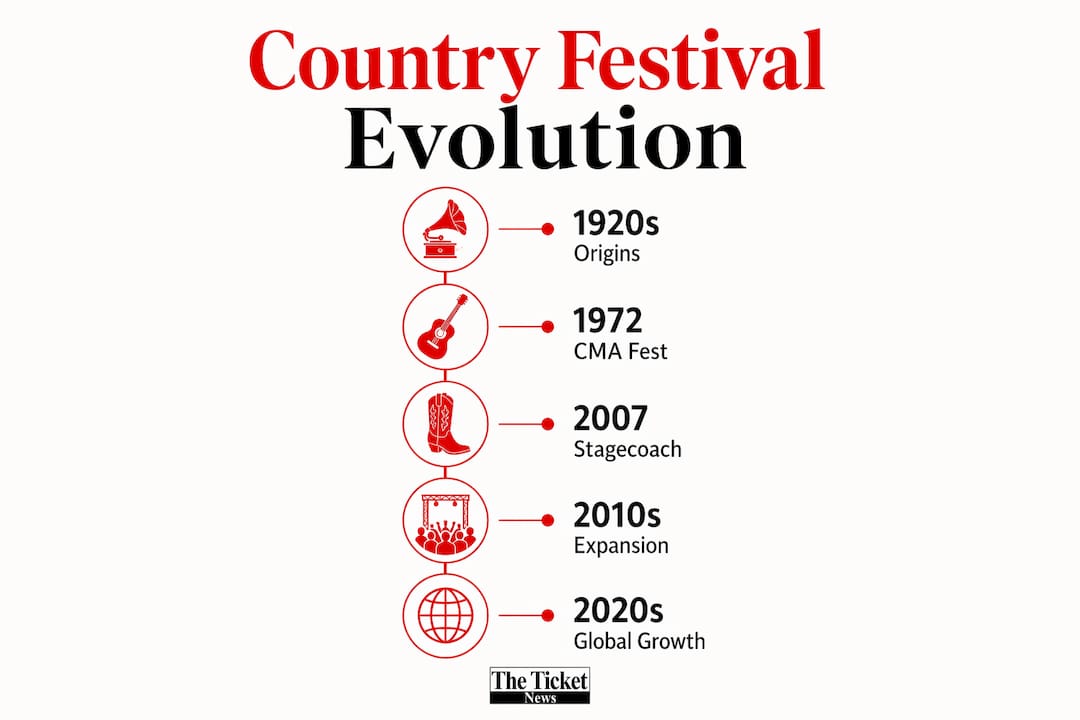
Country music festivals are defined as multi-day, multi-artist live events that celebrate the genre’s traditions while shaping its future. Understanding how country music festivals evolved reveals a story that runs from dusty agricultural fairgrounds in the early 1900s to sold-out stadium concerts drawing nearly 100,000 fans. The history of country music festivals is not just a timeline of bigger stages and louder speakers. It is a record of how a distinctly American art form built its community, spread its identity, and eventually crossed oceans. The Ticket News tracks this evolution closely, because knowing where these events came from helps fans appreciate what they attend today.
How did country music festivals originate?
Country music festivals grew directly from rural community life. In the early 20th century, agricultural fairs and barn dances served as the primary gathering points for working-class Americans in the South and Midwest. Local musicians played for neighbors, not ticket buyers. The atmosphere was informal, the audience was familiar, and the music was tied to the land.
Several forces pushed these small gatherings toward something larger:
- Radio broadcasts gave regional artists a national audience for the first time. The Grand Ole Opry, which launched in 1925 on WSM Radio in Nashville, turned local performers into household names across the country.
- Community identity made these events more than entertainment. Attending a barn dance or a county fair concert was a social act, a way of affirming shared values and regional pride.
- Grassroots booking meant that early lineups were built around local talent. There were no agents, no contracts, and no production budgets. The music came first.
- Single-evening formats eventually gave way to multi-day gatherings as demand grew and travel became easier. Fans who drove hours to see a favorite act wanted more than one night of music.
The multi-day festival format did not appear overnight. It developed as organizers recognized that extended events created stronger community bonds and more reliable revenue. The shift from one-night local shows to weekend-long events was the first major structural change in country festival history.
What technological changes shaped the transformation of country festivals?
Technology is the single biggest driver behind the scale of modern country music festivals. Without advances in staging, sound reinforcement, and crowd management, events drawing tens of thousands of fans would be physically impossible. The history of country music festivals is inseparable from the history of live event production.
The key technological and industry shifts happened in a clear sequence:
- Amplification and PA systems allowed artists to perform for crowds far larger than any barn could hold. Open-air events became viable once sound could carry across a field.
- Recorded music and radio created national fan bases before fans ever saw an artist live. By the time a performer arrived at a festival, the audience already knew every word.
- Multi-artist lineups became the standard format as promoters realized that a single headliner could not justify the growing production costs. Stacking the bill spread financial risk and broadened audience appeal.
- Extended festival durations followed naturally. A four-day event generates more ticket revenue, more merchandise sales, and more media coverage than a single-day show.
- Festival-as-marketing-platform became a deliberate industry strategy. Major country festivals are now used to debut unreleased singles, with artists timing new material to captive live audiences. That elevates the festival’s role from entertainment to career milestone.
Pro Tip: If you attend a major country festival, pay attention during headliner sets for songs you do not recognize. You may be hearing an unreleased track before it hits streaming platforms.
The industry shift toward festivals as marketing tools changed how record labels and artist managers think about touring. A festival slot is no longer just a performance. It is a launch event.
Which festivals best illustrate the evolution of country music events?
Two festivals stand above the rest as case studies in how the genre’s live event culture matured: CMA Fest and Stagecoach.
CMA Fest: from fan meetup to metropolitan event
CMA Fest, established in 1972 as Fan Fair, is the longest-running country music festival in the world. It now draws about 95,000 attendees annually across four days in Nashville. That number represents a transformation from its origins as a modest fan-artist meetup where fans could get autographs and shake hands with their favorite performers.
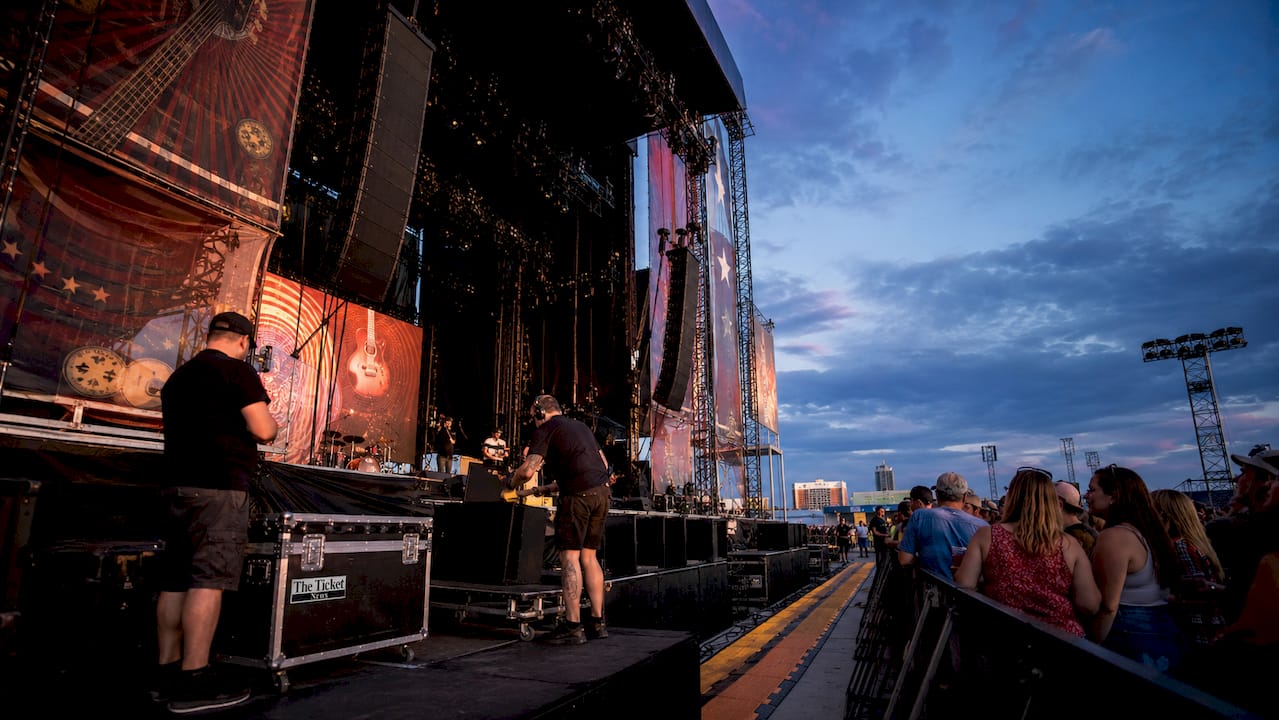
The festival’s structure today reflects decades of deliberate growth. Headline concerts fill Nissan Stadium each evening, but the daytime programming runs across multiple free outdoor stages throughout downtown Nashville. That layered format serves two audiences at once: the dedicated fan who buys a full ticket package and the casual visitor who wanders into a free set on Broadway.
Pro Tip: The free outdoor stages at CMA Fest are one of the most overlooked parts of the event. Many newcomers focus only on the stadium shows and miss the intimate artist access available throughout the city.
Stagecoach: scale, diversity, and economic power
Stagecoach Festival, launched in 2007, became the world’s highest-grossing country music festival with peak attendance of 80,000 before the pandemic. Held in Indio, California, it draws fans who would not traditionally identify as country listeners. The lineup blends traditional country with Americana, outlaw country, and pop-country crossover acts.
The economic footprint of Stagecoach extends well beyond ticket sales. Hotels, restaurants, and transportation providers across the Coachella Valley see measurable revenue spikes during festival weekend. That spillover effect is now a standard feature of major country festivals, and city governments actively compete to host them.
| Festival | Founded | Peak Attendance | Key Characteristic |
|---|---|---|---|
| CMA Fest | 1972 | ~95,000 annually | Longest-running; free and paid programming |
| Stagecoach | 2007 | 80,000 (pre-pandemic) | Highest-grossing globally; diverse subgenres |
How are country music festivals expanding internationally?
The global spread of country music festivals is one of the most significant country music festival trends of the past two decades. The genre was once considered a purely American export with limited international appeal. That assumption no longer holds.
Key developments driving international expansion include:
- Country to Country (C2C) has become the primary vehicle for bringing Nashville-style lineups to the UK and Europe. C2C acts as a cultural bridge that converts casual listeners into committed fans, building a market that did not exist a generation ago.
- Australian festivals have shown the strongest post-pandemic growth of any international market. Events like Gympie Music Muster and CMC Rocks attracted large crowds, with Australian festival revenue rising 70% post-pandemic. Streaming of country music in Australia surged 115% over three years, which created the audience base that festivals now serve.
- Intentional marketing shapes how international festivals position themselves. Festival organizers curate experiences that blend country music with fashion, food, and lifestyle branding. That approach turns a music event into a cultural destination, which attracts sponsors and media coverage beyond the genre’s traditional audience.
- Booking strategy determines whether international festivals succeed or fail. Regional festivals must secure major American headliners more than a year in advance to drive ticket sales and offset high production costs. Balancing those international names with local artists is the central operational challenge for any festival outside North America.
The impact of country music festivals on local artists is a live debate in markets like Australia, where fans want American headliners but industry advocates push for stronger domestic representation. That tension will define the next phase of international festival development.
Key Takeaways
Country music festivals evolved from informal rural gatherings into globally recognized cultural events by combining technological advancement, deliberate marketing, and deep community engagement.
| Point | Details |
|---|---|
| Rural origins define the format | Agricultural fairs and barn dances in the early 1900s established the communal model that modern festivals still follow. |
| Technology enabled scale | Advances in amplification, staging, and crowd management made events of 80,000–95,000 attendees physically possible. |
| CMA Fest and Stagecoach set the standard | These two festivals demonstrate how the genre moved from fan meetups to major economic and cultural events. |
| International growth is accelerating | C2C in Europe and a 70% revenue surge in Australian festivals confirm that country music’s live event culture is now global. |
| Festivals serve as marketing platforms | Artists and labels use major festival sets to debut unreleased material, making live performance a career strategy, not just a revenue stream. |
The Ticket News perspective: what the festival boom gets right and what it risks
The evolution of country music festivals is genuinely impressive. What started as neighbors gathering around a flatbed truck has become a global industry with nine-figure revenue and cultural influence that reaches London, Sydney, and beyond. That growth deserves recognition.
The part that concerns me is the tension between scale and authenticity. CMA Fest still offers free outdoor stages where a fan can stand three feet from an artist they love. That access is the soul of the original festival model. As events grow larger and ticket prices climb, that intimacy becomes harder to preserve. The country music awards ecosystem reinforces the commercial side of the genre, which is fine, but festivals that lose their grassroots character tend to lose their most loyal fans along with it.
The international expansion is exciting, but it creates a real risk for local artists in markets like Australia. When a festival’s entire marketing budget goes toward securing an American headliner, the domestic talent that built the local audience gets pushed to secondary stages or dropped from the bill entirely. That is a short-term commercial decision with long-term cultural costs.
My advice to anyone attending a country music festival for the first time: skip the main stage for at least one session and find the smallest stage on the grounds. That is where the genre’s history lives. The headliner will be on streaming tomorrow. The unknown act on the side stage might not get another shot.
— The Ticket News
The Ticket News: your source for country festival news and tickets
Country music festivals are moving faster than ever, with new lineups, international dates, and ticket releases dropping throughout the year. Staying current is the difference between securing your spot and watching a sold-out notice appear.

The Ticket News covers every major development in the country festival world, from CMA Fest ticket releases to emerging international events. Whether you are looking for affordable festival passes or trying to understand the full range of options before you buy, The Ticket News gives you the context you need to make a confident decision. Check the latest festival coverage and score discounted tickets before prices move.
FAQ
What are the origins of country music festivals?
Country music festivals originated from agricultural fairs and barn dances in the early 20th century. The Grand Ole Opry, launched in 1925, was pivotal in expanding the genre from local gatherings to a national audience.
Which is the longest-running country music festival?
CMA Fest, established in 1972 as Fan Fair in Nashville, is the longest-running country music festival. It now draws approximately 95,000 attendees annually across four days.
How did technology change country music festival culture?
Advances in amplification, staging, and crowd management allowed festivals to scale from small community events to massive multi-day gatherings. These same technologies enabled artists and labels to use festival sets as marketing platforms for new releases.
How are country music festivals growing internationally?
Festivals like Country to Country (C2C) in the UK and Europe, and events like Gympie Music Muster in Australia, have expanded the genre’s live event culture well beyond North America. Australian country festival revenue rose 70% post-pandemic, supported by a 115% surge in country music streaming.
What makes a country music festival experience worth attending?
The richest festival experiences combine headline stadium concerts with free outdoor stages and city-wide programming. CMA Fest, for example, offers intimate artist access through daytime events that many first-time attendees overlook entirely.