A standing ticket is defined as event entry without an assigned seat, formally known as a Standing Room Only (SRO) ticket, where holders stand in designated areas for the entire performance. SRO tickets grant access without a numbered seat assignment, placing you in a specific zone rather than a fixed chair. These tickets are standard at concerts, music festivals, and theatrical events worldwide. Venues like the Royal Albert Hall (home of the BBC Proms) and Broadway theaters have offered SRO options for decades, making them one of the most recognized budget-friendly entry formats in live entertainment. If you have ever wondered whether a standing room ticket is right for you, this guide covers everything from location and pricing to buying tips and real trade-offs.
What is a standing ticket and where does it place you in a venue?
A standing ticket, or SRO, places you in a designated standing zone rather than a fixed seat, and the exact location of that zone varies significantly by venue. Common placements include the area directly behind the last row of seated sections, along the side walls, or in a pit area close to the stage. Where you end up matters more than most first-time SRO buyers realize.
At Broadway theaters, standing zones are typically at the rear of the orchestra or mezzanine level. At the Royal Albert Hall during the BBC Proms, standing zones differ internally between the Arena (ground floor, close to the stage) and the Gallery (upper level, with a bird’s-eye view). Each offers a genuinely different experience despite both being “standing tickets.” A ground-floor Arena spot puts you in the thick of the crowd energy, while the Gallery gives you a panoramic sightline that some attendees prefer.
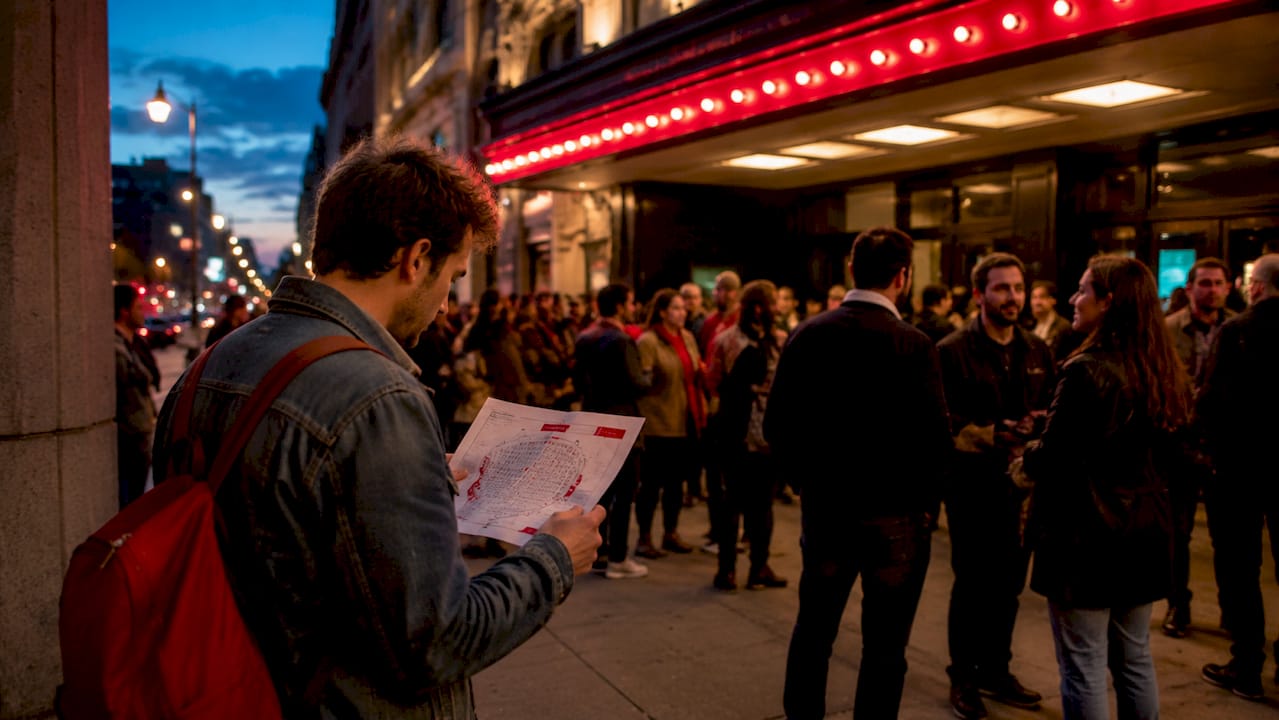
Concert venues follow a similar logic. General admission floor sections at arenas like Madison Square Garden or the United Center place standing ticket holders directly in front of the stage. This is the closest you can get to the performer without a VIP pass. Safety regulations cap occupancy in these zones, which is why SRO capacity is limited by fire codes and venue rules.
Pro Tip: Research the specific venue map before you buy. A standing ticket near the stage at a mid-size club is a completely different product from a standing ticket at the back of a 20,000-seat arena.
| Venue type | Typical standing zone location | Sightline quality |
|---|---|---|
| Broadway theater | Rear of orchestra or mezzanine | Moderate, full stage view |
| Royal Albert Hall (BBC Proms) | Arena (floor) or Gallery (upper) | Arena: close; Gallery: panoramic |
| Concert arena | General admission floor pit | Excellent, nearest to stage |
| Outdoor festival | Open field in front of stage | Variable, crowd-dependent |
How do standing ticket prices compare to seated tickets?
Standing tickets are consistently cheaper than seated options because no physical seat, guaranteed sightline, or fixed comfort level is provided. The price gap is not trivial. Broadway SRO tickets cost between $25 and $49, while orchestra seats for the same show regularly exceed $100. That represents savings of up to 80%, which is the single strongest financial argument for going SRO.
The BBC Proms offer one of the most famous examples of standing ticket pricing in the world. BBC Proms standing tickets cost just £8, released at 10:30 am on the day of each concert and capped at two per person. For context, premium seated tickets at the same venue for the same performance can cost ten times that amount. The price difference reflects the trade-off in comfort and certainty, not in the quality of the music you hear.
Venues price standing tickets lower for three practical reasons. First, no seat infrastructure is required. Second, standing zones carry inherent comfort trade-offs that reduce perceived value. Third, SRO tickets only open after all reserved seats sell out, meaning they serve as a secondary revenue stream rather than a primary product. For budget-conscious concert-goers, this pricing structure is a genuine opportunity. You can check out types of concert ticket discounts to understand how SRO fits into the broader spectrum of savings options available in 2026.
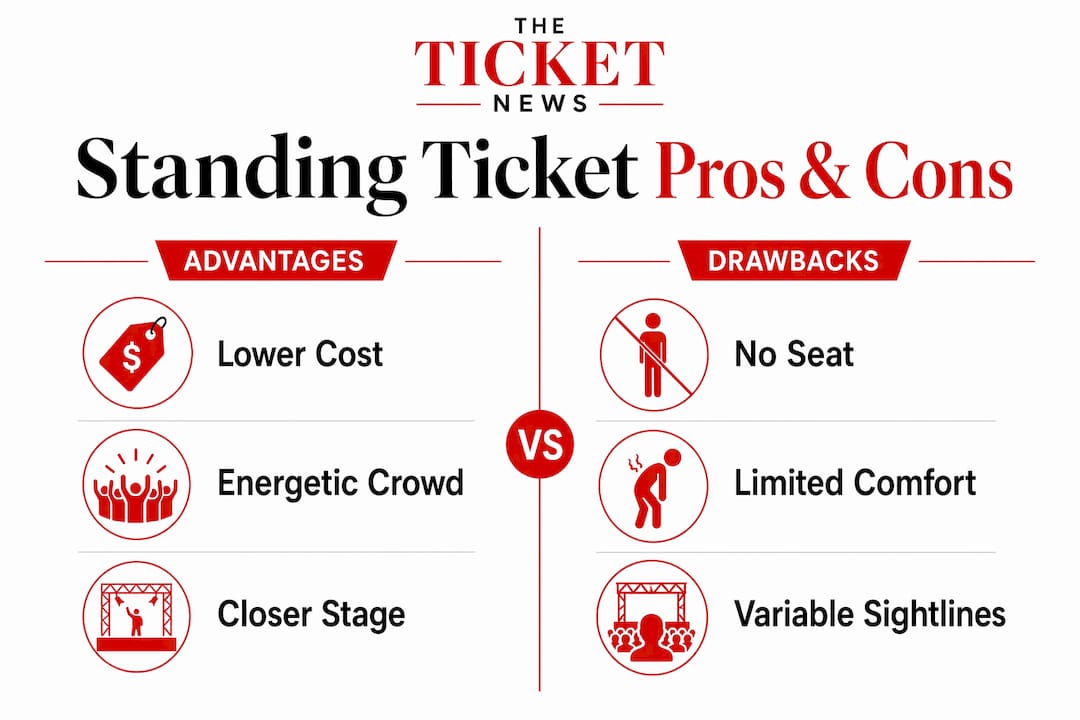
What are the advantages and drawbacks of standing tickets?
Standing tickets deliver a specific kind of concert experience. They are not a compromise for everyone. For the right attendee, they are the preferred option. For others, they create real frustration. Knowing which camp you fall into before you buy saves you from a miserable night on your feet.
The advantages are real and specific:
- Affordability. The price gap versus seated tickets is substantial, often 50% to 80% less for the same event.
- Proximity to the stage. Floor pit standing zones place you closer to the performer than any seated section except front-row orchestra.
- Crowd energy. SRO areas attract fans who prioritize atmosphere and closeness over comfort, creating a more intense, communal experience.
- Freedom of movement. You are not locked into one spot. You can shift position, move toward the sound you want, or find a better angle as the show progresses.
The drawbacks are equally real:
- Physical fatigue. Standing for two to three hours is genuinely tiring, especially on hard concrete floors. This is not a minor inconvenience for many people.
- Obstructed sightlines. Visibility can be blocked by taller attendees or by early arrivals who claimed the best spots before you arrived.
- Limited personal space. Crowded standing zones reduce your personal space significantly compared to a fixed seat with armrests and defined boundaries.
- No guaranteed spot. Unlike a seat with a row and number, your position in a standing zone depends entirely on when you arrive and how the crowd moves.
Pro Tip: Wear supportive shoes, not fashion footwear. A two-hour set on a concrete floor in flat shoes or heels will end your night early. Cushioned sneakers make a measurable difference.
The trade-off between atmosphere and comfort is the defining characteristic of SRO tickets. Energetic fans who want to be part of the crowd rather than observers of it consistently rate standing tickets as the superior experience. Attendees who prioritize sightlines, comfort, or attending with young children or elderly companions should choose seated options instead.
How to buy standing tickets and what to expect on the day
Buying a standing ticket follows a different process than purchasing a regular seat, and understanding that process prevents a wasted trip. SRO tickets are typically sold only at the box office on the day of the performance, with no online advance purchase and no seat reservations. This is a deliberate policy, not an oversight.
Here is what the buying process looks like in practice:
- Check availability in advance. Confirm with the venue whether SRO tickets will be offered for your specific event. Not every sold-out show releases standing tickets. Some venues only offer them once seated capacity is confirmed full.
- Arrive early. Same-day box office sales mean a physical queue forms before the box office opens. For high-demand shows, fans arrive hours ahead. Arriving 30 minutes before opening is rarely enough.
- Bring cash or card. Box office payment policies vary. Some venues are cash-only for day-of sales. Check the venue website the night before.
- Know the limit. Many venues cap SRO purchases at two tickets per person, as the BBC Proms does. Bringing a group of six and expecting to buy all six tickets at once is a common mistake.
- Enter and position yourself. Once inside, move directly to your preferred spot in the standing zone. The best positions go fast. Near the center barrier at a concert floor pit, or close to the stage at a theater, fills within minutes of doors opening.
- Plan for the full duration. You will be standing from doors open through the final encore. Factor in hydration, comfortable clothing, and a realistic assessment of your physical stamina.
For last-minute purchases, finding cheap concert tickets on the day of an event is a skill worth developing. Some venues release additional SRO allocations within an hour of showtime if seated sections remain partially empty. Knowing this can turn a sold-out show into an accessible one.
Key takeaways
A standing ticket grants entry to a live event without an assigned seat, trading comfort and guaranteed sightlines for lower prices, stage proximity, and crowd energy.
| Point | Details |
|---|---|
| Standing ticket definition | SRO tickets provide entry without a seat assignment; you stand in a designated zone for the event. |
| Price advantage | Standing tickets cost up to 80% less than seated options for the same event. |
| Location matters | Your experience varies significantly based on whether you are in a floor pit, rear zone, or upper gallery. |
| Buying process | Most SRO tickets are sold at the box office on show day only, with no online advance purchase. |
| Best suited for | Energetic fans who prioritize affordability and atmosphere over comfort and guaranteed sightlines. |
The honest case for and against standing tickets
At The Ticket News, we have covered thousands of events and spoken with countless concert-goers about their ticket choices. The standing ticket debate is one where conventional wisdom gets it slightly wrong in both directions.
The common criticism, that standing tickets are only for young fans who can handle discomfort, misses the point. The real question is not about age or fitness. It is about what you want from a live event. If you want to feel the bass in your chest, be surrounded by people who know every lyric, and have the freedom to react physically to the music, a standing ticket delivers that better than any seated section. No orchestra seat puts you in the middle of that energy.
The common praise, that standing tickets are always the best value, also oversimplifies things. A standing ticket at the back of a 15,000-seat arena is not a great deal at any price. You are far from the stage, surrounded by a crowd, and watching the show on a screen you could watch at home. In that context, a mid-tier seated ticket is genuinely better value.
The honest framework is this: standing tickets are worth it when the zone is close to the stage and the event is the kind where crowd participation is part of the experience. Rock concerts, pop shows, and festival headliners fit that profile. Classical performances, theatrical productions, and seated-format events are cases where the comfort and sightline of a seat justify the extra cost. We always recommend checking smart ways to save on concert tickets before committing to either option, because the best deal depends entirely on the specific event and venue layout.
— The Ticket News
Find your next standing ticket with The Ticket News
The Ticket News tracks ticket availability, pricing, and event updates across hundreds of concerts and festivals so you do not have to monitor a dozen box office websites manually.

Whether you are hunting for a last-minute SRO spot at a sold-out arena show or planning ahead for a festival floor experience, The Ticket News surfaces the options that match your budget and preferences. Browse current event listings, compare standing and seated ticket prices side by side, and get alerts when SRO allocations drop for high-demand shows. Visit The Ticket News to start searching for your next concert ticket today.
FAQ
What does SRO mean on a ticket?
SRO stands for Standing Room Only. It means your ticket grants entry to the event but does not include an assigned seat. You stand in a designated area for the full performance.
Are standing tickets cheaper than seated tickets?
Yes. Standing tickets typically cost significantly less than seated options, with savings of up to 80% compared to orchestra or reserved seats for the same event.
Can you buy standing tickets online in advance?
Most venues sell SRO tickets only at the box office on the day of the show, with no online advance purchase available. Policies vary by venue, so confirm directly before you plan your trip.
Is a standing ticket worth it for a concert?
A standing ticket is worth it if the standing zone is close to the stage and you want an energetic, immersive crowd experience. It is less suitable if you need guaranteed sightlines, seating comfort, or are attending with young children.
How early should you arrive for a standing ticket?
Arrive at least one to two hours before the box office opens for high-demand shows. SRO spots fill quickly once doors open, and the best positions in the standing zone go to those who queue earliest.