Concert ticket refunds are possible when an event is canceled, significantly rescheduled, or materially changed by the organizer. The industry term for this is a “consumer refund entitlement,” and it applies in specific circumstances only. Ticket sales are nearly always final; refunds are granted mainly when the event is canceled, not when you simply change your mind. Knowing exactly when you qualify, and what steps to take, is the difference between recovering your money and losing it entirely. This guide covers the full refund process for event tickets, from eligibility to escalation.
What are the typical refund policies for concert tickets?
Concert ticket refund policies fall into three categories based on event status: cancellation, postponement, and rescheduling. Each carries a different refund outcome, and confusing them is one of the most common and costly mistakes concert-goers make.
Cancellation is the clearest case. When an organizer cancels an event entirely, you are entitled to a full refund of the ticket price. For canceled events, refunds typically cover the ticket price plus service fees; if you receive a partial refund that excludes fees, you have grounds to contest it.

Postponement is trickier. Postponed events keep tickets valid, and refunds are often unavailable unless the event later cancels or the organizer explicitly offers a refund window. Many concert-goers assume postponement equals cancellation. It does not.
Rescheduling and major changes occupy a gray area. Consumers are entitled to a refund for major changes like venue shifts or headline act replacements, according to regulatory guidance. Whether that right is enforceable depends on the organizer’s terms and your jurisdiction.
| Event status | Refund likelihood | Notes |
|---|---|---|
| Full cancellation | High | Ticket price plus fees typically returned |
| Postponement | Low to medium | Refund window may open if event later cancels |
| Rescheduled date | Medium | Depends on organizer policy and refund window |
| Major change (venue, lineup) | Medium | Consumer rights may apply; document the change |
| Personal reasons | None | Personal reasons do not entitle you to a refund |
Primary sellers and secondary resale marketplaces operate under different rules. Ticket sellers generally require the original purchaser to claim refunds, and resale purchase policies vary widely. If you bought from a resale platform, check its buyer guarantee terms before assuming you have the same protections as a primary buyer. The resale market buyer protections differ significantly from what primary sellers offer.
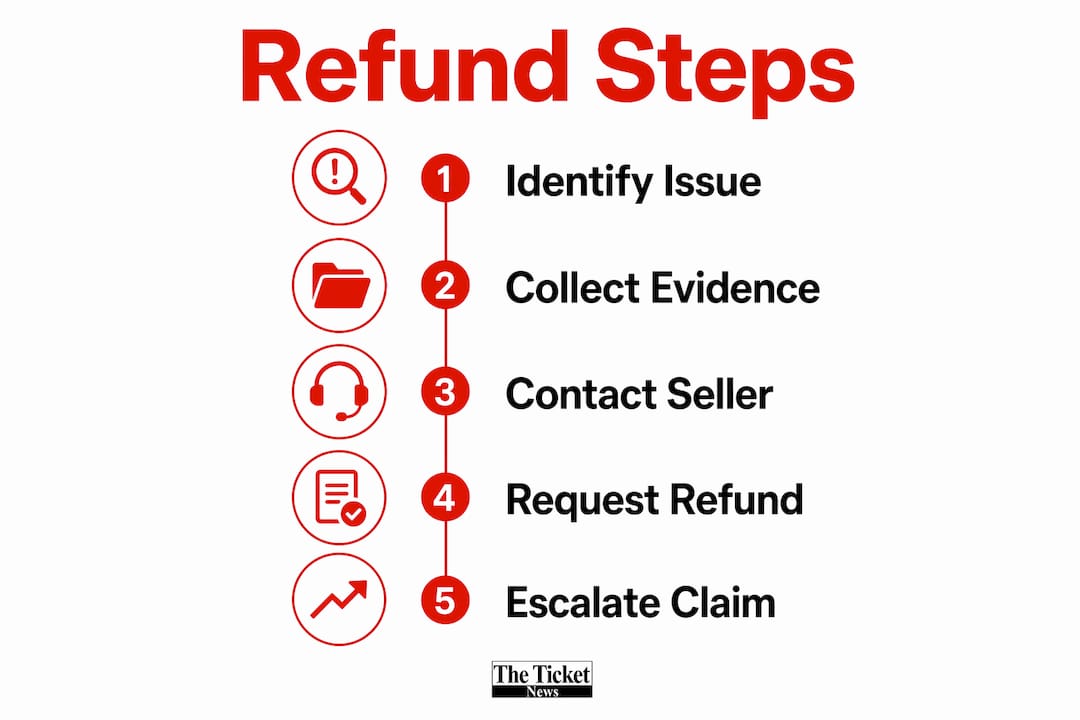
How to request a concert ticket refund: step-by-step
The refund process for event tickets follows a clear sequence. Skipping steps or acting out of order reduces your chances of success.
-
Locate the official cancellation or change notice. Find the email or announcement from the organizer or seller. This is your primary evidence. Screenshot it and save it to a dedicated folder.
-
Log in to your original purchase account. Go directly to the platform where you bought the ticket. Look for a refund request option in your order history. Many platforms activate a refund button automatically for canceled events.
-
Gather your documentation. You need your order confirmation number, the cancellation or rescheduling notice, and any correspondence with the seller. A clear paper trail is the single most effective tool in any dispute.
-
Submit your refund request within the window. Refund windows after rescheduling typically last 7 to 30 days. Missing this window often locks you out of any refund option entirely. Set a calendar reminder the moment you receive a rescheduling notice.
-
Follow up in writing. If you do not receive a confirmation within five business days, send a written follow-up via email. Keep the tone factual and polite. Reference your order number, the event name, and the date you submitted the original request.
-
Escalate to a supervisor or formal complaints channel. If the front-line response is unhelpful, ask to escalate. Most platforms have a formal complaints process. Reference the specific policy or consumer protection rule that supports your claim.
Pro Tip: Save every email, chat transcript, and screenshot with a date stamp. Platforms and organizers are far more likely to resolve disputes quickly when you present a complete, organized record of every interaction.
What to do when your refund request is denied
A denied refund request is not the end of the road. Several escalation paths exist, each with different risks and timelines.
-
Credit card chargeback under the Fair Credit Billing Act. The Fair Credit Billing Act allows disputing charges for canceled events if refunds are not provided within a reasonable time. Contact your card issuer, select “services not rendered” as the dispute reason, and submit your documentation. This is one of the most effective tools available to U.S. concert-goers.
-
Understand the chargeback risks first. Credit card chargebacks carry risks of account flagging and bans on ticket platforms, especially for claims deemed frivolous. Use this option only after exhausting direct channels with the seller.
-
File a complaint with the FTC or your state attorney general. The Federal Trade Commission accepts consumer complaints online. State attorneys general offices often have dedicated consumer protection units. Filing a complaint creates an official record and sometimes prompts a faster resolution from the seller.
-
Consider small claims court. For amounts worth pursuing, small claims court is a legitimate option. Bring your order confirmation, the cancellation notice, your refund request, and the denial. Courts in most states handle these cases without requiring an attorney.
-
Contact your state’s consumer protection office. Many states have specific ticket resale and consumer protection laws that go beyond federal minimums. A quick call to your state’s consumer protection office can clarify your local rights.
Pro Tip: Act within 60 days of the charge appearing on your statement for credit card disputes. Most card issuers enforce this window strictly, and missing it eliminates the chargeback option entirely.
Common mistakes that block concert ticket refunds
Most failed refund attempts share the same root causes. Avoiding these mistakes significantly improves your outcome.
-
Assuming personal reasons qualify. Illness, a scheduling conflict, or simply not wanting to go anymore does not create a refund entitlement. Organizer policies and consumer law both draw a hard line here.
-
Missing the refund window for rescheduled events. Missing narrow refund windows after reschedules often results in being locked into unusable tickets. This is one of the most common complaints in the industry. Read every rescheduling email carefully and act the same day.
-
Confusing ticket insurance with organizer refunds. Ticket insurance policies typically exclude coverage for cancellation by the promoter or venue. They protect against your personal inability to attend under strict conditions, such as documented illness or jury duty. Do not assume your insurance covers what the organizer should cover.
-
Filing a chargeback without attempting direct resolution first. Card issuers expect you to contact the merchant before disputing. Skipping this step weakens your chargeback case and increases the risk of a denial.
-
Applying primary seller rules to resale purchases. Resale platforms operate under separate buyer guarantee terms. Check the safe buying checklist before purchasing from a secondary market, so you understand exactly what protections apply before something goes wrong.
-
Failing to document the event change officially. A social media post from the venue is not sufficient evidence. You need an official email or announcement from the organizer or seller to support any refund or dispute claim.
Key Takeaways
Getting money back for concert tickets requires acting fast, documenting everything, and knowing which escalation path fits your situation.
| Point | Details |
|---|---|
| Cancellation triggers refunds | Full cancellations entitle you to a refund of ticket price plus service fees. |
| Refund windows are short | Rescheduled event refund windows typically last 7 to 30 days; act immediately. |
| Personal reasons don’t qualify | Only event-driven changes, not personal conflicts, create a refund entitlement. |
| Chargebacks carry real risks | Use the Fair Credit Billing Act dispute only after exhausting direct seller channels. |
| Documentation wins disputes | A complete paper trail of orders, notices, and correspondence is your strongest asset. |
The Ticket News take on concert refunds in 2026
The single most underrated piece of advice we give concert-goers is this: pay by credit card, every time. It is not about distrust of the seller. It is about having a legal backstop when things go wrong. The Fair Credit Billing Act chargeback right is a genuine consumer protection, and it has resolved disputes that direct seller communication could not.
That said, we have seen concert-goers misuse chargebacks and pay a real price for it. Getting flagged or banned from a major ticketing platform because of a disputed charge is a painful outcome, especially if you attend multiple events per year. The chargeback is a last resort, not a first move.
The other habit that consistently separates successful refund claims from failed ones is speed. The moment you receive a rescheduling or cancellation notice, open a folder, save the email, and submit your request that day. Waiting even a week can close the window permanently. The marketplace policies for 2026 have not become more generous; if anything, refund windows are tighter than they were two years ago.
One more thing: read the terms before you buy, not after something goes wrong. Force majeure clauses, which excuse organizers from refund obligations when cancellations result from events outside their control, are standard in most ticket contracts. Knowing this in advance helps you decide whether to buy ticket insurance, and which type actually covers your risk.
— The Ticket News
How The Ticket News helps you navigate ticket refunds
Buying concert tickets is exciting. Dealing with a canceled show is not. The Ticket News exists to give you the information you need before and after the purchase, so you are never caught off guard.

The Ticket News covers refund policy updates, buyer protection news, and event status alerts across major music festivals and tours. Whether you are buying from a primary seller or a resale platform, our guides walk you through the rules that apply to your specific situation. Start with our primary vs. resale ticket guide to understand which protections apply before you spend a dollar. When a show gets canceled or rescheduled, you will already know exactly what to do.
FAQ
Can I get a refund if a concert is rescheduled?
You may qualify for a refund during the organizer’s official refund window, which typically lasts 7 to 30 days after the rescheduling announcement. Missing that window usually means your ticket remains valid for the new date only.
Does ticket insurance cover concert cancellations?
Ticket insurance generally does not cover cancellations made by the promoter or venue. It covers your personal inability to attend under specific conditions, such as documented illness or a court summons.
What is the Fair Credit Billing Act and how does it help?
The Fair Credit Billing Act lets U.S. consumers dispute credit card charges for services not rendered, including canceled concerts where refunds were not issued. Contact your card issuer with your order confirmation and the cancellation notice to open a dispute.
Do resale ticket buyers have the same refund rights as primary buyers?
No. Resale platforms set their own buyer guarantee terms, which differ from primary seller policies. Always review the resale platform’s guarantee before purchasing, since your refund options may be more limited.
What happens if I file a chargeback against a ticket platform?
A successful chargeback returns your money, but repeated or frivolous disputes can result in account bans on the ticket platform. Use chargebacks only after direct resolution attempts have failed.