A presale code is a unique alphanumeric string that unlocks early ticket access before the general public sale opens. Concert fans who know how to find presale codes for new tours consistently beat the crowd to the best seats. These codes come from a handful of official sources: artist newsletters, credit card companies like Citi and American Express, and ticketing platforms like Ticketmaster. The process is more structured than most fans realize, and getting it right starts well before the presale window opens.
Where and how can you find presale codes for new concert tours?
The most reliable sources for new concert presale access are official channels tied directly to the artist, venue, or ticketing platform. No universal presale code exists. Every presale distributes its own code through its own channel, which means you need to register with multiple sources to cover your bases.

Official artist newsletters and fan clubs are the single best starting point. Fan clubs remain a primary source of presale codes, with some requiring paid membership and others offering free signup. Artists like Taylor Swift, Bad Bunny, and Beyoncé have used fan registration systems that send codes directly to verified subscribers. Signing up early, before a tour is even announced, puts you in the best position.
Here are the main sources to register with right now:
- Artist official website and newsletter. Subscribe to the mailing list of every artist you follow. Tour announcements and presale codes typically go out to this list first.
- Ticketmaster Favorites. Sign in, add artists to your Favorites, and enable email alerts to receive presale codes directly from Ticketmaster. This is one of the most overlooked steps.
- Credit card presales. Citi, American Express, and Chase each run their own presales for major tours. Citi uses numeric codes tied to the first six digits of the card, while American Express uses preset code words like “INGOLD.” Check your card’s entertainment benefits page.
- Spotify and streaming platforms. Spotify’s Concert Hub and artist pages sometimes surface presale links for fans who stream an artist frequently.
- Live Nation and venue mailing lists. Venues and promoters run their own presales independent of the artist. Sign up for your local venue’s email list and Live Nation’s newsletter.
- Artist social media. Official artist social pages and venue websites sometimes share presale codes publicly. Follow verified accounts on Instagram, X (formerly Twitter), and Facebook.
Pro Tip: Set up a dedicated email folder for presale alerts. Codes buried in a cluttered inbox expire before you ever see them.
How do different types of presales work across platforms?
Presales fall into four main categories, and each one works differently. Knowing the difference saves you from entering the wrong code at the wrong time.
| Presale Type | Who Distributes the Code | How Access Works |
|---|---|---|
| Artist presale | Artist newsletter or fan club | Code sent by email, or account recognition with no code needed |
| Credit card presale | Citi, Amex, Chase, etc. | Numeric or word code tied to card eligibility |
| Venue/promoter presale | Venue mailing list or Live Nation | Code sent by email or posted on venue website |
| Ticketmaster presale | Ticketmaster Favorites alerts | Code sent by email; some presales use queue recognition |
The most important distinction is between code-based and recognition-based presales. Some presales do not require a code at all. Instead, Ticketmaster’s Artist Presale system recognizes your account eligibility automatically when you join the queue. This happens when you pre-registered through the artist’s official site or added the artist to your Ticketmaster Favorites. You show up at the right time, and the system lets you in.
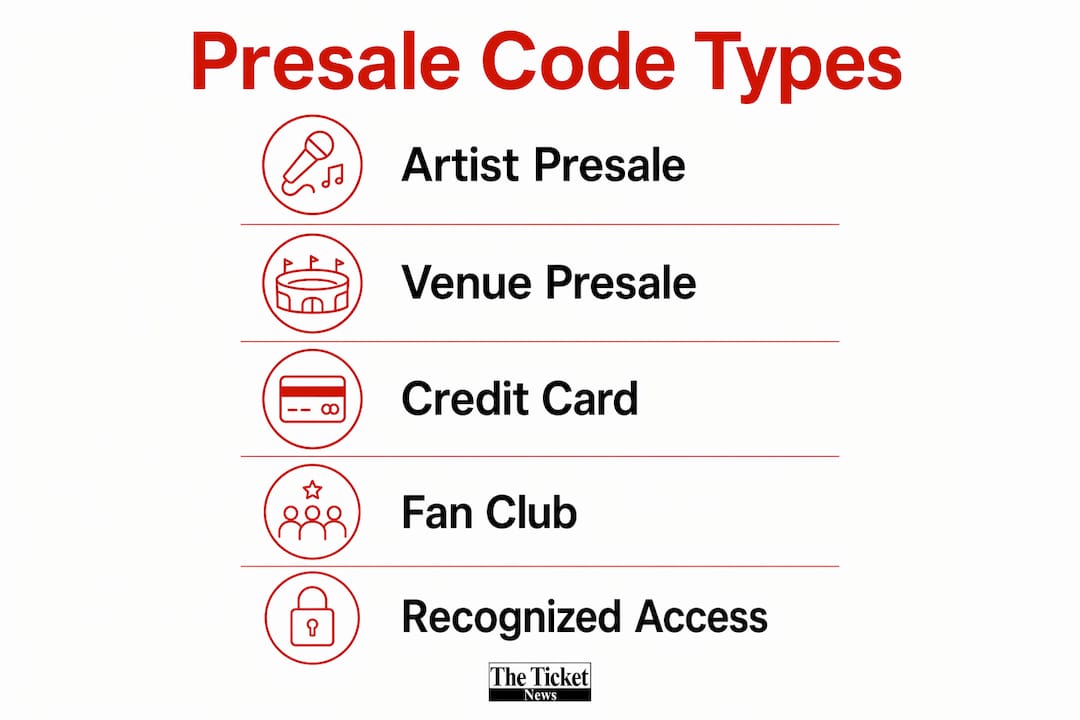
Code-based presales work differently. On Ticketmaster, you enter the presale code via the Unlock control next to the seat map filters on the event page. Once entered, available presale seats appear. If the code is wrong or expired, no seats show up.
Credit card presales add another layer. Citi and Amex presales require either a matching card number prefix or a specific code word, depending on the event. These codes are typically listed on the card’s entertainment portal or sent to cardholders by email.
Pro Tip: Check the event page on Ticketmaster the day before the presale opens. The Unlock button appears there even before the presale starts, confirming a code is required.
Step-by-step guide to using presale codes on Ticketmaster and beyond
Success in a presale is mostly preparation. The actual purchase takes minutes. The setup takes days.
- Subscribe to all relevant channels at least two weeks before a tour announcement. Add the artist to your Ticketmaster Favorites, join the official newsletter, and check your credit card’s entertainment benefits page.
- Confirm your presale windows. Tour announcements typically list presale dates. Note the exact start time, including the time zone. Most presales open at 10:00 a.m. local venue time.
- Check your email the morning of the presale. Presale codes are commonly sent by email after you add artists to Favorites and opt into notifications. Have the code copied and ready before you open the event page.
- Log in to Ticketmaster before the presale opens. Do not wait until the queue starts. Being logged in and on the event page at the exact start time puts you ahead.
- Click the Unlock control on the event page. Paste your presale code carefully. A single typo returns zero results. If the presale is recognition-based, skip this step and join the queue directly.
- Select your seats and complete checkout without pausing. Ticketmaster holds seats in your cart for a limited time. Have your payment method saved in your account before the presale starts.
- Repeat the process for each presale window. Many tours run multiple overlapping presales with distinct eligibility and code requirements. If you miss the artist presale, the credit card presale may still be open.
A few additional tips that make a real difference:
- Use a wired internet connection or a strong Wi-Fi signal. Mobile data can lag during high-traffic presales.
- Open the event page on a desktop browser. Ticketmaster’s desktop interface handles the Unlock feature more reliably than the app during peak traffic.
- Use the same email address for your Ticketmaster account, artist newsletter, and credit card alerts. Account mismatches are a common reason codes fail to arrive.
What are the most common presale code mistakes to avoid?
Most failed presale attempts come down to preparation errors, not bad luck. These are the mistakes that cost fans their seats.
- Using outdated or fake codes. Codes from unofficial Reddit threads, resale forums, or third-party code aggregators are frequently expired or fabricated. Stick to official artist and ticketing sources to avoid wasting your presale window.
- Not adding artists to Ticketmaster Favorites in time. Ticketmaster sends presale codes to fans who have added the artist before the announcement. Adding the artist after the tour is announced often means missing the first email.
- Missing the email with the code. Presale code emails frequently land in promotions or spam folders. Check both folders the morning of every presale.
- Account mismatch between newsletter and ticketing platform. If your artist newsletter subscription uses a different email than your Ticketmaster account, codes may arrive but not match your purchasing account.
- Treating one code as a pass for all presales. Each presale is a distinct entry gate with unique eligibility and code requirements. A Citi presale code does not work during the artist presale window, and vice versa.
What to do if a presale sells out: Move immediately to the next presale window. Most major tours run artist, credit card, venue, and Live Nation presales on consecutive days. If all presales sell out, check the general sale and monitor for ticket drops closer to the show date.
The best defense against a missed presale is redundancy. Register with every official source before the tour is announced. That way, even if one channel fails to deliver, another one will.
Key takeaways
The most reliable way to secure presale tickets is to register with multiple official sources before a tour is announced and treat each presale window as a separate process with its own code and eligibility rules.
| Point | Details |
|---|---|
| Register early across all channels | Add artists to Ticketmaster Favorites and join newsletters before tour announcements drop. |
| No universal code exists | Each presale type (artist, credit card, venue) distributes its own code independently. |
| Some presales need no code | Ticketmaster Artist Presales may recognize your account automatically in the queue. |
| Account consistency matters | Use the same email for Ticketmaster, artist newsletters, and credit card alerts to avoid missed codes. |
| Treat each presale separately | Multiple presales per tour have distinct codes and eligibility. Plan a checklist for each one. |
The Ticket News take on mastering presale access
The fans who consistently land great seats are not lucky. They are organized. After covering hundreds of tour announcements and presale cycles, The Ticket News has seen the same pattern repeat: the fans who win presales set everything up weeks in advance and treat the presale morning like a scheduled appointment.
One thing most guides understate is the value of credit card presales. Fans fixate on artist presales and overlook the fact that Citi and Amex presales often have lighter competition. Fewer fans know to check their card’s entertainment portal, which means more inventory is available. If you carry an eligible card, that presale window is one of the most underused advantages in the entire process.
The other insight worth emphasizing: avoid any site or account claiming to share “leaked” or “universal” presale codes. The most reliable access comes from official channels, not shortcuts. Fake codes waste your presale window and can expose your account to phishing risks. The official path is also the faster path once you have your accounts set up correctly.
Staying informed about tour announcements as early as possible gives you the maximum setup time. That lead time is the real presale advantage.
— The Ticket News
The Ticket News keeps you ahead of every presale
The Ticket News tracks presale announcements, code release windows, and ticketing news across major tours and festivals so you do not have to monitor every artist channel manually.

Whether you are chasing tickets to a stadium headliner or a sold-out club show, The Ticket News delivers presale alerts and concert ticket tips that keep you one step ahead of the general sale crowd. The site also covers affordable ticket options for fans who want to stretch their budget without missing the shows that matter. Visit The Ticket News for ongoing presale updates, tour news, and ticketing guides built for serious concert fans.
FAQ
What is a presale code and how does it work?
A presale code is an alphanumeric string that unlocks early ticket access on platforms like Ticketmaster before the general sale opens. You enter it via the Unlock control on the event page to reveal available presale seats.
Where do I get presale codes for new tours?
Presale codes come from artist newsletters, fan clubs, credit card companies like Citi and American Express, venue mailing lists, and Ticketmaster Favorites email alerts. Each source distributes its own code independently.
Do all presales require a code?
No. Some Ticketmaster Artist Presales recognize your account eligibility automatically when you join the queue, requiring pre-registration rather than a code entry.
Why is my presale code not working?
The most common causes are a typo in the code, an expired code, or using a code in the wrong presale window. Each presale has distinct eligibility rules, so a credit card code will not work during an artist presale.
How early should I register for presale access?
Register with artist newsletters, Ticketmaster Favorites, and credit card entertainment portals at least two weeks before a tour announcement. Early registration is the single biggest factor in receiving codes before they are distributed.