A world tour schedule is the official itinerary listing every concert date, venue, and city where an artist performs across international markets, typically spanning 12–18 months with 30 to 80+ shows. The industry term is “concert tour routing,” and understanding it separates fans who score tickets from fans who miss out. In 2026, tours like BTS’s “Arirang” and BIGBANG’s stadium run are setting the standard for scale and complexity. Knowing what a world tour schedule contains, how it gets announced, and how ticketing phases work gives you a real edge when planning your attendance.
What is a world tour schedule, exactly?
A world tour schedule is defined as an official, sequenced list of performance dates tied to specific venues and cities across multiple countries. It functions as the operational backbone of an entire touring campaign, balancing artist availability, venue contracts, and fan demand across continents. The BTS “Arirang” tour covers 86 shows across 34 cities and 23 countries from april 2026 through march 2027. That scale illustrates why these schedules require months of advance planning before a single date goes public.
Most major world tours connect directly to an album promotion cycle. Artists and their management teams build the schedule around release windows, radio campaigns, and streaming pushes. BIGBANG’s 31-date stadium tour follows the same logic, anchoring dates to key markets where the album has the strongest commercial traction. For fans, this means a new album announcement is often the first signal that a world tour schedule is coming.

How are world tour schedules structured?
World tours are organized into “legs,” which are clusters of shows grouped by geography or timing. Each leg functions almost like a separate mini-tour, with its own production setup, local crew, and logistical chain. Understanding tour leg structure helps fans predict when their region will be announced and how ticket sales will be phased.
Here is what drives the leg structure on major tours:
- Geographic clustering: Shows in North America, Europe, Asia, and Oceania are grouped to minimize cross-continental travel between consecutive dates.
- Regional production crews: Separate crews manage equipment for each leg, reducing transit costs and setup time at each venue.
- Recovery gaps: Intentional breaks between legs give artists rest time and allow equipment to move between continents safely.
- Venue availability: Arena and stadium calendars in major cities often dictate exact dates more than artist preference does.
Taylor Swift’s Eras Tour grossed $2.089 billion from 149 shows, and that revenue was only possible because of tight, regionally segmented scheduling. Disorganized routing would have added millions in unnecessary costs and reduced the number of shows the tour could realistically support.
Pro Tip: If your city is not in the first announcement wave, do not give up. Secondary legs are added regularly as demand data comes in from the initial markets. Monitor the artist’s official channels weekly.
What details does a world tour schedule include?
A complete world tour schedule typically contains the show date, city, venue name, and sometimes the on-sale date for tickets. More detailed schedules from major acts also include local start times, support act information, and links to official ticketing partners. The table below shows the core elements fans should look for when reading any tour schedule.
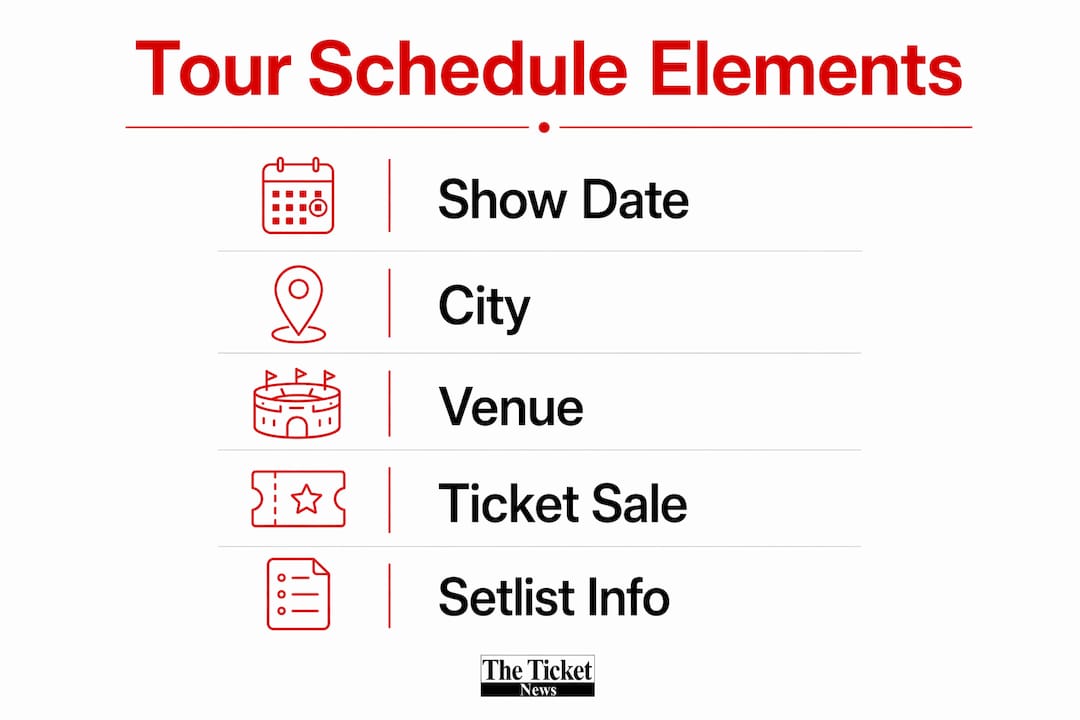
| Schedule Element | What It Tells You | Why It Matters |
|---|---|---|
| Show date | Exact performance day | Lets you request time off work or plan travel |
| Venue name | Specific arena or stadium | Determines seat capacity and ticket price range |
| City and country | Geographic location | Confirms whether the tour reaches your region |
| On-sale date | When tickets go live | Tells you when to register for presales |
| Ticket platform | Which site handles sales | Directs you to the correct purchase channel |
Schedules are rarely complete at first announcement. Artists release dates in phases, starting with confirmed legs and adding others as venue contracts are finalized. This means the schedule you see in January may look significantly different by June. Official artist websites and verified ticketing platforms are the only reliable sources for current world tour schedule details.
Pro Tip: Set a calendar reminder for the on-sale date the moment you see it published. Ticket windows for major tours can sell out within minutes, and a 15-minute delay often means paying resale prices.
How do fans access tickets for world tours?
Ticket sales for major world tours follow a multi-phase process, and missing the first phase almost always means paying more. The BTS Weverse presale for the 2026 Arirang tour ran its application period from January 14–19, with general ticket sales opening January 24. That five-day gap between presale application close and general on-sale is standard practice for top-tier acts.
Here is the typical sequence fans should prepare for:
- Tour announcement: The artist or management releases the official schedule, usually 6–12 weeks before the first on-sale date.
- Fan club or membership presale registration: Platforms like Weverse require fans to apply during a specific window to qualify for presale access. Missing this window locks you out of early pricing.
- Presale ticket purchase: Registered fans receive a code or direct access link to buy tickets before the general public.
- General on-sale: Tickets open to everyone. Demand spikes immediately, and popular shows sell out fast.
- Resale market: Unsold or returned tickets appear on secondary platforms, usually at a significant markup above face value.
Missed presale opportunities most often happen because fans fail to convert release times across time zones or skip the registration step entirely. The BTS Weverse notice listed presale times per city and time zone specifically to prevent this. Read those notices carefully and write down your local time, not the time listed for another city.
Pro Tip: Use a world clock app to convert presale times to your local time zone the moment the announcement drops. A one-hour miscalculation can cost you access to the best seats.
For more ways to reduce what you spend on tickets, The Ticket News covers smart concert ticket strategies that apply directly to world tour purchases.
What challenges affect world tour schedules?
World tour schedules are not fixed documents. They change, sometimes significantly, due to factors outside anyone’s control. Fans who treat the first announcement as final often make costly mistakes.
The most common reasons schedules shift include:
- Artist health: Illness or injury can force postponements or cancellations with little advance notice.
- Venue conflicts: Arenas and stadiums host multiple events, and scheduling conflicts occasionally push concert dates.
- Logistical delays: Equipment shipping across continents is complex. Customs delays or transport failures can shift entire legs by days or weeks.
- Low ticket sales: Underperforming markets sometimes see dates quietly removed or consolidated with nearby cities.
Official tour pages explicitly state that all dates are subject to change. That disclaimer exists for a reason. The safest rule is to never book non-refundable flights or hotels until you have a confirmed ticket in hand. Gaps between tour legs are also intentional. Industry scheduling standards build in rest periods for artist recovery and equipment transit, so a three-week gap between the North American and European legs is normal, not a sign that dates are missing.
How do major artists announce world tour schedules in 2026?
Major artists in 2026 use phased announcement strategies that prioritize their largest commercial markets first. The comparison below shows how two major 2026 tours handled their rollout differently.
| Tour | First Markets Announced | Secondary Markets | Announcement Channel |
|---|---|---|---|
| BTS “Arirang” | Asia and North America | Europe, South America, Oceania | Weverse, official BTS website |
| BIGBANG 2026 Stadium Tour | Asia and United States | Additional international dates | Billboard, official BIGBANG channels |
Phased routing announcements put major markets first because those venues are booked earliest and carry the highest revenue potential. Smaller or secondary markets get added as the tour’s commercial performance becomes clearer. This is why fans in cities like São Paulo, Sydney, or Warsaw sometimes wait weeks or months after the initial announcement to see their dates confirmed.
Social media plays a central role in how fans track these announcements. Artist accounts on Instagram and X post cryptic countdown graphics days before official schedule drops. Fan club newsletters and platforms like Weverse send direct notifications to registered members before anything goes public. Following the artist’s official accounts across every platform gives you the best chance of seeing dates the moment they go live. For a deeper look at how concert routing works from a production standpoint, The Ticket News has a full breakdown.
Key takeaways
A world tour schedule is a phased, dynamic document that requires fans to act fast, register early, and verify information through official sources only.
| Point | Details |
|---|---|
| Definition of a tour schedule | An official list of dates, venues, and cities spanning 12–18 months tied to album promotion. |
| Tour legs structure the routing | Geographic clusters reduce transit costs and allow separate regional production crews to operate. |
| Presale registration is mandatory | Fan club or platform membership is required to access early ticket windows before general sale. |
| Schedules change frequently | Never book non-refundable travel until a confirmed ticket is in hand, as dates shift regularly. |
| Phased announcements are standard | Major markets appear first; secondary cities are added weeks or months later as demand is confirmed. |
The ticket news take: what most fans get wrong about tour schedules
Most fans treat a world tour schedule like a finished product the moment it drops. It is not. After tracking dozens of major tours over the years, the pattern is consistent: the first announcement is a draft, not a final document. The BTS Arirang tour launched with core markets and has continued adding dates as demand data rolled in. Fans who waited for “their” city to appear rather than acting on nearby dates often ended up paying resale prices or missing the tour entirely.
The other thing fans consistently underestimate is how much the presale registration step matters. It is not optional. Platforms like Weverse gate presale access behind membership status and application windows. If you miss the application period by even one day, you are in the general sale pool competing with everyone else. That is a significant disadvantage for high-demand shows.
The advice that actually works: treat the tour announcement date like a starting gun. Register for every relevant fan platform immediately. Set time zone-corrected alarms for every presale and general on-sale window. And never, under any circumstances, book a flight before you have a ticket. The tour will not wait for your refund policy.
— The Ticket News
Stay ahead of every tour announcement with the ticket news
Tracking a world tour schedule across multiple announcement phases, time zones, and ticketing platforms is a full-time job if you do it alone. The Ticket News aggregates verified tour dates, presale windows, and ticket purchase links in one place so you spend less time searching and more time planning.

Whether you are following BTS, BIGBANG, or the next major act to drop a global itinerary, The Ticket News keeps you current with up-to-date tour dates and tickets as soon as they go live. Bookmark the site now and check back regularly. The difference between floor seats and nosebleeds often comes down to who saw the announcement first. You can also follow expert advice on tracking live music dates to build a monitoring system that works across every tour you care about.
FAQ
What is a world tour schedule?
A world tour schedule is an official list of concert dates, venues, and cities where an artist performs internationally, typically spanning 12–18 months. It is organized into geographic legs and tied directly to an album promotion cycle.
How many shows does a typical world tour include?
Major world tours in 2026 range from 30 to 86+ shows. The BTS Arirang tour includes 86 shows across 34 cities and 23 countries, while BIGBANG’s 2026 stadium tour covers 31 dates.
How do i get presale tickets for a world tour?
Register on the artist’s official fan platform, such as Weverse, before the application window closes. The 2026 BTS tour presale required registration between January 14–19, with ticket sales opening January 24.
Why do world tour schedules change after announcement?
Schedules shift due to artist health issues, venue conflicts, logistical delays, or low ticket sales in specific markets. Official tour pages note that all dates are subject to change, so always verify before booking travel.
Where can i find accurate world tour schedule details?
The artist’s official website, verified fan platforms like Weverse, and trusted ticketing news sources are the most reliable options. Avoid third-party aggregators that may post outdated or unverified dates.