Country music festivals support local artists by providing paid performance slots, dedicated stages, and coordinated promotional campaigns that place emerging regional talent directly in front of large, engaged audiences. This is not a side effect of festival culture. It is a deliberate structural choice made by organizers who understand that a healthy local music scene feeds the festival pipeline for years to come. From the Carrboro Bluegrass Festival in North Carolina to the Cattle Country Music Festival in Texas, 2026 has produced clear evidence of how intentional programming and public funding are reshaping opportunities for local country musicians.
How country music festivals structure lineups to support local artists
The most direct way festivals aid artists is through lineup design. Country and roots festivals routinely place emerging or regional performers alongside headline acts, giving local musicians access to audiences they could not build on their own. This is not charity booking. Organizers recognize that local acts generate hometown loyalty, drive early ticket sales, and create the kind of community buzz that national headliners cannot replicate.
The 2026 Cattle Country Music Festival took this approach further by adding a dedicated stage called Whiskey Jam exclusively for up-and-coming talent across its three-day structure. That decision matters because dedicated stages remove the visibility problem that local acts face when buried at the bottom of a crowded main stage schedule. A curated showcase gives emerging musicians a defined moment, a focused audience, and a professional context that signals their work is worth taking seriously.
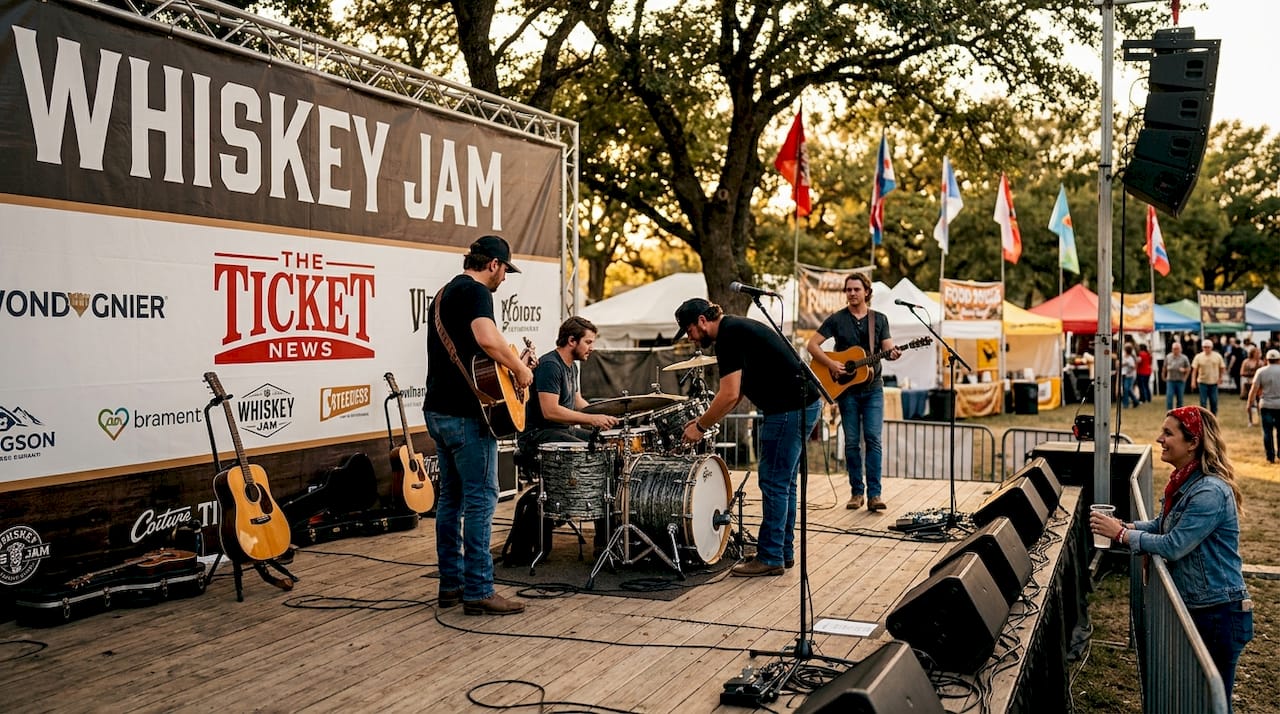
The Carrboro Bluegrass Festival 2026 reinforced this model by creating space for local artists with dedicated funding built directly into the event budget. The Feels Like Home Festival in Brownwood, Texas, takes a community pride approach, pairing well-known names with local acts in an intimate setting that makes regional artists feel central to the event rather than incidental.
Here is what effective lineup support looks like in practice:
- Local acts are booked as paid performers, not as volunteers or exposure-only slots
- Dedicated stages or curated showcases give emerging talent a defined performance window
- Festival programs pair regional artists with headliners to maximize audience crossover
- Repeat booking across multiple festival years builds audience familiarity with local names
- Intimate venue formats amplify local artist presence in ways that large main stages cannot
Pro Tip: When you check a festival lineup, look beyond the headliners. The second and third stages are where you will find the regional artists building real careers. Showing up early for those sets is one of the best ways to discover the next breakout act before everyone else does.
What funding programs make local artist booking possible?
Paid performance opportunities do not happen without money behind them. Public and private grant programs have become one of the most reliable mechanisms for getting local country musicians onto festival stages with fair compensation.
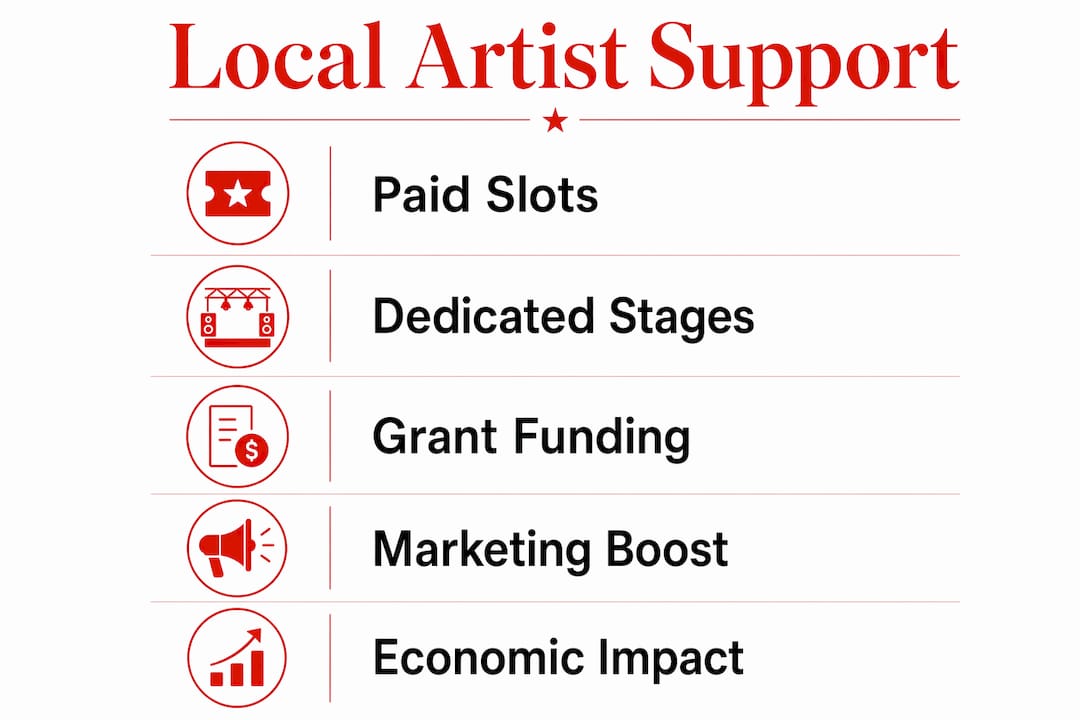
Mississauga’s Live Music Grant increased its maximum award to $5,000 per event in 2026, supporting 165 new concerts and 385 gig opportunities over three years with a reported $278,486 economic impact during the pilot phase alone. That figure represents real wages for real musicians, not abstract cultural value. The grant covers musician fees, marketing costs, and AV staffing, which means organizers cannot use funding to produce a polished event while asking artists to perform for free.
The NSW Local Audience Development Grants in Australia operate on a similar principle. Eligibility criteria require that funded events predominantly program local music artists, making community participation a structural condition of receiving public money rather than an optional add-on.
“Grant programs that reimburse comprehensive eligible costs, including marketing and AV staffing, prevent unpaid labor and ensure a more viable pool of local acts over time.” — City of Mississauga Live Music Grant findings
The funding model that produces the best outcomes for local artists follows a clear sequence:
- Grants cover musician fees as a reimbursable expense, removing the financial barrier for organizers who want to pay fairly
- Marketing costs are included in eligible expenses, so promotion of local acts is funded alongside the performance itself
- Eligibility requirements tie funding to local artist programming, creating structural incentives rather than relying on organizer goodwill
- Economic impact reporting builds the case for program renewal, creating a sustainable cycle of investment
The lesson from both Mississauga and NSW is that public funding works best when it is designed to prevent unpaid labor, not just to subsidize events. When grants require local artist booking as a condition of eligibility, the result is a reliable pipeline of paid gigs that builds careers over time.
How festivals use marketing to amplify local artist visibility
Booking a local artist is step one. Getting audiences to show up for that set requires a separate promotional effort, and the most effective festivals treat local artist marketing as a core budget line rather than an afterthought.
The clearest recent example comes from outside the United States but carries a direct lesson for country music festival organizers. Vast Billboards donated ad space for 9 artists across 36 digital billboards in 12 regions during New Zealand Music Month in May 2026, generating millions of impressions for local musicians who would never have accessed that scale of outdoor advertising independently. The campaign demonstrates what happens when third-party sponsors treat local artist promotion as a genuine partnership rather than a logo placement.
Venue and community sponsorships function as hidden amplifiers for festivals, reducing financial risk for organizers while expanding the promotional reach available to local acts. When a regional business sponsors a stage or a media outlet runs preview coverage of local performers, the effect compounds the festival’s own marketing budget without requiring additional spend.
Effective festival marketing for local artists includes:
- Paid digital advertising that features local act names alongside headliners in campaign creative
- Billboard and outdoor media placements in the festival’s home region to build local name recognition
- Social media spotlights and playlist placements that extend artist visibility beyond the festival weekend
- Press partnerships with regional outlets that cover local acts as part of festival preview coverage
Pro Tip: Follow the social media accounts of festivals you plan to attend and watch for local artist spotlights in the weeks before the event. Festivals that actively promote their regional lineup on social media are signaling that those acts are worth your attention.
What economic impact do country music festivals have on local music scenes?
The financial benefits of festivals extend well beyond the performance fee a local artist receives for a single set. Festivals create economic spillovers for local labor and vendors, generating millions in regional revenue and strengthening the broader creative ecosystem that local musicians depend on.
Visitor spending at festivals increases demand for local hospitality, security, production services, and vendors. That demand creates jobs for sound engineers, lighting technicians, stage managers, and catering staff, many of whom are part of the same local creative community as the artists performing. When a festival brings 10,000 people to a small Texas town for a weekend, the economic activity supports the infrastructure that makes year-round music culture viable in that community.
The Michigan Journal of Economics documented this ripple effect clearly, showing that festival economies generate local jobs and revenue streams beyond performance fees, benefiting production crews, hospitality workers, and small business owners who support the creative ecosystem. For local artists, this matters because a thriving local economy means more venues, more promoters, and more audiences willing to spend money on live music throughout the year.
| Economic benefit | Impact on local artists |
|---|---|
| Visitor spending in local hospitality | Funds venues and promoters who book local acts year-round |
| Production and technical job creation | Builds a skilled local crew that makes professional shows affordable |
| Vendor and small business revenue | Strengthens community investment in local cultural events |
| Regional media coverage | Increases name recognition for local artists beyond the festival audience |
Large destination festivals vs. community-rooted festivals: which model serves local artists better?
Not all festival models deliver the same outcomes for local country musicians. The structure of the event determines how much visibility and financial benefit actually reaches regional artists.
| Festival model | Strengths for local artists | Trade-offs |
|---|---|---|
| Large destination festival | Massive audience exposure, national media coverage | Local acts compete with dozens of performers for attention |
| Community-rooted festival | Intimate setting, place-based identity, loyal local audience | Smaller reach, limited national exposure |
| Hybrid model (e.g., Feels Like Home) | Combines big-name draw with local pride programming | Requires deliberate programming commitment to avoid tokenism |
| Dedicated showcase stage (e.g., Whiskey Jam) | Focused audience, professional context, repeat booking potential | Dependent on organizer commitment to sustain the stage year over year |
The Feels Like Home Festival in Brownwood, Texas, represents the hybrid model at its best. It uses place-based branding to make local identity central to the event’s appeal, which means local artists are not filler between headliners. They are part of the reason people attend. The Cattle Country Music Festival’s Whiskey Jam stage shows that even large multi-day events can create protected space for emerging talent when organizers make it a structural priority rather than a programming afterthought.
Large destination festivals offer exposure that community events cannot match, but that exposure is diluted when local acts are scheduled opposite major headliners or given minimal promotional support. The festivals that produce the most meaningful outcomes for local artists are those that treat regional talent as central to the event’s identity, not as a warm-up act for the main attraction.
Key takeaways
Country music festivals that combine paid booking, dedicated stages, and funded marketing produce the most sustainable outcomes for local artists and their communities.
| Point | Details |
|---|---|
| Paid performance slots are non-negotiable | Local artists must receive fair compensation; exposure-only bookings do not build careers. |
| Dedicated stages multiply visibility | Curated showcases like Whiskey Jam give emerging acts a professional context that main stage bottom billing cannot provide. |
| Grants fund the full picture | Programs like Mississauga’s Live Music Grant cover fees, marketing, and staffing to prevent unpaid labor. |
| Marketing amplifies booking | Billboard campaigns and social media spotlights extend local artist reach far beyond the festival weekend. |
| Economic spillover sustains the scene | Festival-driven spending supports venues, crews, and businesses that keep local music culture alive year-round. |
The Ticket News perspective: why intentional support is the only kind that counts
The country music festival world has a habit of talking about local artist support while delivering something closer to tokenism. One slot at 11 a.m. on the secondary stage, no promotional mention in the main campaign, and a performance fee that barely covers gas money. That is not support. That is optics.
What actually moves the needle for local artists is the combination of paid booking, dedicated promotional real estate, and repeat opportunities. The Whiskey Jam stage at Cattle Country is a good example because it is a structural commitment, not a one-off gesture. When a festival builds a stage specifically for emerging talent and brings it back year after year, it creates a track record that artists can point to when pitching other venues and promoters.
The funding side of this equation deserves more attention from fans than it typically gets. Grants like Mississauga’s Live Music Grant exist because public investment in live music produces measurable economic returns. When those programs require local artist booking as a condition of eligibility, they create accountability that voluntary goodwill cannot. Fans who care about the local artists they discover at festivals should pay attention to which events are backed by these programs and advocate for their expansion.
The risk of unpaid labor in festival settings is real and underreported. Organizers who accept public funding while asking local acts to perform for free are extracting value from the very community the funding is meant to support. The standard should be simple: if a festival has a budget, local artists get paid from it.
For fans, the most direct form of support is showing up early, staying for the local sets, and buying merchandise directly from regional artists at the festival. That spending goes further than any streaming royalty.
— The Ticket News
Find your next festival and discover local talent

The Ticket News tracks festival lineups, ticket releases, and local artist announcements across the country music calendar. Whether you are looking for a major country festival with a stacked regional undercard or a community-rooted event that puts local artists front and center, The Ticket News has the lineup details and ticketing options you need. Check the latest announcements for 2026 festivals featuring emerging regional acts, and use The Ticket News to find affordable festival tickets before they sell out. Supporting local artists starts with buying a ticket and showing up.
FAQ
How do country music festivals support local artists financially?
Festivals support local artists financially through paid performance fees, grant-backed booking programs, and marketing budgets that cover promotional costs. Mississauga’s Live Music Grant, for example, reimburses musician fees and marketing expenses to prevent unpaid labor.
What is a dedicated showcase stage and why does it matter?
A dedicated showcase stage is a performance space reserved exclusively for emerging or regional artists, separate from the main lineup. The Cattle Country Music Festival’s Whiskey Jam stage is a 2026 example that gives local acts a professional context and focused audience rather than a buried time slot.
Do music festivals create jobs beyond performance opportunities for local artists?
Yes. Festival economies generate employment for sound engineers, lighting technicians, hospitality workers, and vendors, all of whom are often part of the local creative community. This broader economic activity supports the infrastructure that sustains year-round live music in the region.
What should fans look for to identify festivals that genuinely support local artists?
Look for festivals with dedicated stages for emerging talent, named local acts in promotional materials, and grant-backed programming requirements. Events that promote regional artists in their marketing campaigns, not just in the fine print of the lineup, are the ones making a real structural commitment.
How do grants improve local artist opportunities at country music festivals?
Grants like the NSW Local Audience Development Grants require funded events to predominantly program local artists, making community inclusion a structural condition rather than an optional choice. This creates reliable, paid gig opportunities that build careers over multiple festival cycles.