A sold out tour night is defined as the point when all publicly available tickets for a specific concert date have been sold, officially reaching the venue’s capacity as set by the primary ticket seller. The industry term for this status is “sellout,” and it signals one clear fact: no tickets remain through official channels. Understanding what a sold out concert night actually means, versus what promoters sometimes want you to believe, is the difference between making a smart ticket decision and overpaying in a panic. This guide breaks down the real meaning of sold out tour status, what happens to ticket prices, and how you can still get in.
What is a sold out tour night and what does it mean for fans?
A sold out concert officially means the primary ticket seller has sold every ticket allocated for public sale, reaching the venue’s designated capacity. That designation matters because it is specific to the public allocation, not necessarily every seat in the building. Guest lists, promotional holds, and production reserves are separate from the tickets you can buy on Ticketmaster or AXS.
The phrase itself carries weight beyond logistics. When an artist or promoter announces a sellout, it signals high demand, cultural relevance, and urgency. For fans, it means the window for face-value tickets has closed. For artists, it means leverage: better festival booking fees, stronger press coverage, and a growing reputation that compounds with each sold out date on a tour.

Sold out status also varies by how quickly it happens. Highly sought-after tours create intentional scarcity by choosing smaller venues or clustering dates in the same city, causing shows to sell out within minutes. That speed itself becomes part of the story, reinforcing the artist’s demand and driving secondary market activity before the ink is dry on the announcement.
How sold out tour nights affect ticket availability and prices
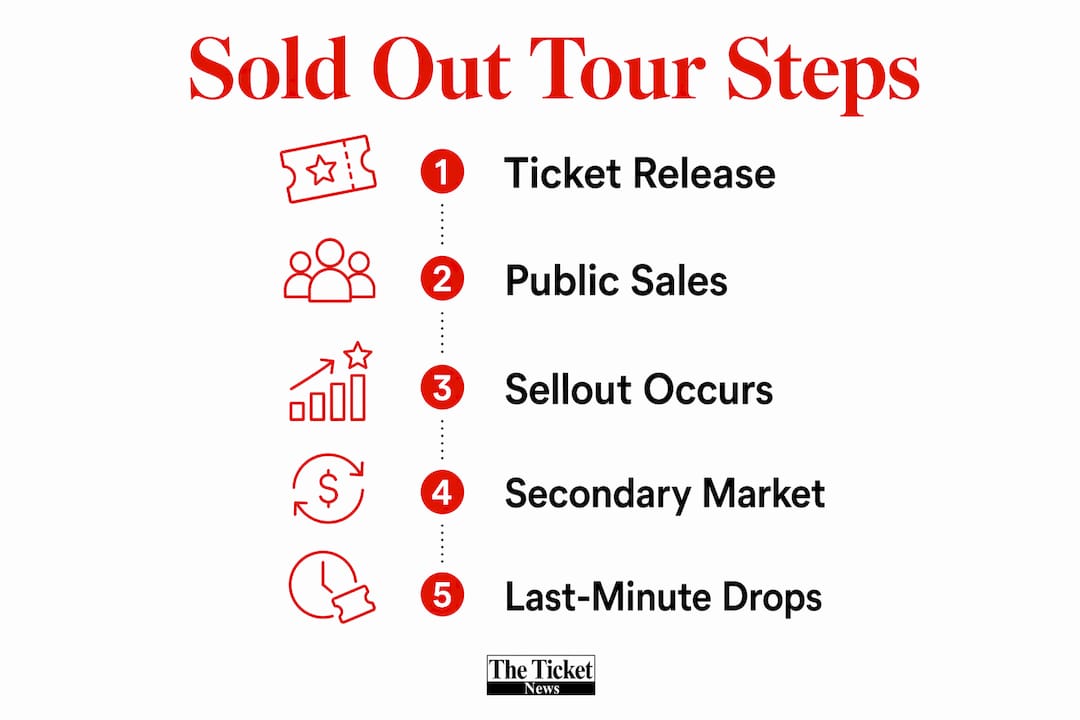
Once a show sells out, the primary market closes and the secondary market opens up. Platforms like StubHub, Vivid Seats, and SeatGeek become the main options, and prices on those platforms reflect demand rather than face value. A $75 floor ticket can list for $300 or more the day after a sellout announcement. That markup is not random. It reflects the gap between supply and what fans are willing to pay to attend.
Here is what actually happens to ticket availability after a sellout:
- Primary sale exhausted: Ticketmaster, AXS, and venue box offices show no inventory. The official sale is over.
- Secondary market surge: Resale platforms fill with listings, often at significant markups above face value.
- Production hold releases: Small batches of tickets sometimes release close to the show date after staging and production logistics are finalized. These are genuine face-value tickets and represent one of the best post-sellout opportunities.
- Waitlists: Some venues and artists, including those using Ticketmaster’s official waitlist feature, allow fans to register for tickets if cancellations occur.
- Fan-to-fan resale: Platforms with verified resale, such as Ticketmaster’s own resale feature or DICE’s fan-to-fan transfer system, offer some protection against counterfeit tickets.
The risks on the secondary market are real. Counterfeit tickets, inflated prices, and non-transferable tickets sold by scalpers are common problems. Secondary market prices surge immediately after sellout announcements, but savvy fans can sometimes access production holds or official waitlists for genuine tickets at face value.
Pro Tip: Set up alerts on the official venue website and the artist’s social media accounts. Production hold releases and cancellation drops rarely get wide publicity, so fans monitoring those channels directly have a real advantage.
Why “sold out” doesn’t always mean every seat is filled
This is where the meaning of sold out tour status gets more complicated. Sold out status often does not reflect total venue capacity but rather the public ticket allocation based on modular venue configurations and promotional considerations. In plain terms: a venue that holds 900 people can be configured to hold 270 for a specific show, and selling all 270 tickets makes that show “sold out.”
The table below shows how the same venue can produce very different sellout thresholds:
| Venue capacity | Configured capacity | Tickets sold | Sold out? |
|---|---|---|---|
| 900 | 270 | 270 | Yes |
| 5,000 | 3,500 | 3,500 | Yes |
| 20,000 | 20,000 | 20,000 | Yes |
| 900 | 900 | 750 | No |
The practice of modular configuration is not deceptive on its own. Smaller configurations create better atmosphere for emerging artists and protect against the optics of a half-empty room. But it does mean that “sold out” is a relative term, not an absolute one.
“Selling a projection of success is often an investment in brand positioning, not just pure ticket sales profit.” — Sold out as a fictional story
Using sold out as a growth narrative helps artists secure better festival fees and legitimizes public perception even when financial results are modest. The label functions as a marketing asset, not just a logistical fact. For fans, this means treating a sellout announcement as a signal of demand rather than proof that every seat in the building was filled.
How sold out shows shape the actual concert experience
A sold out show is not just a ticketing status. It changes what happens inside the venue. The energy in a full room is measurably different from a half-capacity crowd, and artists know it. Sold out nights tend to produce the most memorable performances precisely because both sides of the stage are fully invested.
Artists also use the controlled environment of a sold out show to experiment with policies that deepen fan engagement:
- Phone-free experiences: Phoebe Bridgers enforced a no-device policy at her sold out Madison Square Garden show, requiring fans to use Yondr pouches. The result was a room of undivided attention that fans described as transformative.
- Extended setlists: Artists playing to a sold out crowd often run longer, knowing the audience is fully committed and the room is locked in.
- Exclusive merchandise drops: Limited merchandise available only at sold out shows creates a secondary layer of exclusivity that fans value beyond the music itself.
- Heightened crowd energy: A full room amplifies every moment. Sing-alongs, crowd surges, and collective reactions hit differently when every seat is occupied.
Artists use sold out concerts to impose controlled environments that focus fan attention and deepen engagement beyond typical live experiences. That intentionality is part of what makes a sold out night feel different from a regular show, even when the setlist is identical. The hip-hop fan engagement model reflects a similar principle: scarcity and exclusivity build loyalty that extends well beyond the night itself.
Practical tips for getting tickets to sold out tour nights
Getting tickets after a show sells out requires a different strategy than standard on-sale shopping. Speed and preparation matter, but so does knowing where to look and what to avoid.
- Join the official waitlist immediately. Many venues and ticketing platforms offer waitlists. Register as soon as the sellout is announced. Cancellations and production hold releases often go to waitlist members first.
- Monitor the artist’s official channels. Additional dates, venue upgrades, or ticket drops are announced on official social media accounts and email newsletters before they appear anywhere else.
- Use verified resale platforms. StubHub, Vivid Seats, and Ticketmaster’s own resale feature offer buyer guarantees. Avoid purchasing from individual sellers on unverified platforms where counterfeit risk is high.
- Check presale status before assuming a full sellout. Presales and on-sales represent distinct inventory releases. A show that appears sold out during a fan club presale may still have tickets available during the general public on-sale. Never assume a presale exhaustion equals a full sellout.
- Set price alerts on resale platforms. Prices on the secondary market fluctuate. Listings often drop in the final 48 hours before a show as sellers accept lower offers rather than holding unsold inventory.
- Consider nearby dates or cities. Tours with multiple dates in a region often have uneven demand. A sold out Friday night show may have Saturday tickets still available at face value.
Pro Tip: For smart ticket savings on high-demand shows, check resale prices on Tuesday and Wednesday. Secondary market listings tend to soften mid-week when sellers adjust expectations ahead of the weekend.
Key takeaways
A sold out tour night marks the exhaustion of public ticket inventory, but the label carries layers of marketing strategy, venue configuration, and secondary market dynamics that every fan should understand before spending money.
| Point | Details |
|---|---|
| Sold out definition | All publicly allocated tickets are sold; official capacity is reached per the primary seller. |
| Secondary market reality | Resale prices surge after sellout; production holds and waitlists offer rare face-value options. |
| Marketing nuance | Venues can be configured below max capacity, making “sold out” a relative, not absolute, status. |
| Concert experience impact | Sold out shows enable artist-controlled environments like phone-free policies that deepen fan engagement. |
| Buying strategy | Monitor official channels, use verified resale, and check presale vs. full on-sale status before giving up. |
The Ticket News take on sold out culture
The sold out label has become one of the most loaded phrases in live music, and not always for the reasons fans assume. After tracking ticket markets and concert trends for years, The Ticket News has watched “sold out” shift from a straightforward logistical fact into a carefully managed narrative. That shift matters for your wallet.
The scarcity model works because fans respond to it emotionally. When a show sells out in minutes, the fear of missing out drives secondary market prices to levels that have no rational basis in the actual value of the experience. A $300 resale ticket for a show that originally priced at $75 is not three times better. It is the same show at a price inflated by manufactured urgency.
The honest advice is this: treat sold out status as useful information, not a verdict. Check whether it was a full venue sellout or a modular configuration. Look for production holds. Register for waitlists. And if the price on the secondary market feels wrong, trust that instinct. More often than not, patience and preparation will get you in at a price that makes sense.
The Ticket News believes the best concert experiences come from informed decisions, not panic buying. Scarcity is real sometimes, but it is also a tool. Knowing the difference is what separates fans who overpay from fans who get in.
— The Ticket News
Find tickets and track sold out shows with The Ticket News
The Ticket News tracks ticket releases, production holds, and resale trends across hundreds of tours so you do not have to monitor every platform manually.

Whether you are chasing a sold out night or planning ahead for an upcoming tour, The Ticket News gives you the information and deals to make smart decisions. Browse discount concert tickets for verified options across venues nationwide, including late-release and resale listings updated in real time. From country festivals like the Bristol Rhythm & Roots Reunion to stadium tours and intimate club shows, The Ticket News covers the full spectrum of live music. Visit theticketnews.com to explore current deals and set up alerts for the shows you care about most.
FAQ
What does sold out mean for a concert tour?
A sold out concert tour night means all publicly available tickets for that specific date have been sold through the primary ticket seller. No official tickets remain, though secondary market options and production hold releases may still become available.
Can you still get tickets to a sold out show?
Yes. Production hold tickets sometimes release close to the show date, and official waitlists, verified resale platforms, and fan-to-fan transfers all offer legitimate paths to entry after a sellout.
Why do shows sell out so fast?
Intentional scarcity is a primary driver. Promoters and artists often choose smaller venues or fewer dates than demand warrants, causing tickets to sell out within minutes and amplifying the artist’s perceived popularity.
Is a sold out show always completely full?
Not always. Modular venue configurations mean a venue can be declared sold out at a fraction of its total capacity. Guest lists and promotional inventory also occupy seats that were never part of the public ticket count.
What is the difference between a presale sellout and a full sellout?
A presale sellout means only the limited presale inventory is exhausted. Presales and general on-sales are separate inventory releases, so a show that appears sold out during a fan club presale may still have tickets available when the general public on-sale begins.
Leave a Reply