A ticket exchange program is a structured marketplace that lets fans buy, sell, or trade event tickets with verified authenticity and fair pricing built into the process. The industry term for this system is “ticket resale exchange,” and it covers everything from official face-value programs run by primary ticketing platforms to peer-to-peer transfer tools embedded directly in your ticketing account. Understanding how these programs work protects you from scams, saves you money, and gives you real flexibility when your plans change. The Ticket News breaks down exactly what you need to know before your next transaction.
What is a ticket exchange program and how is it different from resale?
A ticket exchange program is a platform or system that enables fans to transfer, resell, or swap event tickets within a controlled, verified environment. The key distinction from general resale is oversight. Official exchange programs operate under rules set by the event organizer or primary ticketing platform, while third-party resale markets operate independently with fewer protections for buyers.
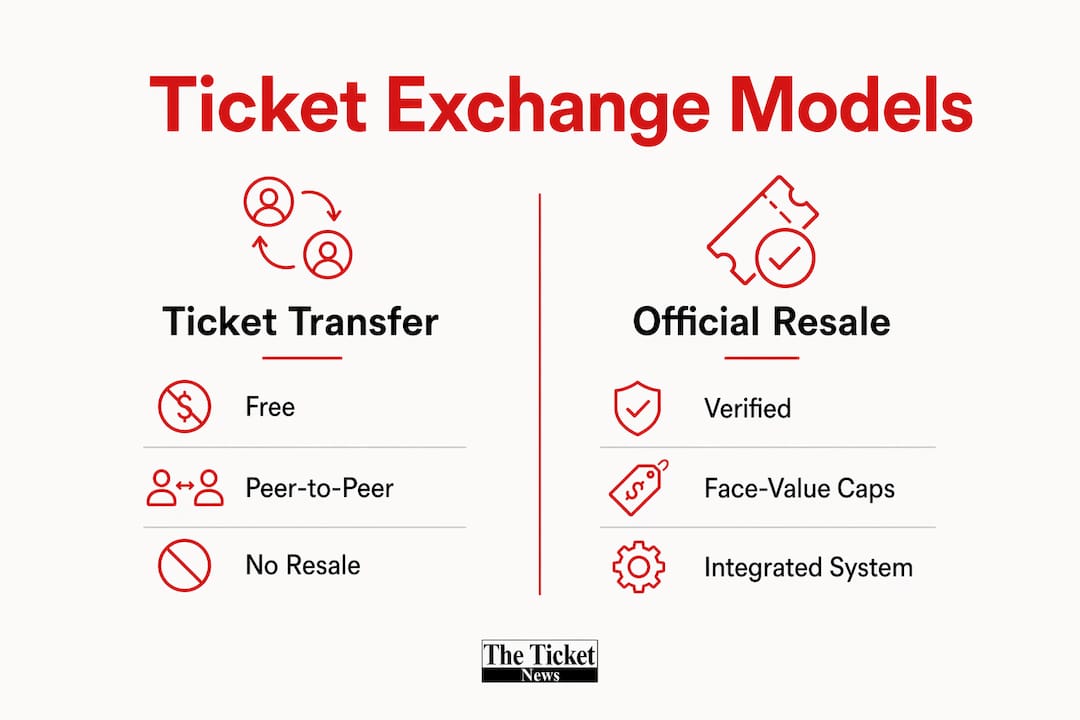
Two main models exist. The first is a ticket transfer, which is free and peer-to-peer. You send your ticket directly to another person through the official platform. The second is a face-value exchange, where you list your ticket for resale at the original price you paid. Face-value exchange caps resale prices at the original purchase price, which protects genuine fans from inflated markups and minimizes scalping.

Official exchanges are also integrated with the event organizer’s ticketing system. That integration means every transaction is verified before the event. Third-party marketplaces offer broader ticket choices but carry higher fraud risk compared to official exchanges. The difference matters most when you are buying a ticket the day before a sold-out show.
How does a ticket exchange work step by step?
The mechanics behind a ticket swap program are straightforward once you know the sequence. Here is how a standard official exchange works from start to finish.
- Log in to your ticketing account. Access the platform where you originally purchased your tickets. Most official programs require you to manage everything through that same account.
- Select the ticket you want to transfer or list. Choose whether you are transferring the ticket to a specific person or listing it for resale through the exchange marketplace.
- Set your price (for resale) or enter the recipient’s contact (for transfer). Face-value programs restrict your listing price to what you originally paid. Transfer options require the recipient’s email or phone number.
- The original ticket is deactivated. When a transfer completes, the original ticket deactivates and the recipient receives a new ticket in their name with a fresh, scannable QR code. This step is critical for event security.
- The recipient accepts and confirms. The new ticket lands in the recipient’s account. They can access it through the same platform on their phone.
Understanding face-value restrictions
Face-value exchange tickets cannot be resold above the original purchase price and are often mobile-only with transfer restrictions built in. These conditions are not arbitrary. They are legal terms embedded at the point of sale, which means the program must be configured before tickets go on sale. You agree to these terms when you buy, so read the ticket conditions carefully at checkout.
Digital security and QR codes
Every official exchange relies on dynamic QR codes to prevent duplication. A static screenshot of a ticket is worthless in an official exchange because the QR code updates when ownership changes. This is the single most important technical feature separating official programs from informal private sales.
Pro Tip: Never accept a ticket via screenshot or PDF from a private seller. A valid ticket in an official exchange always lives inside the buyer’s ticketing app account, not in an image file.
What are the benefits of using official ticket exchange programs?
Official ticket exchange programs deliver concrete advantages for both fans and event organizers. The benefits go well beyond simple convenience.
- Fraud reduction. Security is the defining difference between official exchanges and third-party marketplaces. Official platforms verify every ticket before it transfers, cutting the risk of counterfeit tickets reaching buyers.
- Price fairness. Face-value programs maintain ticket price integrity by ensuring fans pay the artist’s intended price. You do not pay a 300% markup because a scalper bought in bulk.
- Flexibility when plans change. Life happens. Official exchanges let you resell or transfer your ticket without losing the full purchase price to a no-show.
- Lower refund burden for organizers. Official ticket transfers reduce refund requests by 30–50% by allowing fans to reallocate tickets instead of demanding their money back. That reduction translates directly into better revenue retention for event organizers.
- Self-service upgrades and swaps. Self-service exchange tools enable buyers to upgrade, downgrade, or swap tickets without contacting customer support. Automated exchanges reduce organizer workload and eliminate manual errors.
“Enabling ticket exchanges increases fan satisfaction and reduces no-shows by providing flexibility when plans change. Event organizers report increased ticket sales and lower customer service inquiries as a direct result.”
The fan experience improvement is real. When you know you can resell or transfer a ticket if something comes up, you are more likely to buy in the first place. That confidence drives ticket sales and keeps events at capacity.
What risks exist when using ticket exchange programs?
Ticket trading carries real risks, especially outside official channels. Knowing the warning signs protects your money and your event experience.
- Unauthorized resellers. Private sellers on social media or classified sites have no accountability. You have no recourse if the ticket is fake or already used.
- Unsecured payment apps. Using unsecured payment apps for private ticket sales exposes you to fraud with no mediation if the transaction goes wrong. Apps without buyer protection treat ticket purchases like cash transfers.
- Screenshot tickets. Any seller offering a ticket as a photo or PDF is a red flag. Legitimate tickets in official programs exist only inside verified app accounts.
- Prices far below face value. A ticket priced dramatically below market rate is almost always a scam. Genuine sellers using official exchanges cannot list below face value in face-value programs.
- Pressure to pay quickly. Scammers create urgency to prevent you from verifying the ticket. Legitimate sellers on official platforms have no reason to rush you.
Pro Tip: Before buying any resale ticket, check whether the listing exists inside the event’s official ticketing platform. If the seller cannot show you the ticket inside the app, walk away. The Ticket News has a detailed concert ticket resale checklist that walks you through every verification step.
Verified platforms provide mediation and escrow for safer transactions. That layer of protection does not exist in private sales. The small convenience of buying from a stranger rarely justifies the risk.
How to buy, sell, or trade tickets through an exchange program
Practical execution matters as much as understanding the theory. Here is a step-by-step approach to getting the most out of any ticket exchange platform.
- Verify the platform is official. Check that the exchange is integrated with the event organizer or primary ticketing platform. Look for the event name and your original order number in your account.
- List early for resale. Demand for resale tickets peaks in the days before an event. Listing early gives your ticket more visibility and a better chance of selling at face value.
- Use transfer for trusted contacts. If you are giving a ticket to a friend or family member, use the free transfer feature. It is faster, free, and carries zero resale risk.
- Check exchange limits before you list. Many platforms limit exchanges to a single use per ticket to prevent abuse. Know the rules before you start swapping.
- Confirm the recipient accepts before the event. A transferred ticket is not complete until the recipient accepts it in their account. Follow up to confirm, especially close to the event date.
Spotting fair pricing in the resale market
Pricing in the secondary market follows supply and demand. Tickets for sold-out shows command premiums on third-party platforms, but official face-value exchanges cap that ceiling. Use the original ticket price as your baseline. Anything significantly above that on a third-party platform reflects scalper markup, not genuine market value.
| Ticket type | Pricing model | Transfer method | Fraud risk |
|---|---|---|---|
| Official face-value exchange | Capped at original price | Mobile app only | Low |
| Official peer-to-peer transfer | Free, no resale | Mobile app only | Very low |
| Third-party resale marketplace | Market-based, no cap | Varies by platform | Medium to high |
| Private sale (social media) | Unregulated | Screenshot or cash | Very high |
The table above shows why official channels win on every safety metric. Third-party platforms fill a gap when official exchanges are unavailable, but they require more due diligence. The Ticket News covers how resale markets work in detail if you want to go deeper on pricing dynamics.
Pro Tip: If you must buy from a third-party marketplace, use a credit card. Credit cards offer chargeback protection that debit cards and payment apps do not. That protection is your last line of defense against a fraudulent listing.
Key Takeaways
Official ticket exchange programs are the safest and most cost-effective way to buy, sell, or trade event tickets because they verify authenticity, cap resale prices, and eliminate the fraud risk that defines private sales.
| Point | Details |
|---|---|
| Official exchanges reduce fraud | Verified platforms authenticate every ticket, cutting counterfeit risk that private sales cannot match. |
| Face-value policies protect buyers | Resale price caps prevent scalper markups and keep tickets at the artist’s intended price. |
| Transfers deactivate original tickets | New QR codes replace old ones on transfer, making screenshot scams impossible in official programs. |
| Exchanges cut organizer refunds | Official transfer tools reduce refund requests by 30–50%, improving revenue retention for event organizers. |
| Private sales carry the highest risk | Unsecured payment apps and screenshot tickets offer no buyer protection or fraud recourse. |
The Ticket News take on where ticket exchanges are heading
The shift toward official ticket exchange programs is one of the most meaningful changes in live event ticketing over the past five years. From where The Ticket News sits, the trend is accelerating, and fans who understand these systems now will be far better positioned as the technology matures.
What strikes us most is how much the conversation has shifted from “can you exchange tickets?” to “why would you use anything else?” Official exchanges used to be a niche feature. Now they are becoming the default expectation for any major event. Artists and venues are pushing for face-value programs because they see the direct connection between price fairness and fan loyalty.
The next wave of improvement will come from mobile integration. Dynamic QR codes, biometric verification at the gate, and real-time transfer confirmation are already in development at major platforms. These features will make ticket fraud nearly impossible within official systems. The gap between official exchanges and private sales will only widen.
Our honest advice: treat any ticket transaction outside an official exchange as a risk you are consciously accepting, not a shortcut. The savings rarely justify the exposure. Stay informed about the exchange policies for every event you attend, because the rules vary by organizer and platform. The Ticket News tracks these policy changes so you do not have to.
— The Ticket News
The Ticket News: your resource for safe ticket transactions
Ticket exchange programs are changing fast, and staying current on platform policies, pricing rules, and security features makes a real difference in what you pay and whether your ticket works at the gate.

The Ticket News covers the full spectrum of ticket buying and selling, from breaking news on major events to practical guides on buying resale tickets safely. Whether you are navigating a face-value exchange for the first time or trying to avoid a scam on a sold-out show, you will find clear, current guidance here. Visit The Ticket News for up-to-date resources on ticket exchange policies, market trends, and money-saving strategies for every event on your calendar.
FAQ
What is a ticket exchange program in simple terms?
A ticket exchange program is an official marketplace where fans can buy, sell, or transfer event tickets with verified authenticity and price controls built in. It differs from private resale because the platform verifies every ticket before the transaction completes.
Can you exchange tickets after you buy them?
Most official ticketing platforms allow ticket transfers or resale through their exchange programs, but policies vary by event and organizer. Check your original ticket confirmation for exchange eligibility and any restrictions before attempting a transfer.
How does a face-value exchange protect buyers?
A face-value exchange caps resale prices at the original purchase price, preventing scalper markups and ensuring fans pay what the artist intended. Tickets in these programs are also mobile-only, which eliminates screenshot fraud.
What is the safest way to buy tickets through an exchange?
The safest method is buying directly through the event’s official ticketing platform, where every ticket is verified and linked to a real account. If you use a third-party marketplace, always pay by credit card to retain chargeback protection.
How is a ticket transfer different from a ticket resale?
A ticket transfer is free and sends your ticket directly to a specific person through the official platform, while a resale lists your ticket publicly for another buyer at a set price. Transfers deactivate the original ticket and issue a new QR code to the recipient, maintaining full event security.
Leave a Reply