A ticket stub is defined as the portion of a physical event ticket retained by the attendee after the entry portion is torn off or collected at the gate. You see them at concerts, sports games, and theater performances. Platforms like Ticketmaster and StubHub have processed billions of these transactions over the decades, making the stub one of the most quietly iconic artifacts in live entertainment. The shift toward digital ticketing has made physical stubs rarer, which means the ones you already own may be worth more than you think.
What is a ticket stub and why has it always mattered?
A ticket stub is the retained half of a ticket after the main portion is collected at entry, and it serves two distinct purposes: proof of purchase and personal keepsake. Most stubs measure roughly two by four inches and carry the event name, venue, date, seat number, and price. That combination of details is exactly what makes them meaningful long after the night ends.
The word “stub” comes from the same root as a checkbook stub or a pencil stub. It is the leftover piece, the part you keep. For decades, venues from Madison Square Garden to the Ryman Auditorium used perforated paper tickets precisely because the tear created a clean record on both sides. The venue kept proof of admission; you kept proof of being there.
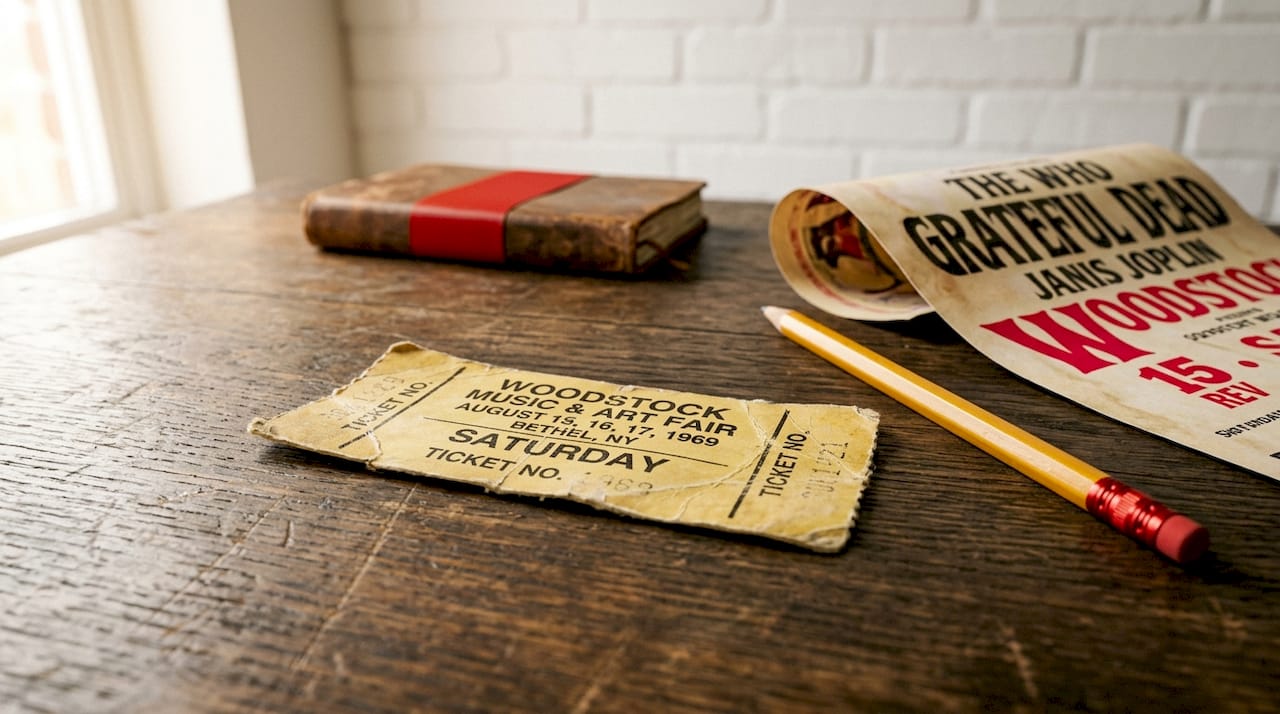
Physical tickets also served a practical function beyond memory. StubHub’s refund policy requires event cancellation confirmation before issuing refunds, which illustrates how tickets function as formal documentation, not just souvenirs. The stub is the fan’s side of that contract.
How did ticket stubs become cultural artifacts?
The cultural weight of ticket stubs grew alongside the live music industry itself. Attendees kept the half-ticket stub as both proof and memory, and over time those scraps of paper became stand-ins for entire chapters of personal history. A stub from Woodstock 1969, a Led Zeppelin show at the Forum, or Bruce Springsteen’s Born in the U.S.A. tour does not just document attendance. It places you inside a specific cultural moment.
Bands and their management teams recognized this early. Concert programs, backstage passes, and ticket designs became part of the artistic identity of a tour. The Rolling Stones, Pink Floyd, and Grateful Dead each had distinctive ticket artwork that fans collected with the same seriousness as album covers. The stub was the one piece of that art you could only get by actually showing up.
“Physical ticket stubs function as evidence that it actually happened, strengthening fan connection to live music experiences.” — MusicTech
This idea of tangible proof matters more than it sounds. Photographs fade, memories blur, and setlists get disputed. The stub carries a date, a venue, and a seat number that cannot be argued with. For fans of artists like David Bowie, Prince, or Tom Petty, stubs from their final tours have taken on a weight that no digital record can replicate.
Why do ticket stubs matter to collectors and how is value assessed?
Ticket stub collectible value depends on three primary factors: event significance, physical condition, and rarity. A stub from a historically important concert commands more interest than one from a routine club show, even if both are in perfect condition. Condition and rarity then separate the high-value pieces from the merely interesting ones.
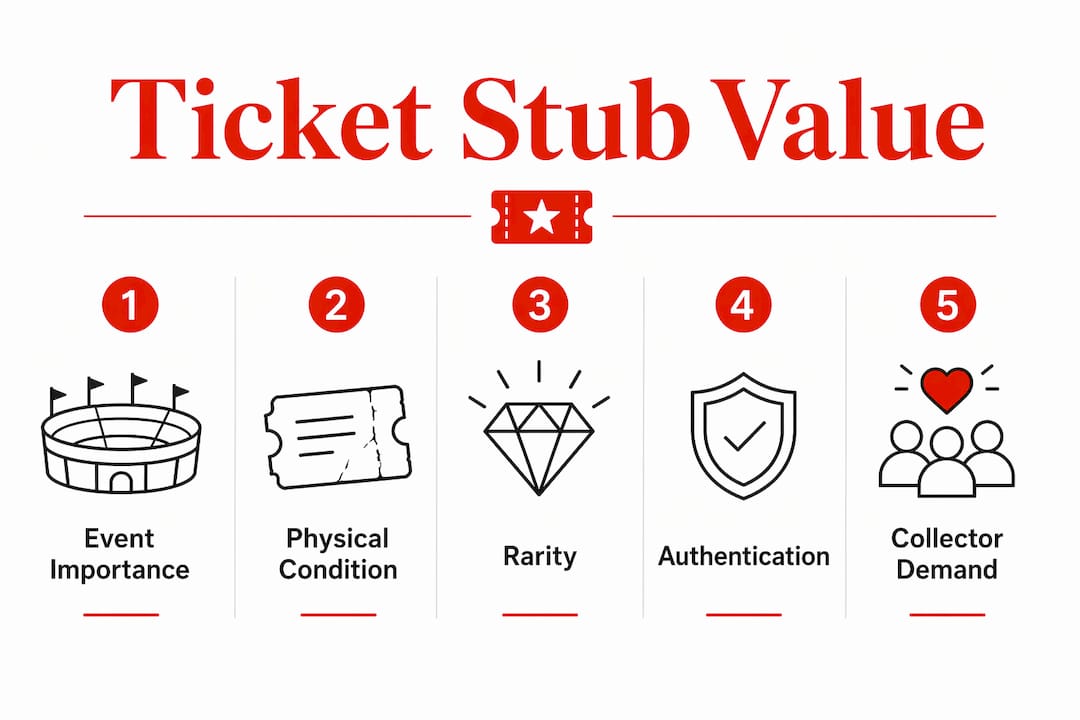
Intact tickets vs. torn stubs
The table below shows how the physical state of a stub affects its position in the collector market.
| Type | Condition | Collector value |
|---|---|---|
| Intact, unscanned ticket | Mint, never used | Highest value; rare because most were torn or scanned |
| Clean torn stub | Sharp edges, legible print | Strong value if event was significant |
| Worn torn stub | Faded, creased, partial text | Moderate value for iconic events only |
| Damaged stub | Torn beyond stub line, water damage | Low value except for extreme rarity |
Collectors treat stubs as compact artifacts that document the exact context of an event, and the printed details are the core of that documentation. A stub where the artist name, venue, and date are still fully legible is worth significantly more than one where any of those details have faded.
Authentication and grading services play a growing role in the higher end of this market. Professional grading services verify authentic ticket stubs and assign condition grades that buyers trust, reducing the risk of counterfeit or misattributed pieces. For stubs from artists like Elvis Presley, The Beatles, or Jimi Hendrix, authentication is not optional. It is the difference between a sale and a dispute.
Pro Tip: If you have stubs from concerts in the 1960s through the 1980s, do not clean them or attempt to flatten creases with heat. The wear pattern itself is part of the authentication evidence.
How does digital ticketing affect ticket stub preservation?
Digital ticketing reduces physical stub availability, and the impact on memorabilia culture is direct. When a QR code on your phone replaces a printed ticket, there is nothing to tear, nothing to pocket, and nothing to frame. Fans who attended landmark shows in the 2010s and 2020s often have no physical record of being there beyond a photo on their phone.
The industry has responded in several ways, with varying degrees of success:
- Souvenir tickets. Ticketmaster introduced souvenir tickets as collectible mementos at hundreds of events, giving fans a printed keepsake even when entry is handled digitally. These are not functional tickets but are designed to look and feel like the real thing.
- Printable e-tickets. Some venues and promoters offer high-resolution printable tickets that fans can print at home and keep. The quality varies widely, but the intent is to preserve the physical artifact tradition.
- NFT tickets. Artists including Kings of Leon and Avenged Sevenfold have experimented with NFT-based tickets that include digital collectible components. These serve a different audience than traditional stub collectors but address the same underlying desire for ownership.
- Fan-created archives. Some fans create printable or archived records to preserve the memory traditionally captured by stubs, scanning old tickets, building digital scrapbooks, and maintaining setlist records alongside their collections.
None of these fully replaces the original. A souvenir ticket is not the same as a stub you actually used to walk through the gate at a 1975 Springsteen show at the Bottom Line. But the industry’s effort to revive the physical artifact signals that demand from fans is real and growing.
Practical ticket stub collection tips for music fans
Starting or expanding a ticket stub collection requires more discipline than most people expect. The physical preservation of paper is a specific skill, and the difference between a stub worth $20 and one worth $200 often comes down to how it was stored for the past 30 years.
- Store stubs flat in acid-free holders. Standard plastic sleeves from office supply stores contain chemicals that degrade paper over time. Acid-free mylar or polypropylene sleeves, available from archival suppliers like Gaylord Archival or University Products, are the correct choice for long-term storage.
- Keep stubs away from direct light. UV exposure fades ink faster than almost any other factor. A stub stored in a dark box retains its color and legibility far longer than one displayed in a frame near a window.
- Document provenance when possible. A stub accompanied by a concert program, a photograph from the event, or a signed item from the same night carries more collector credibility. Condition, authenticity, and provenance are the three pillars of collector market value.
- Source stubs from reputable sellers. Memorabilia shops, estate sales, and established online marketplaces are better sources than anonymous listings. Stubs from iconic artists attract reproductions, so buying from sellers with verifiable track records reduces risk.
- Never handle stubs by the printed surface. Skin oils transfer to paper and accelerate degradation. Use cotton gloves or handle stubs by the edges only.
Pro Tip: Stubs from an artist’s final tour, a venue’s last night before demolition, or a one-off reunion show carry a scarcity premium that grows over time. Identify those events early and preserve those stubs with extra care.
Stubs from iconic concerts or sporting events can command prices that surprise casual collectors. A stub from a Beatles concert at Shea Stadium or a Michael Jackson Thriller tour show is not just a piece of paper. It is a primary source document from a specific moment in cultural history.
Key takeaways
A ticket stub is the retained portion of a physical event ticket, and its value as memorabilia depends on event significance, physical condition, and documented provenance.
| Point | Details |
|---|---|
| Core definition | A stub is the portion of a ticket kept after entry, carrying event, venue, and date details. |
| Value drivers | Event significance, condition, and rarity determine collector market price. |
| Digital impact | Digital ticketing eliminates physical stubs; souvenir tickets and printable options partially fill the gap. |
| Preservation priority | Store stubs flat in acid-free holders, away from light, with minimal handling. |
| Authentication matters | Professional grading services increase buyer confidence and stub value for high-end pieces. |
Why stubs deserve more respect than they get
I have spent years covering live music and ticketing, and the ticket stub is the most underrated artifact in fan culture. People frame setlists, frame posters, and pay thousands for signed guitars. But the stub, the one item that proves you were physically present, gets tossed in a junk drawer or thrown away entirely.
The emotional case for keeping stubs is obvious. The financial case is less obvious but equally real. A stub from a Tom Petty show in 1978 or a Nirvana show at a small club in 1991 is not just sentimental. It is a document with a market. The fans who treated their stubs carelessly in the 1980s and 1990s are the same ones who now pay premium prices to buy back what they discarded.
My honest view is that the industry’s move toward digital ticketing was driven entirely by fraud prevention and operational efficiency, with no consideration for what fans lose in the exchange. Souvenir tickets are a gesture, not a solution. The real answer is for artists and venues to make physical tickets a deliberate part of the concert experience again, the way Phish and Pearl Jam have done with their fan club ticketing programs. Until that becomes standard practice, the stubs that still exist from the analog era are only going to become more valuable and more irreplaceable.
— Capital
Stay current on concerts, tickets, and memorabilia

Theticketnews tracks upcoming concerts, on-sale dates, and ticket deals so you never miss a show worth adding to your collection. Whether you are chasing a stub from a bucket-list artist or looking for the next event that will matter to collectors in 20 years, staying informed is the first step. From country festivals like the Bristol Rhythm & Roots Reunion to stadium tours from legacy rock acts, Theticketnews covers the events that music fans actually care about. Check upcoming tour dates and ticket news to stay ahead of on-sale announcements and find the shows that will define the next chapter of your collection.
FAQ
What is the definition of a ticket stub?
A ticket stub is the portion of a physical event ticket retained by the attendee after the entry section is torn off or collected at the gate. It typically displays the event name, venue, date, seat number, and ticket price.
Are old concert ticket stubs worth money?
Yes. Stubs from significant events can carry real collector value, particularly when the event was historically important, the stub is in good condition, and the printed details remain legible. Authentication increases value further.
How should I store ticket stubs to preserve their condition?
Store stubs flat in acid-free mylar or polypropylene sleeves, away from direct light and humidity. Avoid handling the printed surface directly, and never attempt to clean or flatten stubs with heat, as the original wear pattern supports authentication.
Why are physical ticket stubs disappearing?
Digital ticketing platforms replaced paper tickets primarily to reduce fraud and simplify entry logistics. QR code scanning eliminates the physical tear, which means no stub is produced. Ticketmaster’s souvenir ticket program is one industry response to this loss.
What makes a ticket stub valuable to collectors?
The combination of artist, venue, date, and seat details creates the collectible context. Stubs from final tours, demolished venues, or historically significant performances carry the highest premiums, especially when accompanied by provenance documentation.
Leave a Reply