Concert tickets sell out fast because demand almost always exceeds supply, and that gap is made worse by automated bots, presale systems, and resale markets that move faster than any human can. The reasons concert tickets sell out are not random. They follow a clear pattern driven by artist popularity, venue capacity decisions, ticketing technology, and economic pressure. Understanding ticket demand gives you a real edge when the on-sale clock starts. This guide breaks down every factor so you can stop wondering why tickets vanished in seconds and start buying smarter.
Why concert tickets sell out fast: artist popularity and tour planning
Artist fanbase size is the single biggest factor in how quickly tickets disappear. When Taylor Swift, Beyoncé, or Bad Bunny announces a tour, millions of fans compete for a fixed number of seats. Strategic routing and venue decisions create deliberate scarcity that accelerates sell-outs well before the general public gets a chance to buy.
Tour planning choices matter more than most fans realize. An artist who could fill a 70,000-seat stadium might choose to play three nights at a 20,000-seat arena instead. That decision triples the number of shows but keeps each individual on-sale feeling urgent and scarce. Artists and promoters control sell-out speed upstream through these routing decisions, long before a single ticket goes on sale.
Several specific tour planning factors drive faster sell-outs:
- Fewer tour dates: Limiting the number of shows in a market forces fans to compete for a smaller pool of tickets.
- Weekend and holiday scheduling: Shows on Friday and Saturday nights sell faster because more fans are available to attend.
- Major market clustering: Booking shows only in New York, Los Angeles, and Chicago leaves fans in smaller cities with no local option, pushing them to buy for distant dates.
- Presale allotments: Fan club presales, credit card presales, and venue presales can absorb a large share of tickets before the general public even logs on.
Pro Tip: Sign up for an artist’s official fan club and link a Citi or American Express card to your ticketing account. Presale codes from these sources often unlock access 24–48 hours before the general on-sale, giving you a real head start.
Understanding how concert tour routing works reveals why some shows feel impossible to access from the moment they go on sale. The scarcity is often engineered, not accidental.
How ticket bots buy faster than any human ever could
Ticket bots are automated programs that refresh pages and complete purchases at speeds no person can match. Bots operate at 1,000 actions per second, making human access to popular shows extremely difficult and creating the perception of an instant sell-out. That speed is the core reason why you can be online at exactly the right moment and still walk away empty-handed.

Modern bots are far more sophisticated than simple scripts. They use fake accounts, rotating proxies, and AI to mimic human behavior. Bots simulate human mouse movements and checkout behavior, which makes traditional defenses like CAPTCHA largely ineffective. A single bot operator can run hundreds of simultaneous purchase sessions across different IP addresses, sweeping up tickets in bulk before the queue even processes your first request.
The scale of the problem is staggering. Ticketmaster blocks 20 billion bot attempts per month, yet bots remain effective because they constantly evolve. That figure shows how persistent and organized the scalping industry has become.
Key bot tactics that affect your ticket access:
- Distributed proxy networks: Bots rotate through thousands of IP addresses to avoid detection and bans.
- Account farming: Scalpers maintain thousands of fake verified accounts to bypass purchase limits.
- AI-driven checkout: Machine learning helps bots complete forms and solve security challenges faster than humans.
- Queue manipulation: Some bots enter virtual queues repeatedly to improve their odds of landing near the front.
The Better Online Ticket Sales Act, known as the BOTS Act, made automated ticket buying illegal in the United States. Enforcement remains limited, and bot operators continue to adapt faster than regulators can respond. Virtual queues, introduced by Ticketmaster and other platforms, aim to restore fair access by randomizing position rather than rewarding raw speed. They help, but they do not eliminate the problem entirely.
Pro Tip: Use a wired internet connection instead of Wi-Fi when buying tickets. Reduce browser tabs and disable extensions before the on-sale time. Every millisecond of lag counts when you are competing against automated systems.
How secondary resale markets make sell-outs feel instant
The secondary ticket market creates a feedback loop that makes primary sell-outs feel faster than they actually are. Resale availability starts near-instantly after primary purchases, with scalpers listing tickets on StubHub, Vivid Seats, and SeatGeek within seconds of buying them. When fans see resale listings appear almost immediately, they assume the show is completely sold out. Often, it is not.
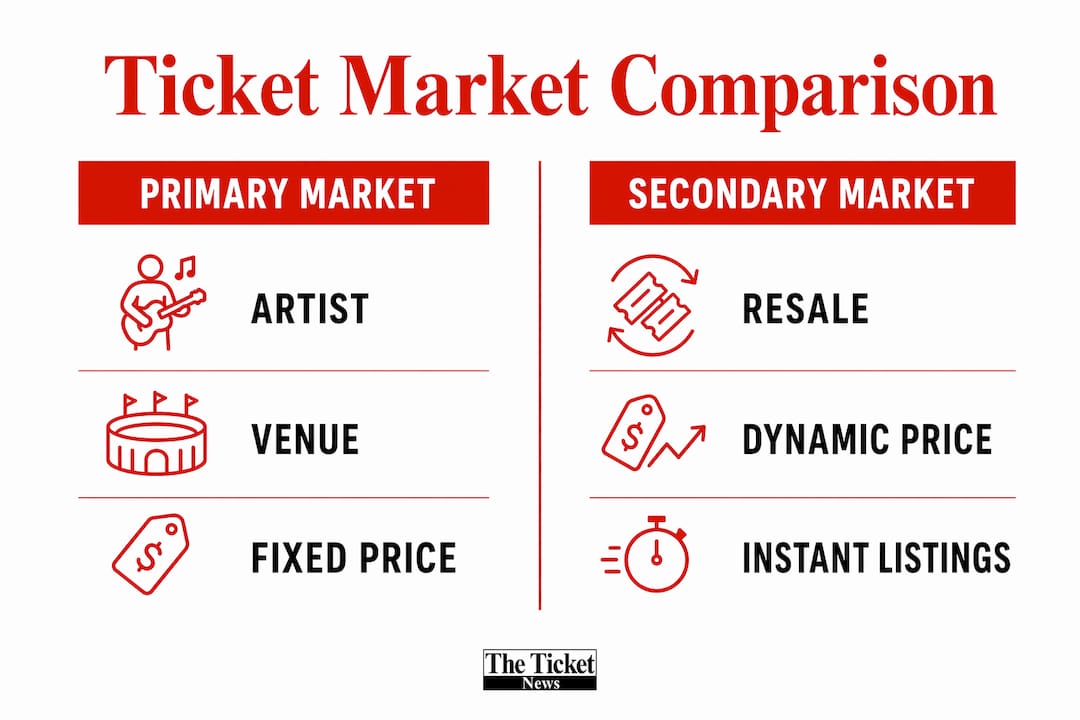
Secondary markets adjust prices in real time based on demand signals, creating a dynamic pricing environment that can push face-value tickets far out of reach. A floor seat that sold for $150 at face value might appear on StubHub for $800 within minutes. That price jump reinforces the sense of scarcity and urgency, pushing more fans to buy quickly at inflated prices rather than wait.
Here is a clear breakdown of how primary and secondary markets differ in practice:
| Factor | Primary market | Secondary market |
|---|---|---|
| Ticket source | Artist, venue, or official ticketing platform | Resellers, scalpers, or other fans |
| Pricing | Fixed face value or dynamic pricing set by artist | Fluctuates based on real-time demand |
| Availability timing | Set on-sale date and time | Appears within seconds of primary purchase |
| Buyer protections | Typically guaranteed by platform | Varies by platform and seller |
A primary sell-out does not always mean no tickets remain. Many tickets move quickly to resale markets with fluctuating prices, meaning the event itself is not truly sold out. Fans who wait and monitor resale platforms sometimes find prices drop significantly in the days before a show, especially if demand softens. Reviewing a concert ticket resale checklist before you buy on a secondary platform protects you from fraud and overpaying.
Economic factors that push fans to buy faster
Ticket prices and broader economic conditions directly affect how urgently fans decide to buy. Rising ticket prices modify fan behavior and attendance patterns in ways that actually speed up sell-outs for the most popular shows. Higher prices filter out casual buyers, leaving a core group of dedicated fans who compete intensely for a smaller pool of affordable seats.
Artists and promoters set prices to hit specific revenue targets for each tour. When those targets require premium pricing, the number of fans who can afford face-value tickets shrinks. The fans who remain in the market are highly motivated and buy quickly, which compresses the sell-out window even further.
Economic pressures beyond ticket prices also play a role:
- Travel costs: Fans who need to fly or drive long distances factor in hotel and transportation costs. When those costs rise, fans prioritize buying tickets early to lock in plans before prices climb further.
- Discretionary spending competition: Macroeconomic factors contribute to hastened purchase decisions when fans feel financial pressure and want to secure an experience before their budget tightens.
- Fear of missing out: Seeing friends post about buying tickets creates social pressure that accelerates individual purchase decisions.
- Dynamic pricing at the primary level: Platforms like Ticketmaster use demand-based pricing that raises face-value prices as inventory shrinks, pushing fans to buy early before prices increase.
Tracking ticket price history for a specific show helps you decide whether to buy immediately or wait for prices to settle. For the biggest tours, early buying almost always wins. For mid-tier artists, patience often pays off.
Key Takeaways
Concert tickets sell out fast because limited supply, automated bots, instant resale listings, and economic urgency all work together to drain inventory before most fans can respond.
| Point | Details |
|---|---|
| Artist and tour decisions drive scarcity | Venue size and limited tour dates create deliberate competition among fans. |
| Bots operate at inhuman speed | Automated programs buy thousands of tickets per second, leaving little for general buyers. |
| Resale markets amplify sell-out perception | Tickets appear on StubHub and Vivid Seats within seconds, making shows look gone instantly. |
| Economic pressure speeds up buying | Rising prices and travel costs push motivated fans to purchase without hesitation. |
| Presale access is a real advantage | Fan club and credit card presales unlock tickets before the general public competes. |
The Ticket News take on what fans actually need to know
The most frustrating part of buying concert tickets is feeling like the system is rigged. Honestly, parts of it are. Bots are a systemic problem, and the BOTS Act has not solved it. Ticketmaster blocking 20 billion bot attempts monthly sounds impressive until you realize bots are still winning often enough to make scalping a profitable industry.
What fans underestimate is how much tour planning decisions shape their experience before they ever open a browser. When an artist chooses a 15,000-seat venue over a 50,000-seat stadium, that is a business decision that directly determines how many fans walk away empty-handed. Understanding that dynamic shifts your frustration from the ticketing platform to the actual source of the scarcity.
The resale market insight that changes everything: a primary sell-out is not the same as a true sell-out. Prices on secondary platforms often drop in the final 48–72 hours before a show as scalpers cut losses on unsold inventory. For shows that are not absolute blockbusters, waiting is a legitimate strategy. For stadium tours by artists like Taylor Swift or Kendrick Lamar, waiting is a gamble that rarely pays off.
The practical advice we give every fan is simple. Use every presale access point available to you. Set calendar reminders. Have your payment information saved. And if you miss the primary sale, check resale prices closer to the show date before paying a 300% markup on day one.
— The Ticket News
Ticket resources to help you buy smarter
Knowing why tickets sell out is only half the battle. The other half is having the right resources when the on-sale clock starts.

The Ticket News covers upcoming concerts, festivals, and ticket on-sale dates with guides built specifically for fans who want to buy smart and pay fair prices. From tracking price history to navigating resale platforms safely, the site gives you the information you need before you spend a dollar. Whether you are chasing floor seats for a stadium tour or looking for the best deal on a festival pass, visit The Ticket News for up-to-date ticket news, buying guides, and resale tips that keep you one step ahead of the market.
FAQ
Why do concert tickets sell out in minutes?
Tickets sell out in minutes because automated bots buy thousands of tickets per second while millions of fans compete simultaneously for a limited supply. Presale allotments also remove a significant share of inventory before the general public gets access.
Does a primary sell-out mean no tickets are left?
Not always. Many tickets move to secondary resale platforms like StubHub and Vivid Seats within seconds of the primary sale, meaning the event itself may not be truly sold out. Resale prices often drop closer to the show date.
How do ticket bots work?
Ticket bots use fake accounts, rotating proxies, and AI to mimic human behavior and complete purchases at speeds no person can match. Traditional security measures like CAPTCHA are largely ineffective against modern bots.
What is the best way to buy concert tickets before they sell out?
Join the artist’s official fan club, link a qualifying credit card for presale access, and have your payment details saved before the on-sale time. A wired internet connection and a cleared browser also improve your speed.
Do ticket prices affect how fast concerts sell out?
Higher prices reduce the pool of buyers but increase competition among dedicated fans, which can actually compress the sell-out window. Dynamic pricing at the primary level also pushes fans to buy early before prices rise further.
Leave a Reply