Concert ticket tiers are defined as multiple price and experience levels offered within a single event, each targeting a different type of fan. Understanding why concerts have multiple ticket tiers reveals a system built on economics, psychology, and genuine fan value. Tiered pricing lets promoters serve everyone from the budget-conscious first-timer to the superfan willing to pay for a meet-and-greet. Tiered pricing can increase gross revenue by about 14.2% compared to flat pricing for mid-sized events. That gap is the reason nearly every major concert today uses some form of tiered structure.
Why concerts have multiple ticket tiers: the core reason
The core reason is simple: not every fan values the same thing. One person wants the cheapest seat in the house. Another wants front-row access, a laminate, and a signed poster. A flat single price forces promoters to choose between those two buyers. Tiered pricing serves both.
Artists and promoters factor in production costs and market willingness to pay when setting each tier. Venue rental, stage production, crew, and marketing all carry real costs. Tiers let the team recover those costs from the fans most willing to pay, while keeping lower tiers accessible to everyone else.

The industry term for this practice is price segmentation, sometimes called demand-based pricing. You will also hear it called tiered ticketing or ticket tier pricing. All of these phrases describe the same mechanic: matching price to perceived value across distinct buyer groups.
How tiered ticket pricing structures work in concert sales
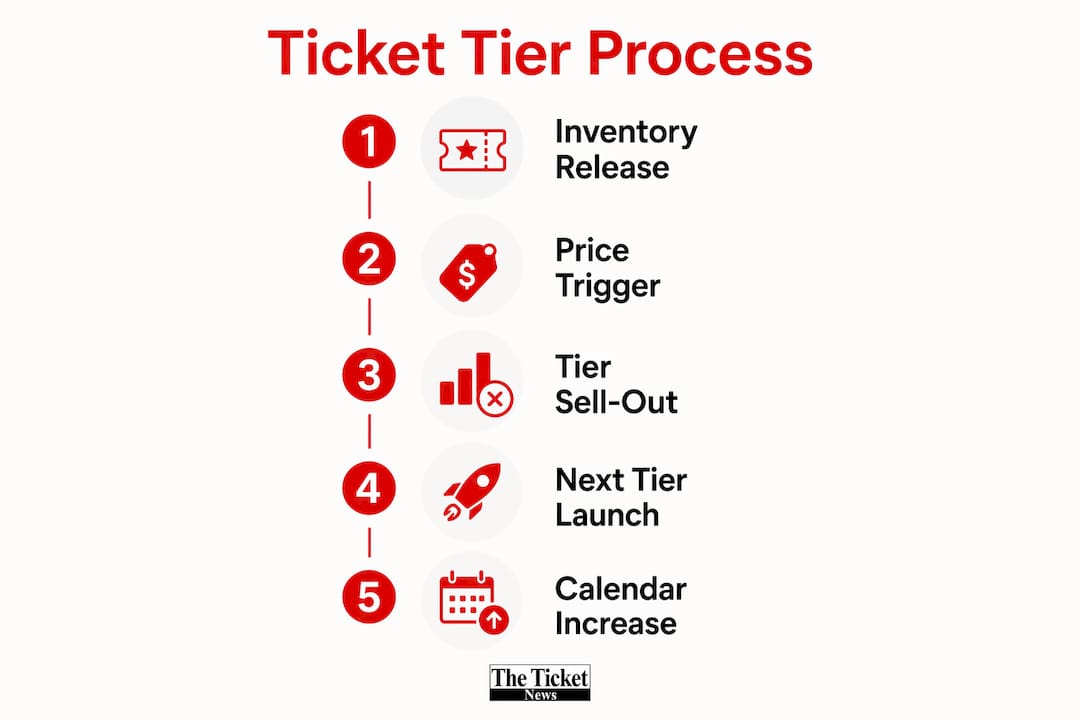
Tiered ticketing works through a system of inventory buckets. Each bucket holds a set number of tickets at a fixed price. When one bucket sells down to a trigger point, the next bucket opens at a higher price.
Here is how a typical tier ladder looks for a mid-sized venue:
| Tier | Price | Inventory | Trigger to next tier |
|---|---|---|---|
| Early bird | $45 | 200 tickets | Sells out |
| General admission tier 1 | $65 | 400 tickets | 70% sold |
| General admission tier 2 | $85 | 400 tickets | Date cutoff |
| VIP / premium | $150+ | 100 tickets | Fixed cap |
Tier 1 tickets represent an inventory bucket that triggers the next higher-priced bucket when about 70% are sold. This means the urgency fans feel is real. The price jump happens automatically when demand hits that threshold.
Price increases also follow calendar triggers. Festivals like Bonnaroo increase ticket prices by about $20 per tier as availability drops or deadlines approach. Both methods, sell-through thresholds and date cutoffs, create honest scarcity rather than manufactured pressure.
Tiered pricing is different from dynamic pricing. Dynamic pricing uses algorithms that adjust prices in real time based on demand signals. Dynamic pricing often works alongside tiers, adjusting prices within preset ceilings to avoid fan backlash. Most systems impose a price ceiling to prevent price gouging even under peak demand. Tiers are the structure; dynamic pricing is the adjustment layer on top.
Pro Tip: Check the event page the moment tickets go on sale. The first tier almost always sells out within hours, and the next tier can be $20–$40 more for the same seat.
Why tiered pricing benefits promoters, artists, and fans
Tiered pricing creates value for every party involved, not just the promoter’s bottom line.
- Promoters collect cash earlier in the event cycle, which stabilizes budgets and reduces financial risk. Early bird and limited-quantity tiers pull cash in sooner and reward committed fans at lower prices.
- Artists benefit because tier revenue data signals demand levels before the show date. Strong early-tier sales justify adding production elements or a second night.
- Fans get real choices. Budget buyers access the event at the lowest price. Superfans pay for perks they actually want.
- Scalpers lose leverage when promoters use tiers strategically. Promoters monitor secondary market resale prices to set tier prices close to resale value, leaving less profit margin for scalpers.
- Transparency improves because tier triggers are published in advance. Fans know exactly why the price went up.
“Tiered pricing’s urgency factor is authentic because price jumps genuinely occur as a tier sells out, creating honest scarcity rather than manufactured pressure. That authenticity builds fan trust in the pricing system over time.”
Tiered ticketing lets promoters serve multiple segments, from bargain hunters to superfans, maximizing both attendance and revenue. A sold-out show at varied price points beats a half-empty room at a single premium price every time.
Common types of concert ticket tiers and what they offer
Most concerts use four to six distinct tier types. Each one targets a specific fan profile.
Standard general admission
The baseline tier covers entry and nothing more. You get a spot in the crowd, access to the general floor or assigned seating section, and the show itself. This tier carries the lowest price and the highest inventory. It is the right choice if the music is the only priority.
Early bird tiers
Early bird tickets are discounted general admission tickets released weeks or months before the event. The discount rewards fans who commit early and helps the promoter lock in revenue before production costs peak. Once the early bird inventory sells out, this tier disappears permanently.
VIP and premium tiers
45% of VIP ticket buyers are willing to pay 50% more than a standard ticket to secure premium upgrades. VIP tiers typically include perks such as:
- Dedicated entry lanes and early access to the venue
- Exclusive viewing areas or front-of-stage barriers
- Meet-and-greet sessions with the artist
- Bundled merchandise like signed prints or limited-edition items
- Dedicated bars or hospitality areas
The perceived value of these perks drives purchase decisions. Fans who attend multiple shows per year often find VIP tiers worth the premium because the experience is meaningfully different, not just a better seat.
Group and bundle tiers
Group tiers offer a per-ticket discount when buyers purchase four or more tickets together. Bundle tiers pair a ticket with merchandise or a streaming album. Both formats increase average order value for the promoter while giving fans a discount they would not get buying individually.
Pro Tip: If you are going with a group of four or more, always check for a group rate before buying individual tickets. The savings can cover parking or a round of drinks.
Displaying the highest-priced VIP tier first on a ticketing page is a deliberate strategy. The anchor effect influences buyers’ perception, making standard tiers feel like better deals by comparison. Knowing this helps you evaluate each tier on its own merits rather than reacting to the price contrast.
How to navigate multiple ticket tiers as a concertgoer
Getting the best value from a tiered system requires timing and a clear sense of your own priorities. Follow these steps to make smarter purchases.
-
Set a sale alert before the on-sale date. Sign up for artist newsletters and follow the venue on social media. Tier 1 and early bird tickets often sell out within the first 30 minutes of general sale.
-
Know your must-haves before you click. Decide in advance whether you need a specific section, a meet-and-greet, or just entry. Fans who decide under pressure often overspend on perks they do not use.
-
Compare the all-in price, not the face value. Service fees, facility charges, and order processing fees can add 20% or more to the listed price. Always check the final checkout total before comparing tiers.
-
Track price changes over time using fan communities. Reddit threads and fan forums often document when tier prices jumped and what inventory remains. This intelligence helps you decide whether to buy now or wait.
-
Buy through official channels first. Official box offices and authorized ticketing platforms carry the lowest risk of fraud. Secondary market purchases carry a premium and no guarantee of tier perks like early entry or VIP access.
Pro Tip: If you missed the early bird tier, check concert ticket discount options like fan club presales or credit card presales. These often unlock a lower price tier before the general public sale opens.
Understanding trade-offs is the real skill here. A $65 general admission ticket and a $150 VIP ticket to the same show are not competing products. They are different experiences. Evaluate each tier against what you actually want from the night, not against what the promoter wants you to want.
Key takeaways
Tiered concert ticket pricing exists because it serves fans at every budget level while maximizing event revenue through price segmentation, early purchase incentives, and differentiated experiences.
| Point | Details |
|---|---|
| Revenue impact | Tiered pricing increases gross revenue by about 14.2% compared to flat pricing for mid-sized events. |
| Tier triggers | Price jumps when about 70% of a tier sells out or a calendar deadline passes, creating real scarcity. |
| VIP willingness to pay | 45% of VIP buyers will pay 50% more than a standard ticket for premium perks. |
| Best buying strategy | Purchase in the first tier or use presale access to avoid paying more for the same seat later. |
| Scalping deterrent | Promoters set tier prices close to resale value, reducing the profit margin available to scalpers. |
The Ticket News take on tiered pricing and fan fairness
Tiered pricing gets a bad reputation it does not fully deserve. Fans often blame tiers for high ticket prices, but the real culprit is usually a mismatch between supply and demand at the top tier, not the structure itself.
What I have seen consistently is that fans who understand how tiers work almost always spend less than fans who do not. The fan who buys on day one at tier 1 pricing pays $40 less than the fan who waits until the week of the show. That gap is not a penalty. It is a reward for commitment.
The post-pandemic live music market accelerated tier adoption significantly. Artists returning to touring after long breaks faced enormous pent-up demand. Promoters responded by adding more tiers and tightening inventory at each level. The result was higher average ticket prices, but also more options at more price points than ever before.
The transparency issue is real, though. Some promoters bury tier triggers in fine print, and fans feel blindsided when prices jump overnight. The fix is not to eliminate tiers. The fix is clearer communication about when and why prices will change. Fans who know the rules play the game well.
The Ticket News recommends treating your ticket purchase like any other planned expense. Set a budget, know your tier options before sale day, and buy early. The system rewards preparation.
— The Ticket News
Find the right concert ticket tier with The Ticket News
The Ticket News tracks ticket releases, tier structures, and pricing updates across hundreds of concerts and festivals each year. Whether you are chasing an early bird deal or weighing the value of a VIP package, the right information makes the difference between overpaying and getting exactly what you want.

From VIP ticket guides to breakdowns of every discount type available at checkout, The Ticket News gives you the context to buy with confidence. Visit The Ticket News for current event listings, tier release alerts, and fan-focused pricing coverage updated throughout the year.
FAQ
What are concert ticket tiers?
Concert ticket tiers are multiple price levels offered for a single event, each with different perks, locations, or access levels. They allow fans to choose an experience that fits their budget and priorities.
Why do ticket prices go up after the first release?
Prices increase when a tier’s inventory sells down to a trigger threshold, typically around 70% sold, or when a preset calendar deadline passes. This reflects genuine scarcity, not arbitrary price increases.
Are VIP concert tickets worth the extra cost?
VIP tickets are worth the cost if the included perks, such as early entry, exclusive viewing areas, or meet-and-greets, match what you actually want from the experience. Evaluate the specific perks listed, not just the tier label.
How can I get the lowest price on concert tickets?
Buy during the first tier release or use a fan club presale to access lower prices before the general public sale. The best time to buy is almost always as early as possible.
What is the difference between tiered pricing and dynamic pricing?
Tiered pricing uses fixed price buckets that activate in sequence as inventory sells. Dynamic pricing adjusts prices in real time based on demand, often operating within the ceiling set by the top tier.
Leave a Reply