A concert tour announcement is the official public reveal of an artist’s upcoming live performances, covering tour name, dates, venues, and ticketing details. In the music industry, this is called a tour announcement or tour reveal, and it functions as the primary promotional vehicle for an artist’s live run. Whether tied to a new album, a milestone anniversary, or a farewell run, these announcements set the entire fan experience in motion. Understanding how they work gives you a real edge when tickets go on sale.
What is a concert tour announcement and what does it include?
A tour announcement is a structured release of information, not just a social media post. The best ones follow a clear format that gives fans everything they need to plan attendance without hunting through multiple sources.
A complete tour announcement typically contains:
- Artist name and tour branding. The official tour name (for example, “The Eras Tour” or “The Death of Peace of Mind Tour”) signals the theme and scope of the run.
- City, venue, and date listings. Exact show details include the venue name, city, state, and the specific date and time of each performance.
- Ticketing schedule. This covers presale windows, public onsale dates, and the platforms where tickets are available, such as Ticketmaster, AXS, or SeatGeek.
- Supporting acts or special guests. When available at announcement time, openers are listed to add value and context.
- Direct ticket links. Official links to authorized sellers reduce the risk of fans landing on fraudulent resale pages.
The Eagles, for example, structured their 2018 stadium tour announcement with all of these elements in a single press release, giving fans a clear path from announcement to purchase. That kind of clarity is the standard every well-run tour aims to meet.
Pro Tip: Save the official artist website and the venue’s box office page as bookmarks the moment a tour is announced. These two sources carry the most accurate ticketing information and update faster than third-party aggregators.
How do artists and promoters roll out tour announcements?
Tour announcements rarely drop as a single, complete document. The phased rollout is a deliberate strategy that keeps media coverage sustained and fan attention high across weeks or even months.
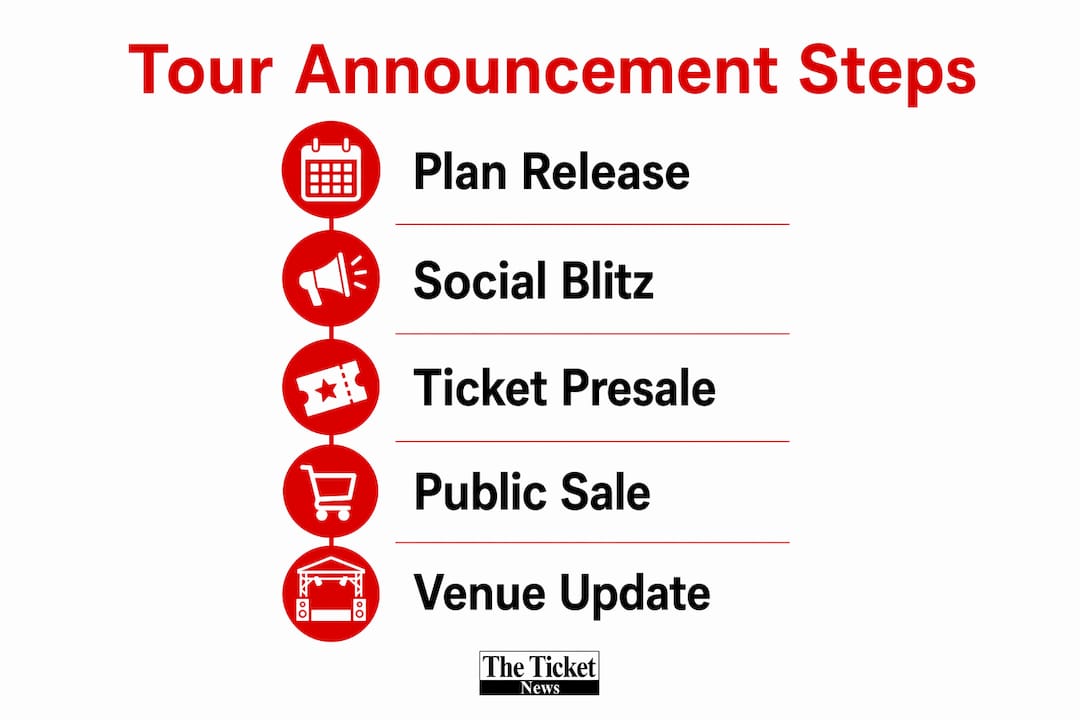
Here is how a typical rollout unfolds:
- Initial announcement. The artist or management drops the first leg of dates, usually covering one region such as North America or Europe. This generates immediate press coverage and social media activity.
- Presale windows open. Multiple presale types launch in sequence: fan club presales, venue presales, credit card holder presales (commonly Citi or American Express), and promoter presales. Each targets a different audience segment.
- Public onsale. General ticket sales open to everyone, usually several days after the first presale wave.
- Additional dates announced. A second or third wave of dates expands the tour to new cities, additional nights in high-demand markets, or international legs.
- Updates and changes. Venue switches, support act additions, and rescheduled dates follow as the tour moves closer to its start.
“Fans familiar with rollout strategies wait for expansions rather than panic about missing cities at first.” — Concert Tour Announcements: The Biggest Tours, Presales and New Dates
The coordinated blitz launch across social media, email newsletters, and media partners is not accidental. It is designed to create a single, unavoidable moment of awareness. Metallica’s 2018–19 WorldWired Tour used exactly this approach, dropping dates simultaneously across Instagram, email lists, and major music outlets to prevent fan confusion about which dates were official.
Understanding this structure helps you read the situation correctly. When your city is not in the first wave, that does not mean you are out. It often means the second wave is coming.

Why do tour announcements matter beyond dates and locations?
A tour announcement does more than list logistics. Effective announcements explain what makes a show special, and that emotional context drives ticket demand in ways that a bare date listing never could.
Here is why the framing of an announcement matters to you as a fan:
- Reunion and anniversary tours carry extra weight. When an artist frames a tour as a 25th anniversary run or a one-time reunion, the announcement signals scarcity. Fans respond by buying faster and paying more.
- Farewell tours create urgency. Elton John’s Farewell Yellow Brick Road Tour generated record demand partly because the announcement made clear this was a final opportunity. The emotional stakes were built into the reveal itself.
- Milestone productions justify premium pricing. When an announcement describes elaborate stage designs, special guest appearances, or unique set lists, fans understand why floor tickets cost more than a standard club show.
- Context shapes fan behavior. Announcements that explain the significance of a tour push fans toward immediate action rather than a “wait and see” approach.
The Bristol Rhythm & Roots Reunion’s 25th Anniversary announcement is a strong local example. By leading with the milestone framing, organizers signaled to country music fans that this was not a routine festival. That framing directly influenced early ticket sales.
Pro Tip: Read the full announcement text, not just the date list. Artists and promoters embed key details about production scale, special guests, and ticket access programs in the body copy that most fans skip.
How can fans track and respond to concert tour announcements?
Tracking tour announcements effectively is a skill. The fans who consistently get tickets to high-demand shows treat the process like a project, not a passive scroll through social media.
| Action | Why It Matters |
|---|---|
| Follow official artist channels | First-party sources post presale codes and onsale times before media outlets pick them up |
| Sign up for venue email lists | Venue presales often open 24–48 hours before public onsale and require venue newsletter signup |
| Join the artist fan club | Fan club presales offer the earliest access and sometimes the best seat inventory |
| Set calendar alerts for onsale times | Missing the first 10 minutes of a high-demand onsale significantly reduces your seat options |
| Confirm payment details in advance | Preparing accounts ahead of sales prevents checkout failures during competitive windows |
Missing a presale does not mean tickets are gone. Fan club, venue, promoter, and credit card holder presales each draw from different ticket pools. Missing one window still leaves multiple entry points before the general public onsale.
Venue changes after announcement often signal capacity or production adjustments. A move from a 5,000-seat theater to a 15,000-seat arena means more tickets but also a different experience. Track these updates on the venue’s official page and the artist’s website, not just fan forums.
Tour announcement trackers like the one at The Ticket News consolidate upcoming concert announcements, presale schedules, and venue updates in one place. Using a single trusted source reduces the time you spend cross-referencing multiple platforms.
Pro Tip: Convert all onsale times to your local time zone the moment you see them. A 10:00 AM Eastern onsale is 7:00 AM Pacific. Missing that conversion is one of the most common reasons fans miss their window.
Also worth reading: The Ticket News covers how concert tour routing works in detail, which explains why certain cities get added in later waves and how promoters decide on venue size.
Key takeaways
A concert tour announcement is a multi-phase, multi-channel event that requires fans to track updates actively, not just react to the initial drop.
| Point | Details |
|---|---|
| Core definition | A tour announcement is the official reveal of dates, venues, ticketing, and tour branding. |
| Phased rollout is standard | Expect multiple waves of dates and presale windows, not one complete release. |
| Emotional framing drives demand | Announcements that explain a tour’s significance increase urgency and early ticket buying. |
| Multiple presale types exist | Fan club, venue, promoter, and cardholder presales each offer distinct access windows. |
| Preparation wins tickets | Updating accounts, saving onsale times, and monitoring venue changes improves your odds. |
The ticket news take: what most fans get wrong about tour announcements
Most fans treat a tour announcement like a finish line. They see the dates, check their city, and either buy immediately or move on. That is the wrong frame entirely.
A tour announcement is a starting gun, not a final answer. We have tracked hundreds of tours at The Ticket News, and the pattern is consistent: the initial announcement covers maybe 60–70% of the final tour. The rest comes in waves over the following weeks. Fans who panic-buy floor tickets in the first five minutes of a presale sometimes do so before the artist has even confirmed the full production setup.
The shift to social media announcement blitzes has made this worse, not better. A 30-second Instagram Reel drops at midnight, fans flood Ticketmaster, and half of them are buying based on incomplete information. The artists and promoters know this. The phased rollout is partly a marketing tool designed to keep you engaged and checking back.
The smarter move is to treat the first announcement as a signal to prepare, not to purchase. Set your alerts, join the fan club if the artist matters to you, and wait for the full picture before committing to resale prices that spike in the first 48 hours. The fans who do this consistently pay less and attend more shows.
One more thing: venue changes are underreported and underreacted to. We have seen fans show up to the wrong venue because they saved the original announcement and never checked for updates. Monitoring venue changes is not optional for high-demand tours. It is part of the job.
— The Ticket News
Stay ahead of every tour drop with the ticket news
The Ticket News tracks upcoming concert announcements, presale schedules, and venue updates across hundreds of artists and tours every year. You do not need to monitor a dozen platforms to stay informed.

From major stadium runs like Kanye West’s North American tour to country legends like Alan Jackson’s tour dates, The Ticket News covers the full spectrum of live music. You will also find tips on saving on concert tickets so you can attend more shows without overpaying. Bookmark The Ticket News and check back regularly. Tour news moves fast, and the fans who stay informed are the ones who get in the door.
FAQ
What does a concert tour announcement typically include?
A concert tour announcement includes the artist name, tour branding, city and venue listings, show dates and times, ticketing schedule with presale and onsale dates, and direct links to authorized ticket platforms. Supporting acts are included when confirmed at announcement time.
Why are concert tours announced in phases instead of all at once?
Phased announcements keep media coverage sustained and allow promoters to gauge demand before committing to additional markets. The first wave typically covers one region, with subsequent waves adding cities, international legs, or extra nights in high-demand venues.
What is the difference between a presale and a public onsale?
A presale is an early ticket window available to a specific group, such as fan club members, venue newsletter subscribers, or credit card holders. A public onsale opens ticket sales to everyone and typically launches several days after the first presale window closes.
How do i find out about upcoming concert announcements before they go public?
Sign up for the artist’s official newsletter, join their fan club, and follow their verified social media accounts. Trusted platforms like The Ticket News also aggregate upcoming concert announcements and presale schedules in one place.
What should i do if my city is not in the first tour announcement?
Wait for the second or third wave of dates before assuming the tour will skip your market. Rolling tour announcements regularly add cities and venues after the initial drop, especially for high-demand artists expanding into additional regions.